

Don't Throw Away Wine Corks: Use Them To Prevent Your Birdbath From Freezing

Ahhhhh, wine corks! Some people discard them once the bottles are emptied; others realize they're useful for so many repurposing projects, such as a cork cabin-style birdhouse for your feathered friends. But did you know they're useful, as is, in the middle of winter? Since corks naturally float and resist absorbing water, dropping a few in your birdbath can actually help prevent the water from freezing thanks to the way they float. A cork is mostly air: between 50 and 85 percent air. Plus it has closed cells which make it excel at floating in water. What makes it useful in winter, is that the lightweight bottle stopper floats around in the water, moved by the wind, helping to prevent ice from forming on the surface. So, much like using rubber ducks to keep your birdbath from freezing, essentially you're dropping a few in the bath, and letting nature do its work.
The part of a cork that isn't made up of trapped air is largely made up of wax and a biopolymer called suberin that help it repel water and block gasses. This means it can sit on the water, bobbing around like a mini-icebreaker for a few days. It's water resistant, not waterproof, so eventually it will absorb enough birdbath H2O to sink. When the cork starts to break down, get grungy, or sink, it's time to replace it. Whether the corks you have are natural or agglomerated cork, the first step for this trick is wash them off thoroughly.
Using corks keep birdbath water from freezing
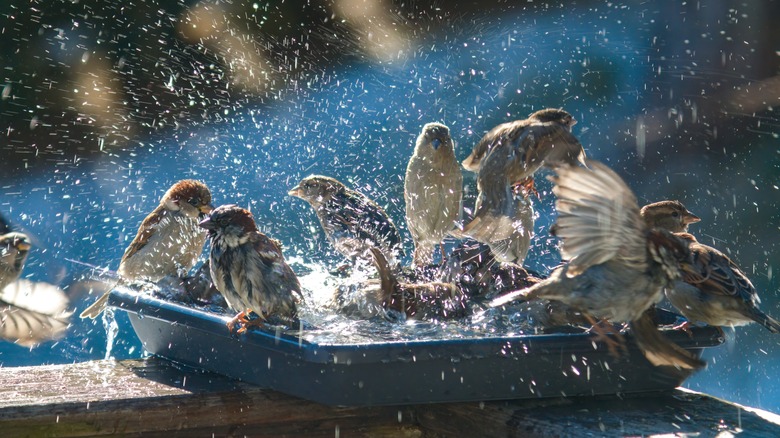
Once you have a few cleaned corks, make sure the birdbath contains at least half an inch or so of water so the cork floats. Cork won't do much good as an ice inhibitor if it sits in one place; it's the moving around and slight agitation of the water that helps prevent that first skin of ice from appearing. Set one or two corks atop the water before it's beginning to freeze; a good time to do it is whenever you refill the birdbath.
As the wind blows, the corks will move around a little, keeping the water from being entirely still. It's not foolproof: When temperatures get below 0 degrees Fahrenheit, ice may form too quickly. One remedy is to add warmwater to the birdbath a few times a day, or as needed. Avoid adding boiling water to a birdbath (or even extremely hot water) because it could cause cracks in stone or concrete, or even shatter some birdbath materials, such as glass. Another challenge with corks is that they may drift to the sides of the bath and stay there, thanks to the curved meniscus effect of water. So check your bath regularly to ensure everything's working like it's supposed to. There's an added bonus when spring approaches: Bees and butterflies like the floating perches when getting a sip of water.
You can also use corks in conjunction with other ice-prevention tactics. Using a dark-colored birdbath helps your feathered friends in winter. Black and other dark colors absorb and retain heat better than light colors. If your birdbath sits in direct sunlight during the winter, the basin itself stays a bit warmer. If you don't have a dark-colored birdbath basin or a shallow, flat-bottomed bowl, add dark rocks instead.