

Think Twice Before Adding Chemicals When Winterizing Your Birdbath. Here's Why
We may receive a commission on purchases made from links.
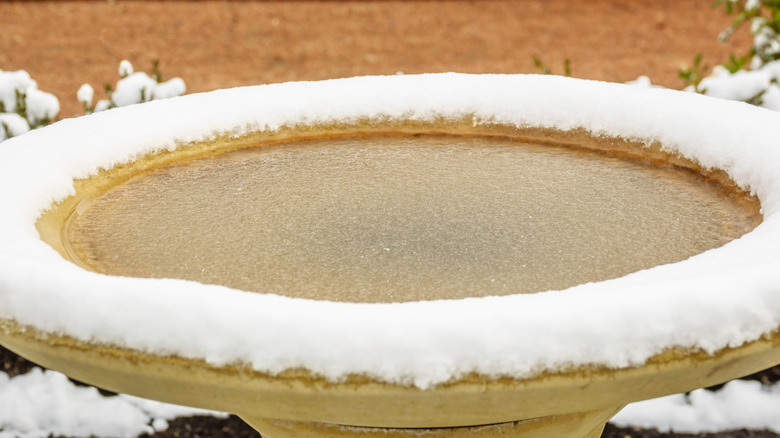
Seeing birds outside on a snowy day is a great way to experience a little mid-winter cheer, so it only makes sense to want more feathered friends to visit your yard. Adding a birdbath is one way to bring birds to your garden all winter long.... but then there's the issue of the water freezing, and frozen water isn't helpful to birds at all. No matter how much you'd like to keep that birdbath water from turning into a sparrow-sized ice skating rink, adding chemicals to keep it from freezing is never a good idea.
Any type of anti-freeze solution or salt might keep the water from freezing, but it's also dangerous and potentially harmful to the birds. Glycerin also shouldn't be used to keep the water from freezing, as it could create dangerous blood sugar levels in any birds that drink it. Glycerin and other substances could also stick to feathers and negatively affect a bird's ability to stay warm. Small, fluffy feathers serve as insulation for the birds; think of a down-filled coat and you're on the right track. When birds fluff up their feathers, pockets of air between feathers help create layers of warmth, and the feathers have to stay clean and flexible for this to happen. Keeping pure, clean water in your birdbath helps the birds maintain their feathers.
How to keep a bird-friendly birdbath in winter
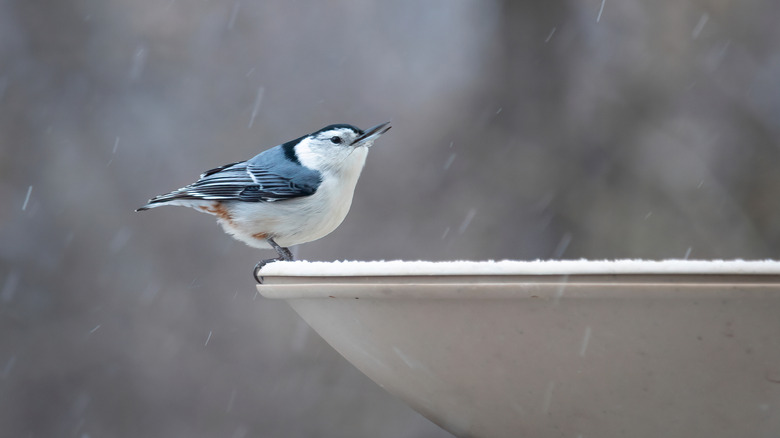
There are quite a few ways to keep a birdbath's water unfrozen on all but the coldest winter days. The birdbath's color even makes a difference; a dark birdbath helps keep birds hydrated in winter because it absorbs warmth, keeping the water from freezing as quickly as it might in a light-colored birdbath basin. This option works best if you keep the birdbath in a sunny location for the winter, so it'll absorb that glorious sunshine warmth. In spring when temperatures rise, move the birdbath out of direct sunlight to help prevent algae buildup.
Adding a floating object to the birdbath water also helps prevent freezing because the object moves around in a slight breeze, making it harder for ice to form. An item such as the API Solar Water Wiggler also creates ripples that could slow the freezing process, too. Replenish the water regularly, even more than once a day, if necessary. If you use warm water, that'll help stop ice from forming, and it may melt any slush that's starting to form. Avoid using boiling water in the birdbath to melt ice because it could crack or even shatter the bath.