

How To Choose The Best Makita String Trimmer For Your Yard
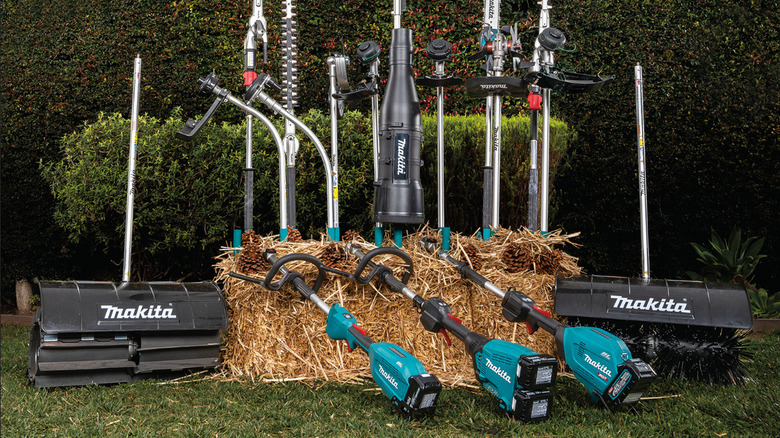
Picking out lawn tools can be a bit of a headache. There are so many products to choose from, even if you focus just on reliable brands. After you research and find the exact tool and company you want to buy from, your work still isn't done. If you're considering buying a Makita string trimmer for your yard, you may go to buy one just to find there are far more than one or two options, and it's difficult to see the differences at a quick glance. In fact, it's quite easy to get wrapped up in the details and become even more confused than when you started. But don't give up now. Despite the number of them you see on the website, there really aren't that many options once you break them down.
You can eliminate quite a few of your choices based on what you're looking for from your string trimmer. Though it doesn't look it at first, pretty much every string trimmer Makita has created serves a slightly different purpose, including specific features to fit its job best. Aspects such as cutting diameter, battery size, and shape can all determine whether or not a certain trimmer is right for you. However, before you go looking at these small details, consider the big picture and eliminate the ones that absolutely won't work for you. The main aspects to focus on are how the tool is powered, how much power you need, and its size. Once you decide these, the options really narrow down and you can pick the exact tool that fits your needs.
First steps in picking the perfect Makita string trimmer
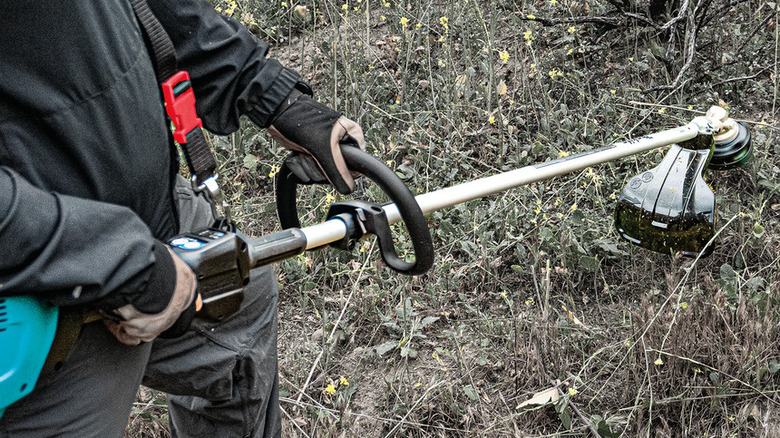
First, decide if you want gas or electric. Because many customers are moving toward battery-powered tools since they have several benefits, there aren't many gas trimmers to choose from. In fact, you really only have two options: EM2650UH and EM2652LHN. Both are four-stroke engines and have the same power. The main difference is the size of the blade. EM2650UH is smaller, with a 9-inch cutting diameter and handles for finer precision. Meanwhile, EM2652LHN's 17-inch diameter takes care of large chunks of weeds at a time.
The rest of Makita's options are battery-powered, which is where it gets a little complicated. Again, there are only a few major differences; once you can tell these apart, it gets a lot easier. However, there are some aspects to consider before buying a battery-powered weed whacker that may make gas options a little more ideal, including higher up-front costs for battery-powered trimmers and limited run times between charges.
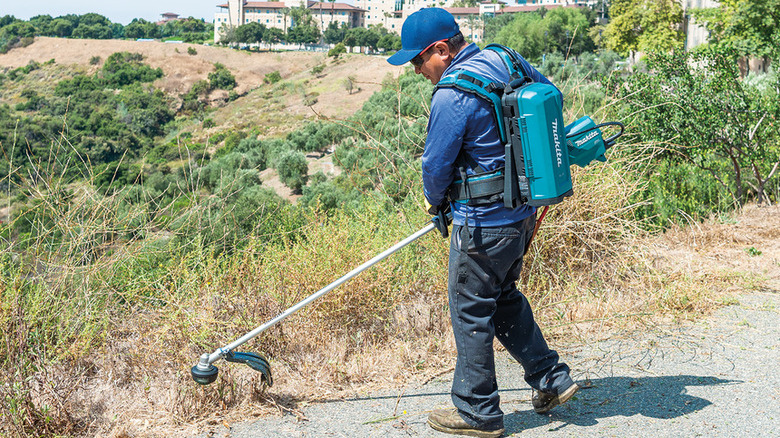
If you look at what's available, you see most of Makita's battery-powered string trimmers are labeled XGT or LXT. XGT tools are made for heavy-duty work. This line is ideal for very large yards that require a lot of maintenance, or professionals who handle several clients in one day. If you have an overgrown lawn, it may be best to choose a brush cutter over a string trimmer, though they come with some flaws to consider. LXT is for the average user. This line provides a balance between weight and power that makes them practical to use.
Makita string trimmers that may fit your needs
There are two final, alternative products for when the standard lines don't work out. The first is the CRU03Z, also known as the ConnectX brushless string trimmer. It's actually powered by a cord, meaning it runs on electricity but not a battery. It's ideal for people who only need a couple of tools and don't want to deal with charging batteries. It's similar in size to the XGT line, but lighter.
The final choice is the RU03Z, part of the CXT line. While Makita has quite a few of these tools, it only has one string trimmer in this category. It's more compact to fit into narrow places that regular equipment isn't able to fit. Unfortunately, the compact design usually means a shorter battery life or less strength, which is why it isn't always ideal. It comes with a telescoping shaft and fully stretches out to about half the length of other string trimmers. It's also lightweight (roughly 5 pounds), even with the battery.
Before deciding on your perfect string trimmer, make sure it's what you actually want. A lot of the time, it feels like you can use the same tool to get multiple tasks done, but using an improper machine can shorten its lifespan and introduce danger. For example, think twice before using a string weed trimmer to edge your lawn; it can send rocks and other debris flying.