

Why You Should Consider Using Resin Bound Gravel In Your Yard
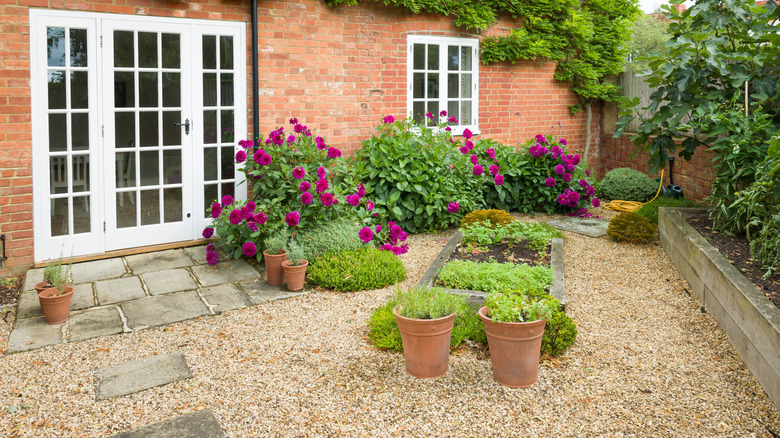
Gravel offers many benefits in a yard; one surprising perk is that it works as a deterrent for keeping snakes out of your yard. But there's also plenty to consider when deciding what type of gravel to use. You'll want to avoid common mistakes when using gravel in landscaping — such as choosing the wrong type — and weigh the pros and cons of each variety. For example, white gravel comes with its own set of pros and cons. One type to consider is resin-bound gravel, which is attractive, versatile, and offers a host of practical benefits, too.
So, what is resin-bound gravel? Although their names are very similar, resin-bound gravel is distinct from resin-bonded gravel, most notably by the method in which each is installed during landscaping. Resin-bound gravel is created by mixing resin and gravel before laying the blend on the surface, while resin-bonded gravel is made by applying resin first and scattering loose gravel over it.
The benefits of resin-bound gravel
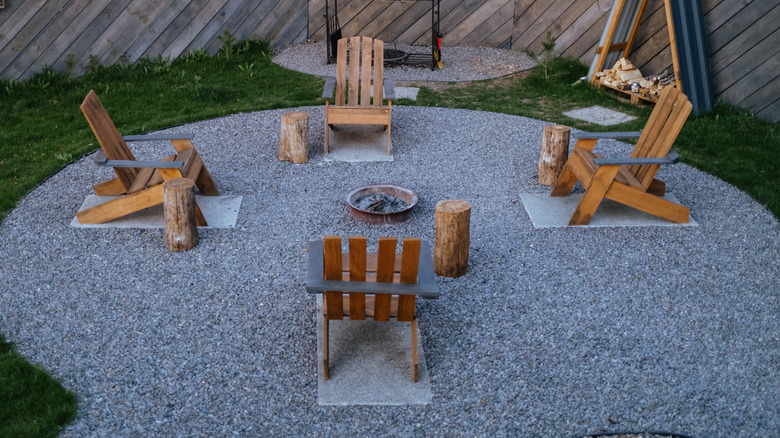
Resin-bound surfacing is sometimes known as "stone carpet" because it creates a seamless, functional, and easy-to-maintain look. It's firm, and unlike conventional gravel, the stones don't scatter or come loose, so there's much less upkeep involved. While resin-bound gravel is sturdy, the gaps between the small stones also make it permeable, so water can move through it easily. This reduces the chance of puddles or flash flooding in heavy rain, and also makes resin-bound gravel a more environmentally friendly option, as it allows for sustainable drainage that supports natural water systems. Despite its porous surface, resin-bound gravel is highly weed-resistant, reducing your overall yard work.
In addition to being low-maintenance, resin-bound gravel is also an attractive option that's sleek and modern. It's easily customizable to fit your style, with many aggregate colors to choose from — including rich reds, warm golds, silvery grays, and blacks. As a result, it can make the perfect material for diverse projects such as garden paths, patios, and driveways.
However, as with all landscaping additions, there are some downsides to consider — primarily around cost. Resin-bound gravel does tend to be a more expensive material than traditional concrete. It also often requires professional installation, which can further increase the overall cost. That said, resin-bound gravel can be an excellent choice if you're looking to upgrade your backyard with a smooth, natural-looking surface that's both attractive and easy to take care of.