

Is Your Lawn Mower Smoking? Here's What It Might Mean And How To Fix It

If you are responsible for your landscaping, big or small, you've likely had some run-ins with a faulty lawn mower or three. Whether you're pushing an old beast of a machine, hearing clogged sounds from a grimy carburetor, or just finding your machine occasionally difficult to start, you're no stranger to troubleshooting. If that trouble involve smoke coming out of your mower, it could be enough to scare you away from lawn maintenance entirely. Luckily, diagnosing and fixing a smoking lawn mower is not quite as complicated as you might expect. In fact, there are a few telltale signs that make your issues easy to understand, potentially saving you hundreds of dollars on unnecessary repair bills, or thousands on brand new equipment.
In general, smoke coming off a gas lawn mower has to do with spilled oil or gas, or a blocked, dirty filter or carburetor. All of these can be dealt with by cleaning grease and oil off your machine and conducting regular maintenance, especially with gas-powered machines that have seen some miles. Of course, smoke could potentially be a sign of a larger hazard as well. The first step to diagnose a smoking lawn mower is to inspect the color of the smoke. This reveals a surprising amount of information regarding the specific area in need of cleaning or more serious repair. The next step is to deal with the issue right away, so it doesn't get worse or permanently damage your mower. When it comes to electric mowers, smoke and an acrid smell may indicate something is blocking the blades, stressing the motor. Turn it off, remove the battery, and remove any twine, garbage, or other blockages. If the fix seems beyond your skills, don't hesitate to call in a professional.
Use smoke color to diagnose your lawn mower's problems
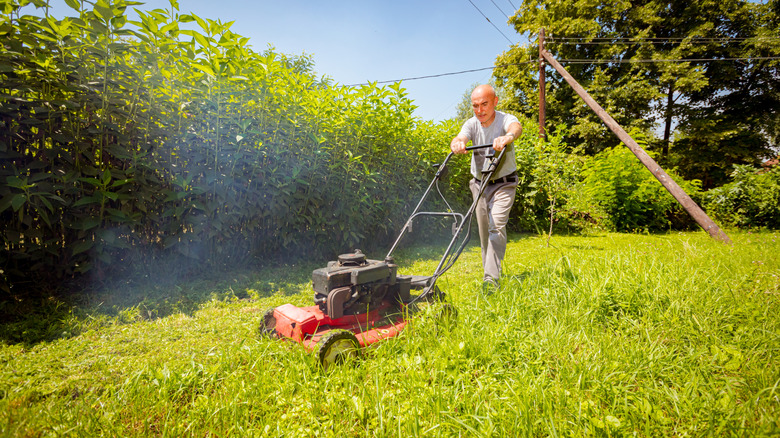
When dealing with a lawn mower, black smoke traditionally means there's something wrong with your fuel ratio. Basically, there's not enough oxygen in the mix, which is the realm of your air filters, injection system, and carburetor. These are usually located on the side or back of the machine, just under the plastic cover. If your filters are choc full of gunk, there is a simple trick to clean your mower's air filter. From there, clean the fuel injectors and adjust the carburetor if needed. Finally, make certain you're using the right kind of fuel. Once the whole fuel system is looking squeaky clean, spray the threads with some WD-40, and reassemble.
If the smoke pouring out is blue or white color, it usually means that you've got oil burning somwhere. Check the head gaskets, oil reservoir, and the engine block. If you're lucky, it's a simple case of spillage from the last time that you topped off the tank. If this is the case, you can simply wipe down the engine block and return to business as usual. Let your lawn mower running for 15 minutes or so, to see if the smoke clears after cleaning. While you're at it, check for any cracked gasket seals, leaky valves, or broken piston rings. Each of these items can be replaced at a relatively low cost, and it's better to replace them yourself than pay the hefty premium at a repair shop. If there is a puncture in your reservoir, or worse, a blown head gasket, it might be time to hang up your gloves and call the pros.
Best practices for lawn mower maintenance
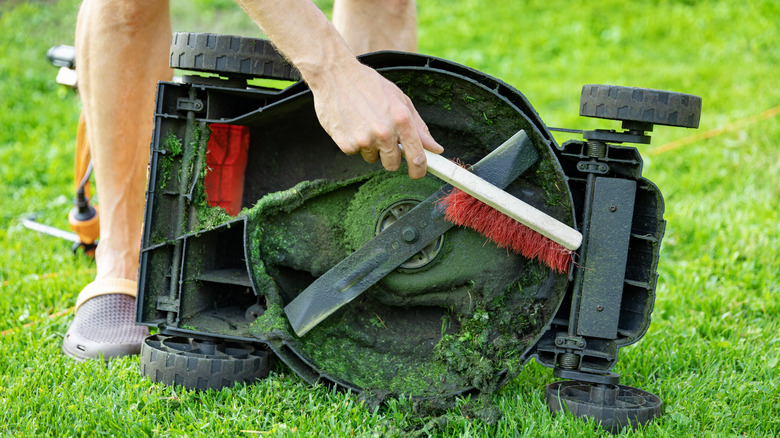
No matter what color smoke you're seeing, a smoking lawn mower should be a wake-up call regarding basic engine maintenance, cleanliness, and care, in order to prevent future mishaps. Clean air filters monthly and replace them annually or as needed. Top off oil per the manufacturer's guidelines. Include spark plugs in your routine care for optimal fuel efficiency. Sometimes, oil can overflow or spill onto the engine block due to tipping or mowing along a steep slope. If this is the case, consider going at the steepest points in your yard with a hedge trimmer, and keeping your mower on flat ground. Obviously, this is all easier said than done, but these are good guidelines to bear in mind when choosing the best lawn mower if you have a hilly yard that can help with spills.
Finally, remember to empty your machine of gas before working on it, in order to ensure that it doesn't spill all over your garage, or worse- start up by accident. This also ensures you're using fresh gas following a long repair delay (sometime we set aside a repair for..."later"), or to kick off a new mowing season. Once cleaning or repairs are complete, refuel the mower. Wait about 30 minutes for the gas to cycle before giving it a spin again. All of this can sound quite daunting to someone who isn't frequently tinkering with motor vehicles, but lawn mowers tend to keep it fairly simple. With any luck, you're well on your way to keeping your lawn care tools in ship shape, extending the life of your lawn mower for as long as possible.