

Why You Should Reconsider Using Borax To Stop Weed Growth In Your Yard
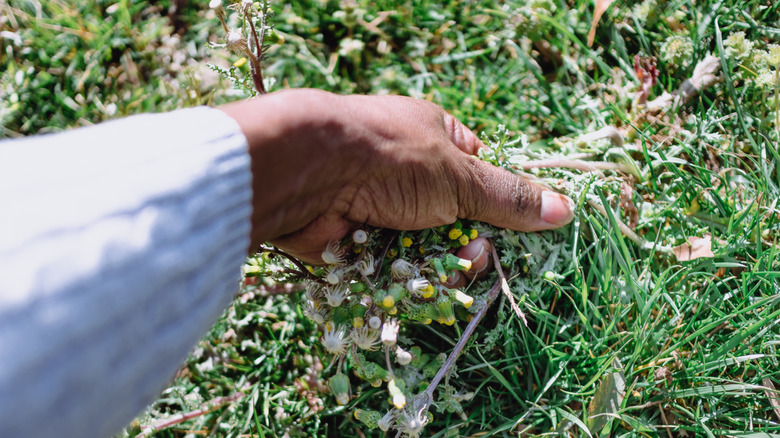
Getting rid of weeds is a constant struggle. Many are durable and stubbornly embedded, so getting rid of them often means removing the plants that you actually want as well. There are all sorts of products, tips, and tricks about weed removal, but some of them are unfortunately misleading and may even harm your garden more than help it. Such is the case with borax. Though this product is a potential solution to get rid of the worst weeds in your garden, it's important to fully understand the risks associated with using it as a weed killer before trying it out.
In theory, it's not a bad idea. Boron, which is a chemical in borax, is a necessary micronutrient for plants. However, too much can damage and potentially kill them. It's a thin line, which makes it hard to add more without causing damage. Interestingly, grass tends to be able to tolerate more boron than plants with broad leaves, so it makes sense that if you use just a bit of borax, it will end up killing broadleaf weeds, but not your lawn.
The problem is that it's unclear exactly how much boron grass can handle. Therefore, it's easy to overdo it in your yard, especially considering boron doesn't break down like most weed killers. If you continue to use it in the same spot, it will build up, creating a dead space where nothing can grow. Strong chemicals like these, even if natural, can pose a danger to your garden and family. For example, you should be very careful about using bleach to control weeds on your grass.
Borax poses quite a bit of danger, but there are alternatives
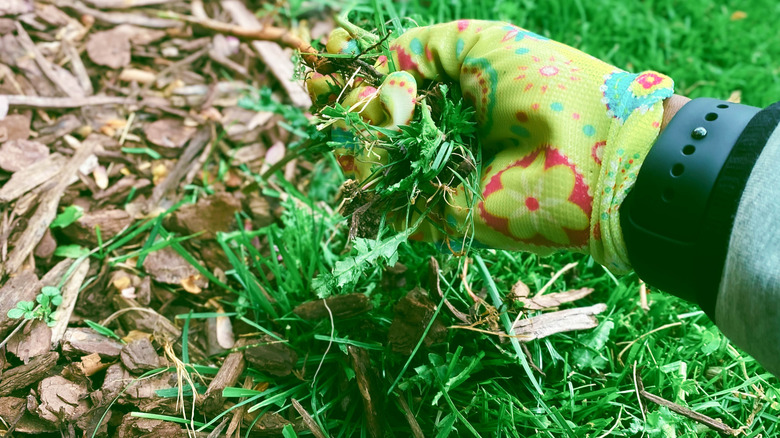
One of the biggest issues with borax is that it can be quite dangerous. According to the EPA, it's considered to have a moderate level of acute toxicity. It's certainly not deadly in small doses, but as it builds up in the soil, it can cause kidney damage and seizures if ingested by pets or children. Even inhalation and skin or eye exposure can cause problems. That doesn't necessarily mean you don't have to use it at all, though. If you are going to continue with this method despite the dangers, it is best to block the area off fully so that children and pets can't get close enough to it to injure themselves.
If you want to xeriscape your lawn, borax can be a good tool to kill off everything in the yard. Some people also suggest diluting it well before pouring it on the lawn. You want roughly 10 ounces of borax for every 2.5 gallons of water. Most people also suggest only applying borax every two to four years, depending on how fast the weeds grow back.
If you decide the borax option might not be for you because of the dangers it poses, there are other solutions. One of the easiest and least dangerous alternatives should prevent weeds from taking over your lawn — deadheading plants. It might not work with every type of weed, but it can help eliminate a large portion of them. Boiling water works well, too, as does rock salt and table salt. Not all weeds are bad, either, such as the American plantain, a common weed you may want to consider leaving in your yard. They aren't always pretty, but some of these common weeds provide nutritional benefits and attract pollinators. Ultimately, the lesser evil is up to you — weeds or borax.