

Unspoken Etiquette Rules To Follow When RV Camping
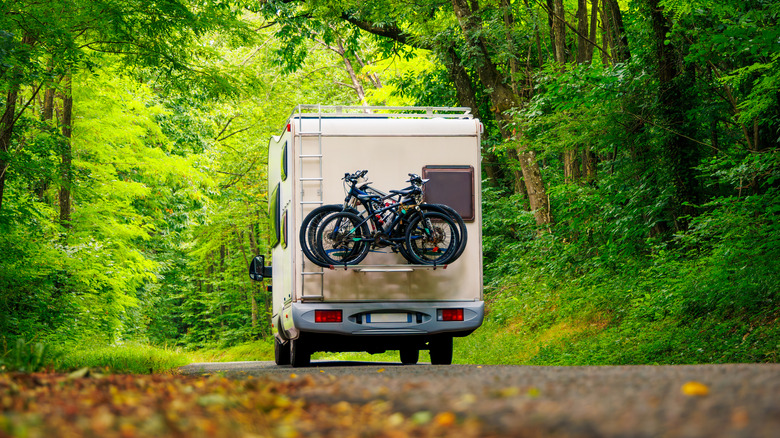
Rolling out on an RV adventure is one of the top ways for outdoorsy people to cultivate loads of happy memories. Whether you're spending the season puttering around your state or you've got a coast-to-coast road trip in mind, the experiences you behold on the open road are often among the best of a lifetime. Not everyone enjoys roughing it in a tent, and glamping at a luxurious spot in a ritzy home on wheels gives you access to all the modern conveniences you could ever want. But just because you've staked out a big rig basecamp in the wilds doesn't mean you should leave your manners behind.
It's just as important to be a good neighbor at an RV park as it is back home, and practicing a little common courtesy will help to ensure everyone has the chance to enjoy a blissful escape. A friendly show of respect and understanding goes a long way in almost every situation you'll encounter where the wild things are, and who knows? When you follow these expert tips, you might even make a few lifelong friends along the way. So, press on to discover our curated list of unspoken etiquette rules when RV camping.
Don't party until the sun comes up
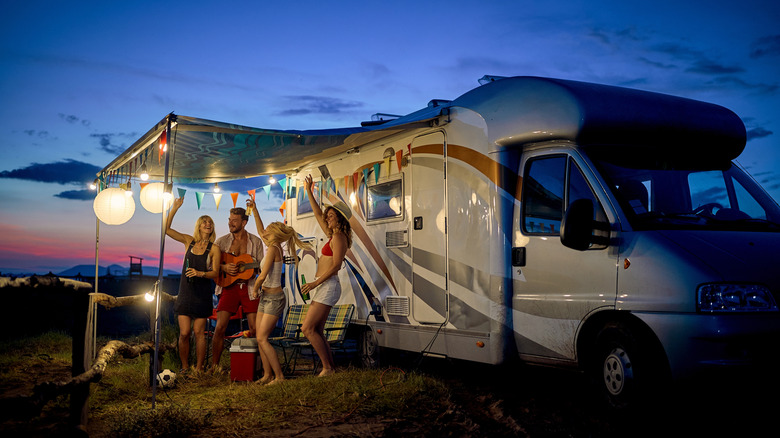
"Party All the Time" by Eddie Murphy is a catchy song, but it's not something you should practice while RV camping. Sleep is important, and sure, most people with a site reservation are on vacation. But for some guests, it's lights out early. Whether they're planning to cast a line at dawn or they have a sleepy toddler in tow, too much of a good thing can be a parkwide problem when noise is a factor. So, practice good etiquette by staying mindful of the campground's rules for quiet time.
If management doesn't specify a precise hour to start winding things down, do your best to pack it up by 10 p.m. Even if it's still light out, rattling everyone's windows with death metal is typically frowned upon, as well. Everyone has their own musical preferences, so especially in this highly communal environment, do your best to err on the side of etiquette and refrain from turning the stereo up to 11.
Beyond getting some shut-eye, you'll also want to monitor your "hoppy hour" intake. It's perfectly acceptable to imbibe a bit while RV camping. In fact, a cooler of beer is a fundamental provision for many campers, and even national parks permit alcohol consumption. Still, it's best to avoid overdoing it. Follow the park's rules and local laws regarding drinking age, open containers, and driving under the influence. Yes, even your ATV and golf cart count as vehicles in this instance, and no one wants to deal with that kind of drama at the campground.
Keep your site clean and tidy
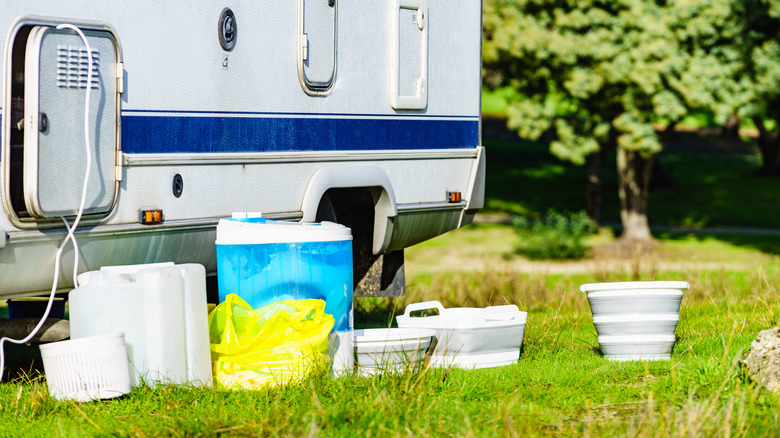
Whether this is your first time RVing or your thousandth, we can all learn a thing or two to make life at camp better, like the importance of keeping your site neat and clean. Maintaining a tidy campsite is another unspoken etiquette rule that some camp hosts don't enforce. Many RVers take this pursuit quite seriously and will set up the most elaborate site, even for a weekend stay. So, when the equivalent of the Beverly Hillbillies characters move in next door, the messy site is probably going to cause a few eyerolls.
There are plenty of essentials that will help keep you organized, from storage tubs to hanging organizers, so you don't have to have indispensable gear scattered across the grass, but the biggest problems happen when trash meets the trailer. A spot with broken glass is hazardous to the next visitor, while crushed up beer and pop cans could damage the park's lawn mower, so make sure to pick up garbage frequently and stow it inside your rig. Open bags of trash can attract critters that you don't want hanging around your campsite. Yellowjackets, raccoons, and even bears are lured in by delicious smells. Depending on what kind of bear it is, it could have a relatively low danger level, or Teddy may be aggressive. Burning trash in the firepit is also a bad idea, as your flaming paper plate could float away and start a forest fire — and who wants to breathe in toxic trash fumes, anyway?
No trespassing. Really. Just don't do it.
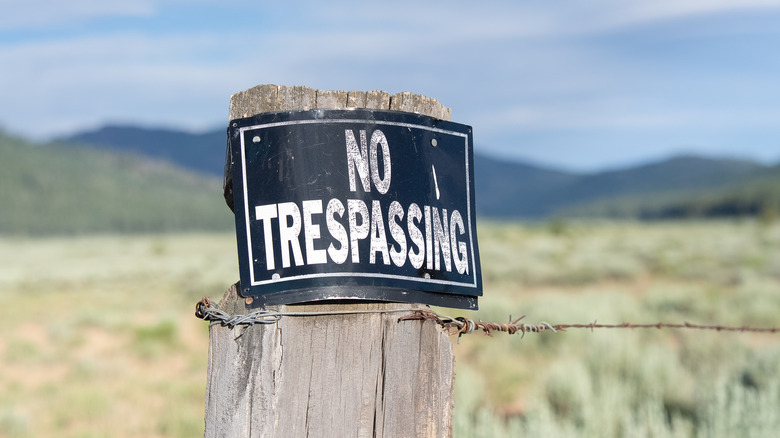
Most RVers take their site's boundaries pretty seriously, and the last thing you want to do is trespass on this sacred ground. Our experienced team of tin can travelers understands your predicament: Your trailer's bathroom is occupied, and the community bathhouse is 100 yards from your site. Those three spots on the end are the only things standing between you and relief. Don't do it. It's probably not worth the backlash you're likely to receive. Campers have tons of personal property strewn around their sites that they're pretty protective of, and traipsing through someone's carefully arranged camp chairs is just bad manners. So, if you wouldn't cut through a resident's yard at home, don't do it here.
An RV campground is designed to house dozens or even hundreds of rigs, and some, like Pleasant Harbor in Arizona, fence in their sites for easy border control. But most hosts don't, especially if you're enjoying a beloved RVing trend: dry camping. Those spots tend to be quite sprawling, but many parks pack the campers in tightly, so just be aware of the obvious boundaries and try to avoid intruding on someone's space out of mutual respect. Always stick to roads and walkways when traversing the campground, even if that means you have a longer walk to wherever you're headed. Teach your kids to do the same, because strolling through someone's site is an effrontery that's often met with grumpy "get off my lawn" comments tossed your way.
Keep your dogs on a leash
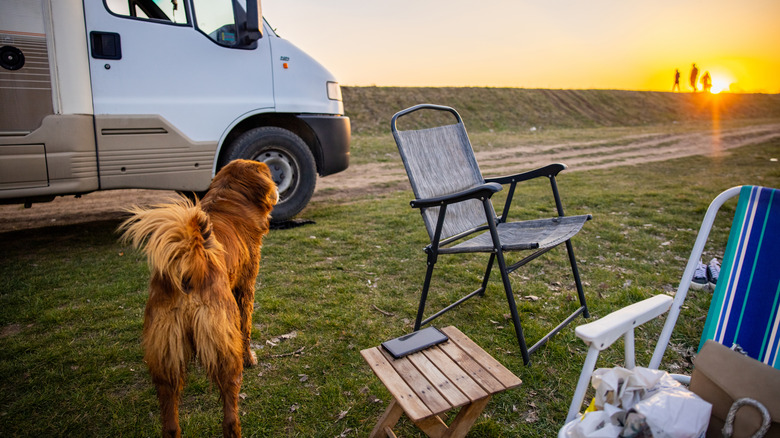
For the most part, RV parks are pet-friendly, and it goes without saying that keeping track of your four-legged friends is essential for their safety — and diplomacy. Always keep Fido on a leash, even when you're sitting nearby. A passing squirrel could instigate a chase into someone else's site, and who knows? Their dog may not be as friendly as yours. Avoid leaving them outside unattended, though. They could get tangled in a tie-out or, if the line is too long, you may just find them mingling with neighbors uninvited.
If your dog has a barking issue or suffers from separation anxiety at home, it might be best for etiquette's sake to leave them with a pet sitter. Many RV campers don't realize that their pups howl for hours while they're out rock climbing, and dogs can make short work out of the inside of your rig. Destruction aside, leaving them behind could lead to a huge safety risk. If the park's power goes out, the temperature inside may rise to unsafe levels quickly. Some states even have laws against leaving your pets unattended inside a parked vehicle, including an RV.
Cleanup is another unspoken etiquette rule, and you can't always rely on the park to provide poop bags, so remember to bring along an adequate supply. You may be wondering — if a bear can poop in the woods, why can't my dog? Nutrient-dense pet food adds chemicals like nitrogen and phosphorus to the soil, disrupting the ecosystem's natural balance. That's why it's essential to dispose of pet waste in the dumpster or other appropriate receptacle.
Supervise your children
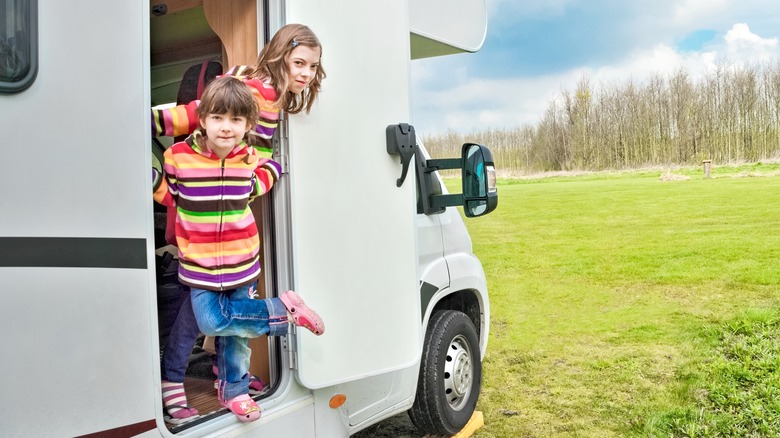
There's no better place to spend your childhood than making happy memories at the campground. It's the ideal place to get a little dirty and scrape some knees, but not without adult supervision. Of course, everyone wants their kids to have a wonderful time RV camping, including the other campers. But beyond the common dangers, like falling in the river or wandering off into the wilderness, a child's innocent antics can be, well, annoying. High-pitched squeals, cutting through sites, and generally disruptive behavior will earn parents a few angry scowls, but is there a magic age for unsupervised fun that falls within unspoken etiquette rules?
Should you allow your kiddos to ride their bikes to the playground or walk down to the neighbor's site for a bit of frolicking? That's a tough question. Exactly how old your child should be before they're ready to treat other guests with courtesy, while fending for themselves, depends on the child. Age-appropriate independence could start when kids are able to remember how to get to your site, know basic stranger danger, and know what to do if they get lost. Some state agencies recommend waiting until children reach the age of 10. By then, they should be able to understand what constitutes good manners and make sound judgments about safety. Ensure a safe and respectful experience for everyone in the family, and reserve a spot near the playground, for example. You'll be able to keep an eye on your little ones from your RV and teach them to follow the rules to the letter.
Turn off your outside lights
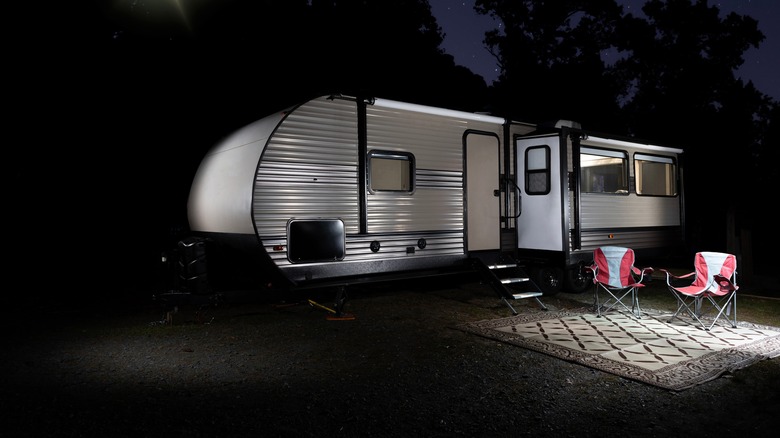
Modern RVs have a wide variety of dazzling lighting options. From blazing flood lights to flashing LEDs, these intense illumination methods can provide aesthetics, convenience, and safety when camping. But do you really need to light up your site like an airplane runway after you head inside for the night? No. Be the beacon of consideration and turn off all of your rig's exterior lights, especially when you're parked in close proximity to others. Even if burning a few bulbs gives you some peace of mind, campgrounds have plenty of lighting to help you find your way through common areas. However, your interior lights are up to you. If having every light in the house aglow makes you feel more secure, do it. Just consider being a good community steward and close your blinds.
Even though that fancy undercarriage light show is attractive, leaving it running until the sun comes up is just rude. Darkness is a welcome show of consideration in the wilderness and an unspoken etiquette rule everyone should follow, because it's essential for producing the sleep hormone melatonin. Few pursuits are better than hanging out under a starry sky. So, avoid being that annoying camper at the park with a thousand moths swarming your rig, and limit your light pollution. Time your lights-out policy with the park's posted guidelines for quiet time, which is usually around 10 p.m. This tip also applies to your vehicle's headlights. If you're heading back to your RV after dark, avoid blasting your neighbors with your high beams.
Treat common areas with respect
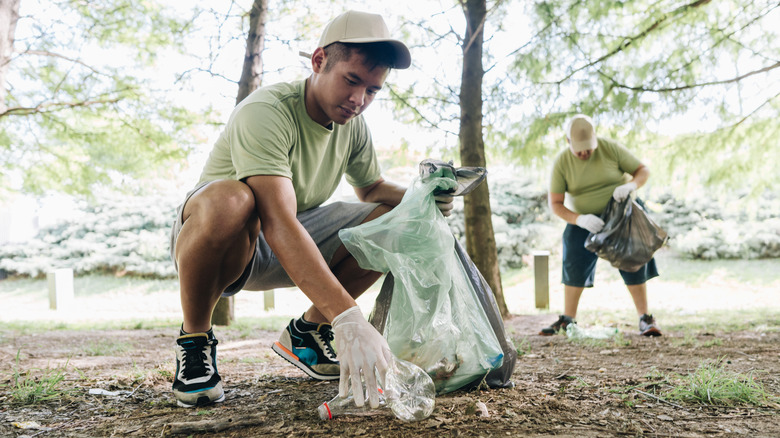
Loads of RV parks out there offer resort-like facilities, with pools, bathhouses, and laundry rooms, but these are the biggest areas where we full-timers see the most disrespect. If you take advantage of communal property, treat it like your own. We all have high expectations when we read the campground's long list of luxurious extras, but when we get to the kayak storage rack and see the life jackets in a dirty disarray on the ground, our eagerly anticipated adventure can quickly turn disheartening.
How guests treat shared spaces matters to the camping community, and some common courtesy goes a long way when you're out RVing. A few minutes of thoughtfulness can prevent bickering over preventable issues, like leaving behind a mess or making the space unusable for others. So, remember to pick up after yourself and your kiddos and avoid practices like washing dishes in the bathroom sink or placing trash in the community fire pit. Practice unspoken etiquette rules and keep a timer for your washer and dryer, so your neighbor isn't waiting on you to do laundry before checking out. Little gestures like these help keep the park and its amenities in good working order for everyone to enjoy.
Dump your tanks in the proper receptacles
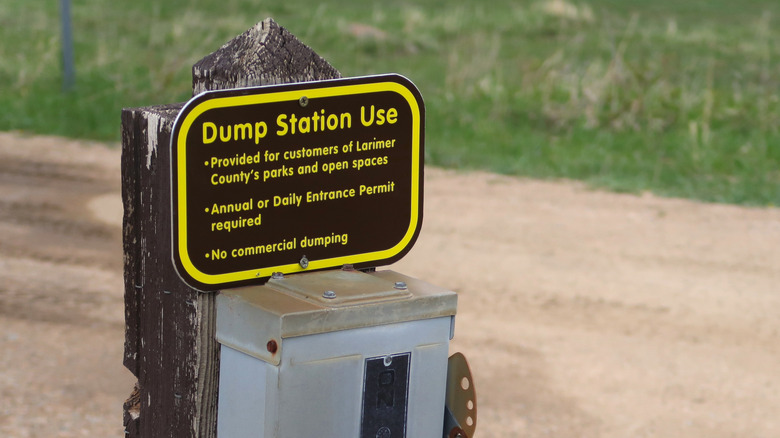
Nothing is more concerning to your RV camping neighbor than seeing fluid leaking from your trailer. Whether you're thinking about dumping your gray tanks in the grass or your black tank hose is leaking, ensuring that you empty liquid waste responsibly is essential to community spirit. While this particularly dirty duty won't put the "glam" in glamping, it's a necessary part of RV camping, and what's in your tanks can be harmful to humans, pets, and the environment.
A proper and polite dump process starts with a durable, leak-proof hose and a secure attachment. The goal is to prevent spillage and ensure a hygienic experience for future campers. If your site has sewer hookups, you're in luck, but if not, you may have to find a designated RV dump station at a truck stop or rest area. If you do use a public dump site, there's typically a water hose nearby. Take a moment to spray down the area, so you don't leave a smelly mess behind for the next rig in line.
Following this universal code of good conduct also transitions nicely to your freshwater tank. If your RV's water pump does a better job of providing pressure than the campground's spigot, you probably want to fill your freshwater tanks on the regular. However, forgetting to monitor the levels often leads to overflowing this tank. Many campgrounds operate on a shared well system, and that 50-gallon pond you just created under your camper could leave adjacent sites high and dry.
Follow the RV campground's rules
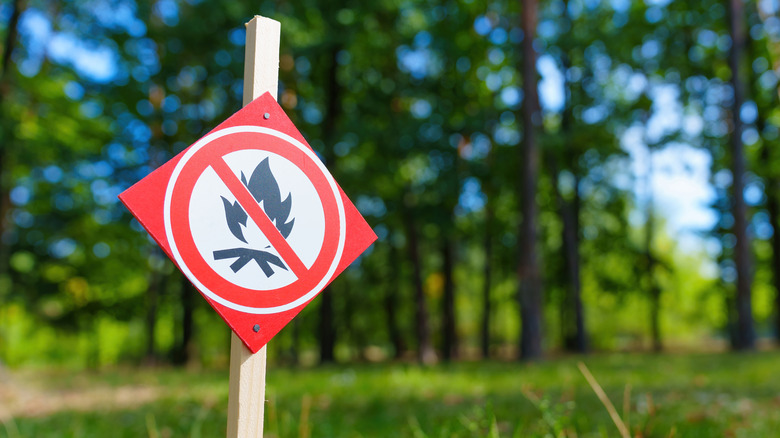
Sure, this etiquette reminder seems pretty obvious, but you'd be surprised how many RV campers are unaware that the park where they booked a week's stay has a long list of rules. Following your host's guidelines helps keep camping safe and fun for your family and everyone else. There are usually plenty of do's and don'ts for just about everything, from hooking up utilities and check out times to "leave no trace" principles. There are quite a few laws you may not know about at U.S. national parks, too, like where you can fly a drone and how fast you can drive. Adhering to these (often written, but unspoken) guidelines will help keep you out of trouble.
Blocking roadways and neighboring sites is a commonly broken rule at RV parks that's heavily frowned upon. If there's not enough room in your spot for your boat trailer, practice good etiquette and move it to the overflow parking lot. It's more than frustrating to other visitors who are trying to navigate around the park's narrow roads when your big F450 Dooley is right in the way. It's also a safety hazard. Don't assume that because the site next to you is empty now, it's a free space to stow all your extra stuff. Chances are good that a new arrival is imminent, and there are strict rules against these kinds of practices.
Respect your neighbor's privacy
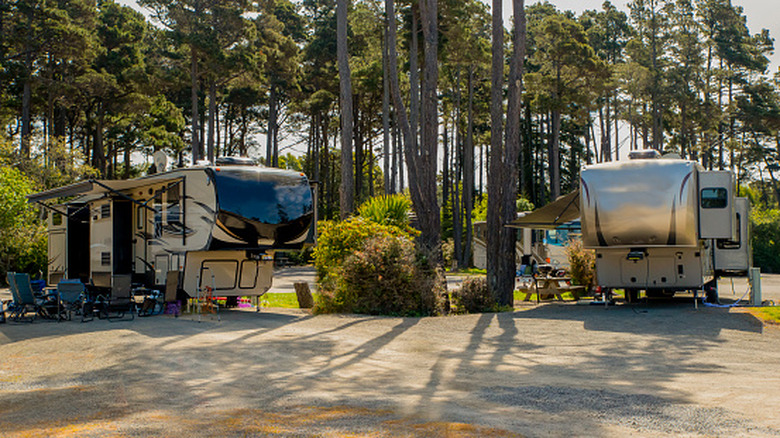
RV campgrounds are a happy place for many outdoorsy folk. After all, they're a hub of social activity, and it's not uncommon to see a large group gathered around someone's campfire. But not everyone is there for a party. Many guests are parked in the wilderness for quiet and solitude, so follow this unspoken etiquette rule and don't make yourself an unwanted pest. Getting a knock on the door is enough to send most RV campers into panic mode, but let's keep this privacy idea going. Imagine being sandwiched between a couple of big Class A's. It can make you feel like your whole camping experience is on display. So, do your best to avoid crowding your neighbors in by lining the boundaries of your site with easy-up tents, grills, and vehicles, too.
Most seasoned RVers want nothing more than to share their hard-earned knowledge with others, and while this seems like a helpful thing to do, it can come across as pushy. Even the simplest intrusion could be viewed as a violation of a camper's privacy, and while some novices appreciate a word to the wise, others learn best by doing it themselves. Providing unsolicited advice may even be dangerous, particularly when a camper is setting up or tearing down. Depending on your rig, the hitching process must be done correctly, and one distracted step could cause a serious safety issue. A friendly wave and a smile may just be neighborly enough.
Don't feed the wildlife

Feeding birds and other wild critters in your own backyard is one thing, but at an RV campground, most guests have a dim view on the practice. One neighbor may love feeding the ducks, but ugh. Stepping in duck poop on your entry mat isn't the best way to start your day. Irritating other guests isn't your only concern, though. The U.S. Fish and Wildlife Service strongly recommends against the practice, because intentionally feeding wild animals could be harmful to their health — packaged foods don't usually meet their nutritional needs. Animals like deer may also become accustomed to mealtimes, and this behavior may develop into a real nuisance for the next folks who book your site.
Underestimating the presence of wildlife could put your campsite in danger. An innocent bird feeder could lure in an invasion, and not just of nuthatches or juncos. You may also motivate a few other forest creatures to investigate your site that could be more than merely a nuisance, like bears. It's best to enjoy wildlife from a distance while RV camping. Make sure to dispose of trash properly in designated receptacles and stow food sources inside your rig, so you don't accidentally leave out an irresistible meal. These unspoken etiquette rules to follow with respect to wildlife help foster a deeper connection with nature far more than a few free handouts.