

Need To Mow Your Lawn After A Frost? Here's How To Do It Right
We may receive a commission on purchases made from links.
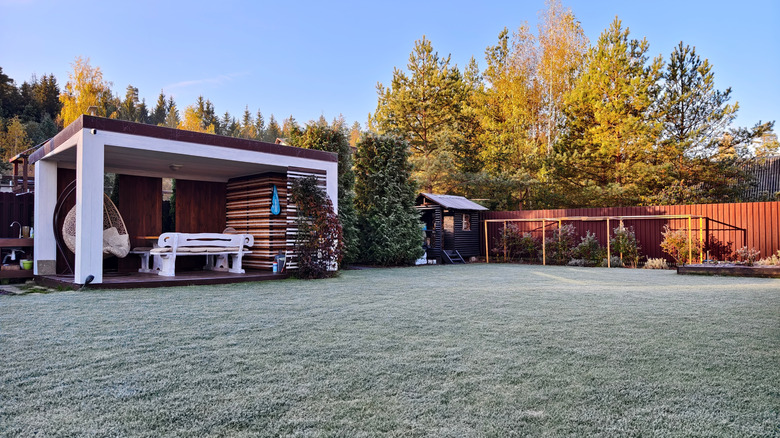
Typically, the first frost of the year is a sign it's time to stop mowing your lawn until spring. Most experts agree that you should mow your lawn for a final time before the cold weather sets in and you prepare your mower for winter storage. However, there are times when a frost moves through before you've had a chance to prep your lawn for winter. There are also times when your grass may not go dormant and will continue to grow after the first frost. This is particularly true in years when mild winter weather is forecasted. In either case, if you find yourself needing to mow your lawn after a frost, you can harm or even ruin your lawn if you don't do it right.
The biggest mistake to avoid when mowing following a frost is mowing while a layer of frost is still on the lawn. In fact, it's best to avoid even walking on it if possible, as any pressure placed on the frozen moisture in the grass blades and roots can cause serious damage. Instead, it is best to wait until the temperature has risen enough to defrost the grass and the soil. You should also wait until the sun has evaporated the moisture left behind by the melting frost. This typically means mowing during the midday hours. Additionally, you need to make sure your mower blades are sharp and you're following the one-third rule when mowing.
Prepping your lawn for the first frost
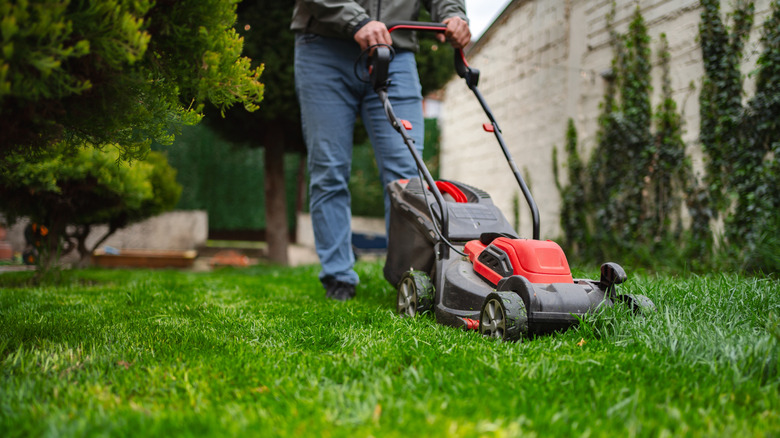
Just as important as mowing correctly after first frost is making sure your lawn is properly prepared before the first frost. One of the best things you can do is adjust the height of your mower blades in preparation for winter. Cool season grasses should be cut slightly shorter than usual, while warm season grasses can be allowed to grow a little taller. You should also continue to water your lawn. This will not only ensure you grass has the water it needs, but will also keep the soil moist, which helps it to retain heat.
Before the first frost arrives, it is also a good idea to dethatch, aerate your lawn, and utilize a winter fertilizer such as Scott's Turf Builder WinterGuard Fall Fertilizer. As fall leaves begin to fall, it is necessary to remove them from the lawn, as during winter a layer of leaves can promote fungus growth and disease on dormant lawns. The same is true for grass clippings, which should be finely mulched if they are left to be left on your lawn. Follow these steps and mowing after the first frost will go very smoothly.