

Why The Rear Wheels On Your Walk-Behind Lawn Mower Are So Large
We may receive a commission on purchases made from links.
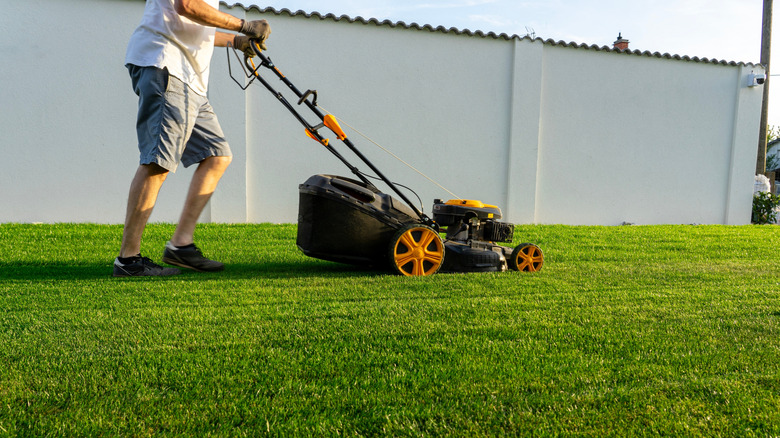
If it's been a good while since you've purchased a lawn mower, you may be surprised to find that the wheels look a bit different. Rather than four little hard, old-school wheels, most reliable walk-behind mowers worth considering feature rear wheels that are larger — sometimes much larger — than their forward counterparts. If that trusty, old Toro or Cub Cadet is starting to falter and you're seeing signs that your mower needs to be replaced, it's worth knowing why modern lawn mowers look more like off-road vehicles, and just why those big rear wheels are important. It turns out that this design serves an important engineering purpose: The goal is to make it easier to handle the mower over hills and uneven terrain, and to make the machine easier to push and navigate.
Rear wheel sizes on push mowers generally range from 8 to 12 inches in diameter or more, while the front wheels are usually 8 inches. Larger-diameter rear wheels are most common on walk-behind or push mowers, and defined as high-wheel. The opposite — low-wheel models — are used most commonly on robo-mowers and some self-propelled models. But low-wheel walk-behinds still exist, and they have their fans. For one thing, they tend to be a bit cheaper. But why exactly do larger wheels work best on non-self-propelled mowers?
Larger rear wheels are designed for traction and terrain
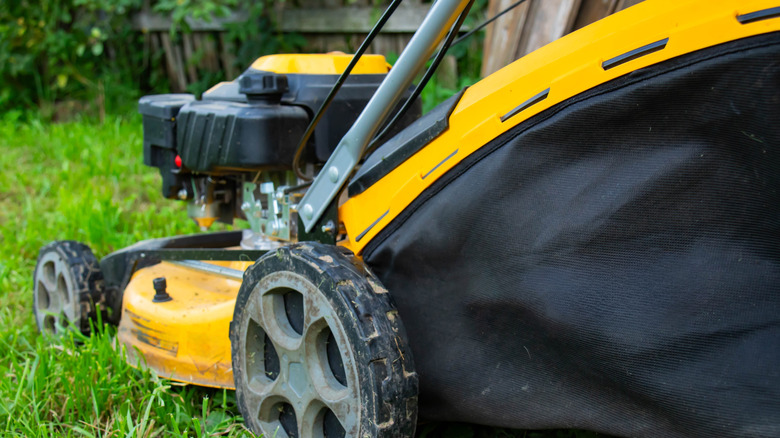
Larger wheels provide better traction in general, even on flat terrain. They also help the mower up hills and even find grip on wet grass. Most companies and some fans say the larger rear wheels help with maneuverability and give extra torque to the angled handle, much like a high-end baby carriage or stroller. They can provide clearance over rough terrain and potholes. When a small wheel runs over a hole or rut, it can get trapped or jolt and jump, potentially impacting your clean lines. The larger wheels ride right over these irregularities.
There are skeptics who say that the high-wheel design isn't all it's cracked up to be. Consumer Reports notes that high-wheel models tend to have motors closer to the of their deck, which can make it harder to tip back and turn the mower. Some feel the larger wheels also receive more stress and can wobble or suffer axle damage more often. You should still keep high-wheels in mind, but also look out for some other features while searching for the best lawn mower to handle a hilly yard. For instance, self-propelled mowers are often recommended for hilly terrain as they have more thrust and extra weight (though that can turn into a negative when grass is wet and slick).
Regardless of which wheel bases you opt for, at some point you're going to need to change the wheels. Whether they're pneumatic or hard rubber, wheels wear out, break, or go flat. So it becomes imperative to know how and when to replace your lawn mower wheels. When it's time check out tires like the AR-Pro 2-pack 8-inch replacement wheels, or the other products at the AR-Pro store.