

How To Grow And Care For The Red Apple Trees In Your Yard
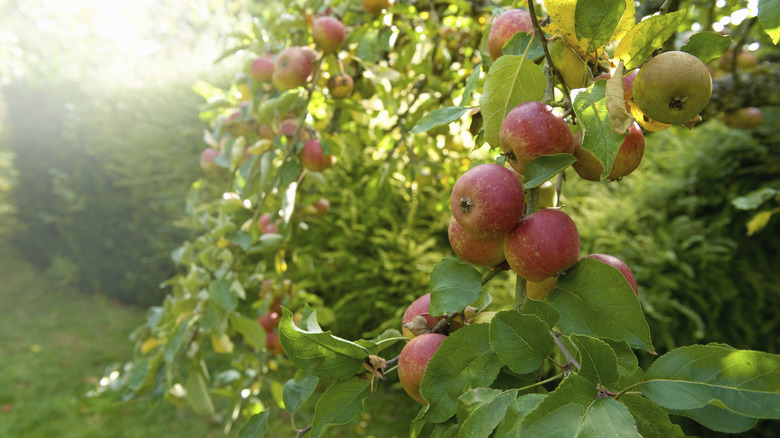
There are numerous reasons why growing red apple trees in your yard is a good idea. They are strikingly beautiful to look at in the spring, when the fruit buds blossom, as well as in the late summer and fall, when the buds give way to shining red fruit. Red apples are also packed with nutrients like carbohydrates, fiber, and natural sugars. If you've ever thought about growing red apple trees in your backyard, you'll need to know how to successfully grow and care for them.
The most important thing you need to do is to choose a tree that is right for your USDA hardiness zone. Thankfully, there are many varieties of red apples available that can be grown in a range of different climates. These include familiar varieties such as Honeycrisp, Gala, and Red Delicious, and some lesser-known (but no less flavorful) ones like Sweet Sixteen and Black Oxford.
The reason you want to do this research first is so you don't waste time growing a tree that isn't right for your climate — this is one of the biggest mistakes beginner gardeners make. Apple trees take an average of seven to 10 years to bear fruit; don't lose out on that time by choosing the wrong variety. Thankfully, almost all local orchards and nurseries should sell trees that will grow well in your area.
How to plant red apple trees
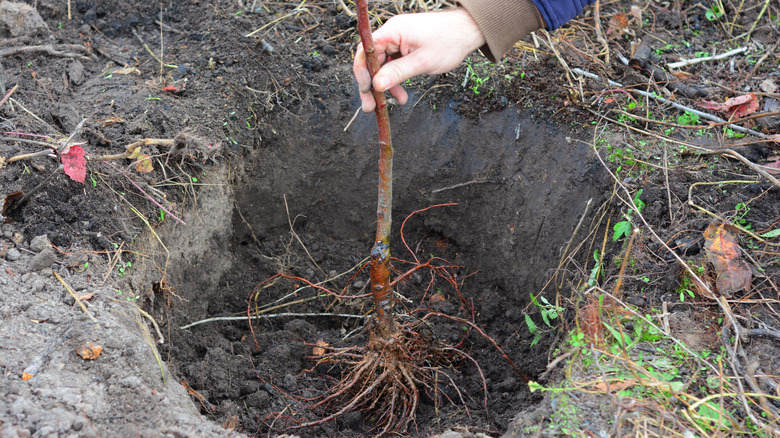
Once you've chosen your apple trees, you need to come up with a plan for planting them. Pick a location in your yard with well-drained soil that gets at least eight hours of daily sunlight. If you can, make sure that the spot also has good air circulation, as this is essential for growth. Always plant two or more apple trees at a time, as they require cross-pollination in order to grow.
Once you've decided on your spot, space your trees accordingly: 25 feet apart for standard trees, 15 feet for semi-dwarfs, and 6 to 8 feet for dwarfs. If you're limited on space, consider planting dwarf varieties in containers. For planting in the ground, dig a hole at least twice as wide and just as deep as the root ball. Spread the roots in the hole, backfill it with soil, lightly compress the ground, and water well.
After the tree is planted, you'll need to wait up to two years for the roots to establish. During this time, fertilize it with plenty of organic matter, such as compost, and add some good mulch to retain moisture and suppress weeds. Planting beneficial companions, like the beautiful and highly nutritious comfrey leaf, will also aid the overall health of your red apple trees.
Why you should prune your red apple trees
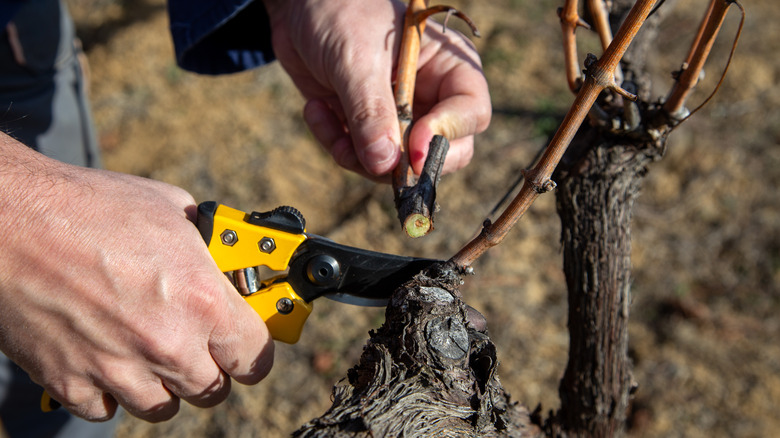
Pruning is an essential fruit tree maintenance task, but it can be rather difficult for beginner orchard keepers to wrap their heads around. Pruning is the act of removing crossing, diseased, or dead growth on the apple tree to keep it open to sunlight. You will need to prune annually, beginning during the tree's youth, as the early years are critical for its training and shaping. There are several different methods you can research and try, but always make sure to prune them when they are dormant, in the late winter or early spring.
Pruning is highly beneficial to the health of every apple tree. It reduces the size of the tree itself, which makes it easier to manage and harvest. It also improves its structural strength, which reduces the need for outside aids, like stakes, to prop up fruit-bearing branches. Above all, pruning actually increases the overall fruit yield.
One final note is that apples have a tendency to attract pests such as aphids and apple maggots, and they're susceptible to diseases like scab and black rot. There are numerous ways to deal with these, with both organic and chemical sprays being popular solutions. Another way you can do this is by thrashing, a straightforward method of pest control that involves physically knocking the pests off your tree. This has the benefit of reducing the amount of spray on your apples, keeping them purer for harvest time.