

Say Goodbye To Weeds With A Clever Natural Solution
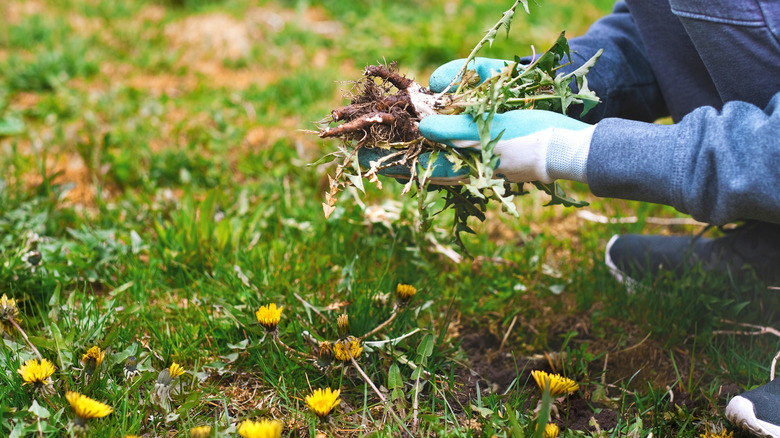
If you're a homeowner, gardener, or professional landscaper, you've likely fought off your fair share of weeds. Invasive weeds can be one of the most frustrating elements of lawn care and garden maintenance, as they hog all the important nutrients from your gorgeous plants, and smother your hard work with their unappealing tendrils. Pulling them can be back-breaking, herbicide can kill your flowers, and letting the weeds reclaim the land is simply not an option. Luckily, there are a few trustworthy life hacks floating around that will help you banish weeds from your yard. One such solution involves a material that might already be littering your lawn: pine needles. These slender little leaves can be used for much more than giving Christmas trees their appealing texture and scent, and actually have a super helpful application in your garden. With a bit of ingenuity and some heavy raking, you could be well on your way to defeating weeds for good.
The pine needle method, also known as pine straw, is not just an effective weed killer, but all-natural as well. It simply involves bunching up a thick layer of fallen pine needles as the best mulch for your garden, deploying them around flowerbeds or walkways in order to suppress weeds, and supporting your desired plants without harmful chemicals. It should be noted that dried pine needles make great kindling, so you might want to reconsider this mulching method next to your house, or if you live in an area where wildfires are common.
How to employ pine needles as a natural mulch
For the most part, adding pine straw to your garden or walkway is as simple as it sounds. Gather up a bunch of fallen pine needles from beneath trees, and spread them as ground cover wherever weeds are found. Still, there are a few details to this process that shouldn't be ignored. While it isn't a requirement to completely clear the area, getting rid of the existing weeds before layering your mulch helps prevent weeds from pushing right through to the top, or smothering your plants' roots before the weeds die off. You'll also want to make sure you've got a lot of pine straw. Collect more than you think you need. For the best outcome, layer 2 to 4 inches of pine mulch on top of your weeded area, ensuring that no sunlight can breach the soil. Be sure to leave a gap of a few inches around any nearby plants and trees, so their trunks, stems, and roots can breathe and continue to soak up the sunlight.
Once your layer of mulch is down, the pine needles will enrich the soil, helping it retain moisture and benefiting nearby plants. The interlocking straw will snuff out weeds by preventing them from getting air or sunlight. This method is eco-friendly and free. Pine needles can take years to fully break down, so this mulching method won't require constant upkeep. Of course, if your mulch is being walked on frequently, or you're just trying to keep everything refreshed often, you can always add a new layer every few months.