

How To Protect Your Lawn From Frost

We may receive a commission on purchases made from links.
Winter can be hard on your lawn. Regardless of what the winter weather forecast predicts throughout the season, frost can cause problems for both warm- and cold-season grasses. So, just as you need to take care of late-season vegetables and protect the trees in your yard from frost, you also need to take the necessary steps to ensure the well-being of your grass. The most effective methods involve taking action before winter even arrives, as well as once the cold weather settles in.
Regardless of what you may or may not have done prior to winter weather setting in, when frost conditions occur, take some precautions to preserve your lawn. If a frost or freeze is predicted, thoroughly water your lawn prior to its arrival. The moisture from the soil will evaporate through the grass blades even as the temperature drops. This process helps the grass maintain its warmth. Should your grass end up frosted or frozen, do not walk or drive vehicles on it. This can severely damage your grass, even if it is in a dormant state. If you or your pets must walk across a frost-covered lawn, first melt the frost and ice with water from a garden hose.
Depending on the size of your yard, it's also possible to cover it prior to the frost. This is particularly beneficial for recently seeded grass. Bedsheets or frost covers are the best options. Plastic, which is prone to freezing, isn't ideal and increases the risk of damage to grass. If you do cover your grass, uncover it once the sun comes out.
Steps to take to protect your lawn before the first frost
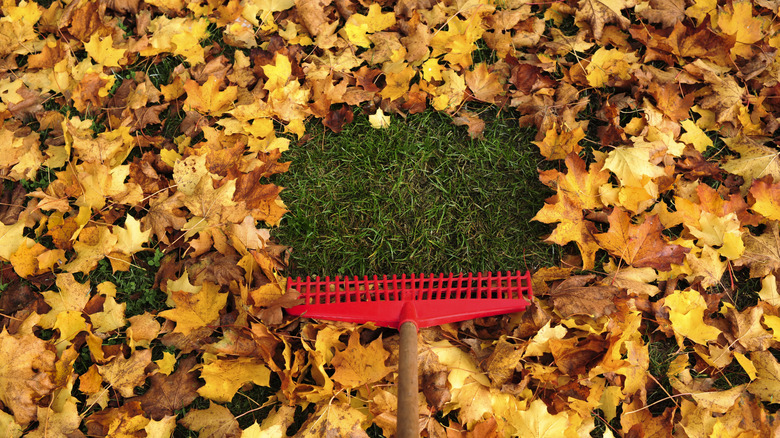
As soon as leaves begin to fall in autumn, begin picking them up. While it may seem like a layer of leaves will insulate your grass and protect it from frost, it actually makes it more difficult on the grass to survive. This is because it blocks both sun and airflow, each of which is necessary to keep your grass healthy. In addition to aiding your lawn's chances for weathering the winter, this also allows you to transform fall leaves into fuel for your garden by composting them or using them as mulch.
Fall is also the best time of year to aerate and fertilize your lawn. Choose the proper type of fertilizer for the grass variety in your yard and follow the instructions on the label. A broadcast spreader, like the Scott's EdgeGuard DLK Broadcast Spreader, can ensure even distribution throughout your lawn. You should also continue to water your lawn through fall and winter to make sure it stays properly hydrated, which will protect it not only from frost, but also from desiccation — which is essentially windburn caused by the strong winds and dry air of winter.
Before preparing your lawn mower for winter storage, give your grass a final cut. If you have cool-season grass in your lawn, cut it a bit shorter. This will allow more sunlight to hit the grass, which will protect it from damaging winter conditions such as snow mold. On the other hand, if your lawn is filled with a warm-season grass, it should be cut at the normal height or even slightly higher.