

These Outdoor Succulents Can Withstand Extreme Winter
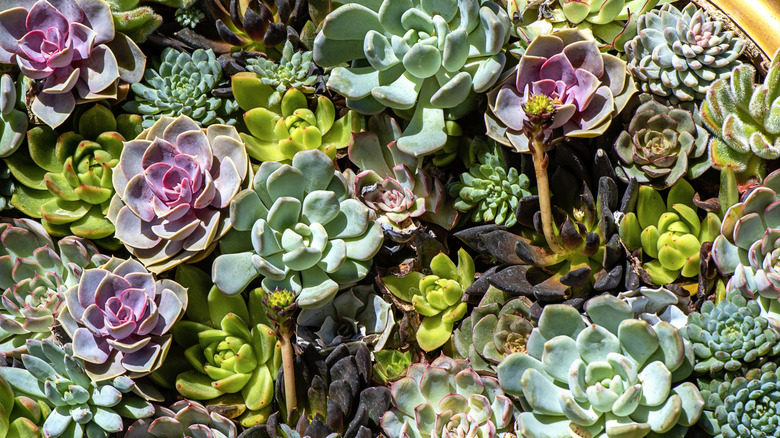
When you think of succulents like cacti and agave, do you imagine open expanses of dry desert, whispering tumbleweeds, and the foreboding screech of hawks? If so, it's probably because most succulents are, by nature, perfectly suited to such harsh environments. They prefer extensive exposure to sunlight, and generally don't mind one bit if they go days, or even weeks, without rain. But that doesn't mean that they can't put up a fight against the cold.
Every succulent has slightly different needs, ranging from the fertility of the soil they thrive in to their need for shelter from the wind. And while most tend to fare badly against overwatering or heavy, cloying soil, there are some that are surprisingly hardy in the winter. In fact, there are succulents that can withstand wintry lows as extreme as -30°Fahrenheit or more. Sure, neither you nor your plants are likely to spend much time outside in such harsh temperatures, but it's at least reassuring to know that there is, after all, something that will grow when nothing else seems to want to ("sempervivum," a genus which shows up a lot below, means "always alive").
The trick to discerning exactly which succulent you should grow in your area is to first find out how hardy your favored plant is. How much winter wet can it withstand? And if you experience particularly bitter winters, how low for your chosen succulent is too low? Armed with this information, you'll be surprised by just how many succulents are up to the task of coping with the worst extremes of winter. You can also combine several of the plants on this list to create a conversation-worthy DIY succulent ball in your garden.
Job's beard (Sempervivum heuffelii)
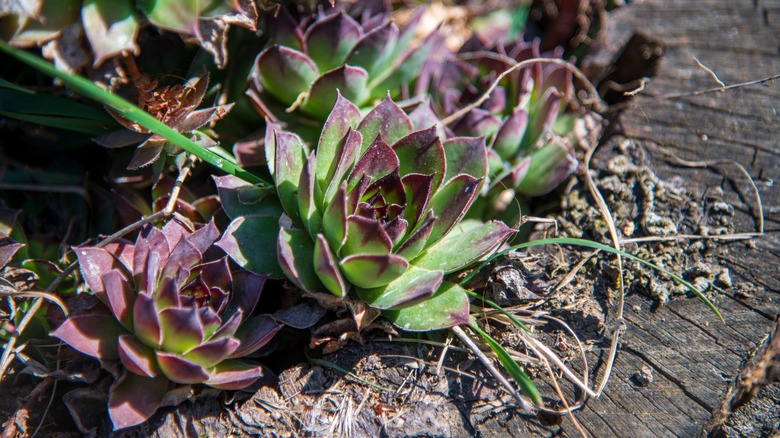
Getting its common name from the sempervivum family's ancient association with the Roman god of Jupiter, this small, compact, Carpathian mountains succulent is distinguished by its rosettes of deep green leaves. These often display brown or strawberry-red-toned tips, and have fuzzy-looking (but almost needle-like) cilia that tend to shimmer in the sunlight. In other words, they're beautiful, especially in the summer, when those reddish tints spread and dominate the leaves.
Best planted in spots with full sunlight and extremely well-draining soil, these succulents are also very winter hardy. In fact, they can withstand winter lows as low as -30°F, making them ideal for hardiness zones 4 to 9. The only real issue you're likely to encounter is excess moisture, particularly in climates with wetter winters.
Given its temperature tolerance, in most cases the cold won't bother it. In fact, these plants actually enjoy a good blanket of snow. Just know that particularly wet winter conditions are not conducive to sustained, healthy growth. While generally considered tough to kill, overwatering Job's beard (Sempervivum heuffelii) can lead to ailments like root rot. So, if you experience damp winters, consider wintering your plant indoors or inside an unheated greenhouse, away from the worst of the rain.
Chinese dunce cap (Orostachys iwarenge)
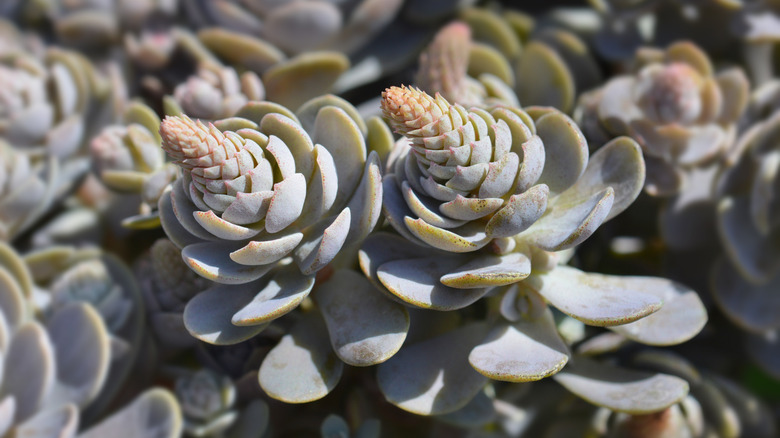
This succulent's name should give you an idea of what to expect. Looking rather more like the Hogwarts Sorting Hat than they do a typical succulent, Chinese dunce caps (Orostachys iwarenge) grow up to two inches tall, with rosettes of beautiful, lavender-grey leaves. They flower with tiny yellow blooms on spikes that shoot up to 6 inches, and while this floral display signals the end of the parent's life, it's actually something of a bittersweet moment. These succulents offset younger plants before they flower, which quickly root themselves and begin the cycle anew.
These plants will grow in hardiness zones 4 to 8, withstanding frigid temperatures as low as -30°F. They're best planted in spots with full sun, compost amendments for slow-release nutrients, and freely-draining soil. The latter is of the utmost importance, especially if you experience substantial wet weather in the colder months. Chinese dunce caps are prone to suffer from root rot if allowed to sit in overly wet conditions, so planting them in a spot that's sheltered from the worst of the rain, or cutting back on watering, is key. If you're unable to do this, consider removing your plant from the ground ahead of the wetter months and wintering it indoors.
Eastern prickly pear cactus (Opuntia humifusa)
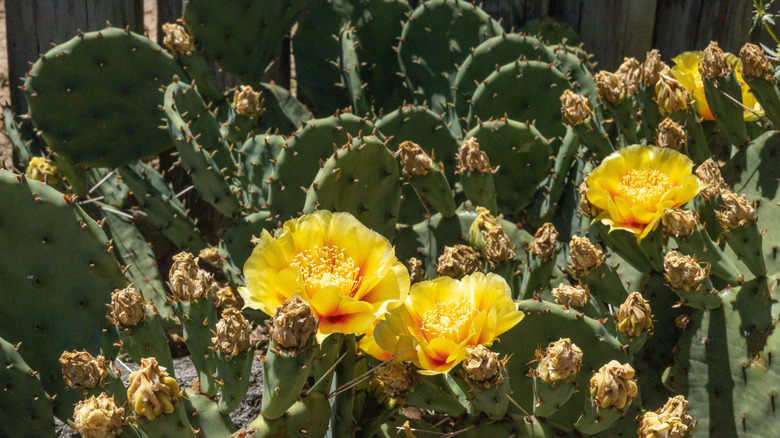
With such a descriptive name, it's easy to picture what this succulent will bring to your rockery or garden. Blooming with large, sunny-yellow flowers up to four inches in size, the eastern prickly pear cactus (Opuntia humifusa) grows with flat, but juicy pear-shaped leaves, covered in sharp, orange spines. In fact, it'd be surprising if you didn't already know what these look like, since they are one of the most common cacti species in the United States.
What you may not know, is that eastern prickly cacti are some of the easiest, most fuss-free plants for gardening beginners. Provided that you live in hardiness zones 4 to 9, not only will they grow easily, but you'll find they can withstand extreme temperatures as low as -22°F. Prickly pear cacti can also attract hummingbirds to your yard, who are attracted to the fruits this plant produces in late summer. Humans can eat them too (the fruits, that is) and while they're known as "tunas," their taste is far from fishy. They're actually quite sweet and juicy.
Plant your eastern prickly pear cactus in light, well-draining sandy or rocky soil, and aim for a spot that gives it full sun. In the winter, you'll probably notice that your plant appears to wither or die back, but don't worry. This is a natural part of its seasonal cycle, and provided that your winter is relatively dry, it'll bounce back just fine in the spring and summer. The only time you may need to intervene is in particularly wet conditions. If you can't guarantee extremely good drainage, then it's best to winter it indoors.
Sempervivum red lion (Sempervivum 'red lion')
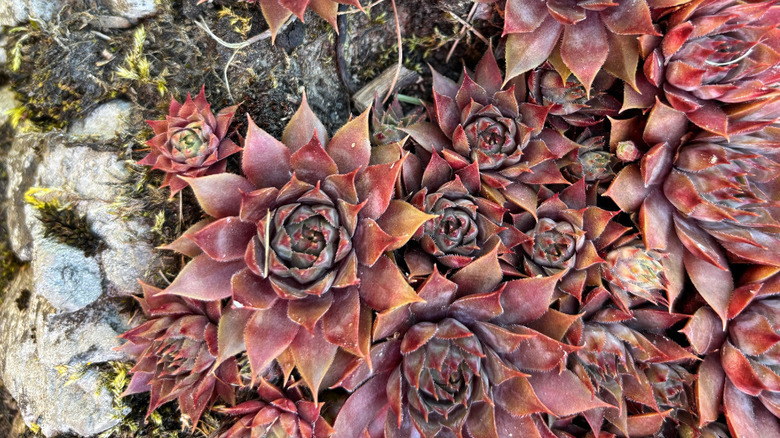
With a rosette shape and a color palette that's about as reminiscent of a lion's mane as a plant is likely to get, there's really no doubt what earns this plant its name. Sempervivum red lion (Sempervivum 'red lion') rosettes are deep red in the center, with leaves growing out from the mother set that eventually fade to sunburst orange.
This hardy succulent will grow happily in zones 5 to 10, withstanding harsh winter temperatures as low as -19°F. As for where to plant it, try to give it a home with either full sun or only partial shade, and ensure that it's rooted in a gritty, well-drained soil blend of sand, soil, and perlite.
Thick winter snow is unlikely to perturb this pretty succulent, in fact, the winter snow will actually work to insulate it. If you need to water them, mimic desert conditions by watering deeply, then letting the soil dry out before watering again. What it doesn't like — as can probably guess by now — is lots of rainfall. If you can protect your red lion with a sheltered spot away from the worst of the rain, then it should be okay. If not, consider allowing it to see out the winter either indoors or in an unheated greenhouse.
Dragon's blood sedum (Sedum spurium 'dragon's blood')
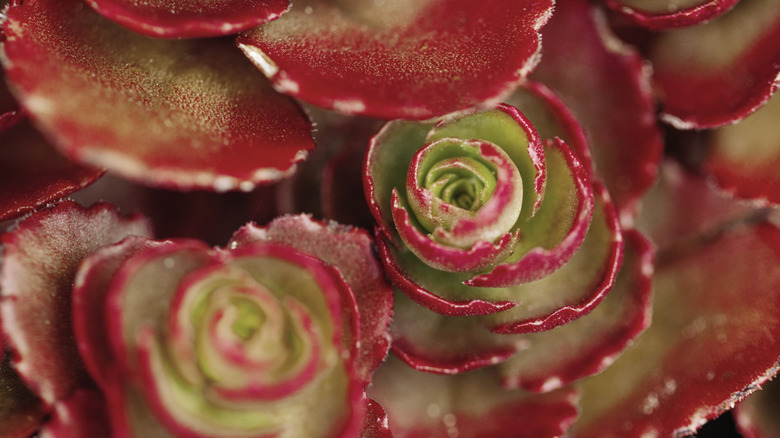
With its fleshy, bright green leaves that feature burgundy tips and edges, this gorgeous succulent is thought to be named for the deep, blood-like hue that spreads through the leaves in the colder months. The leaves change color throughout the year, which is a key draw for gardeners hoping to diversify their planting schemes with the minimal number of plants. During the summer, it also flowers with small, star-shaped, ruby-colored blooms, adding to its overall appeal.
Dragon's blood sedum (Sedum spurium 'dragon's blood') is a mat-forming plant, and is often planted as a ground covering addition to rocky gardens. It grows best in hardiness zones 4 to 9, and if you're concerned about its tolerance for low temperatures, don't be. Provided that it's planted in full sun with well-drained soil, it'll manage just fine, even if your area drops as low as -40°F!
Like other succulents on this list, dragon's blood sedum doesn't stand up well to too much water. In other words, if it's left in the ground during wet winters, and its substrate is unable to drain away sufficient amounts of rainfall, then it's worth wintering your succulent indoors.
Houseleek mahogany (Sempervivum 'mahogany')
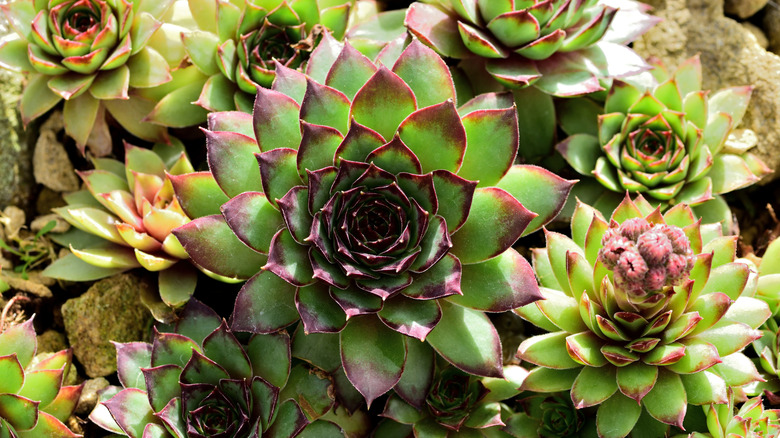
This evergreen succulent, often known as hen and chicks, is superb for gardeners wanting to add a multicolored display to their rockeries or potted gardens. With a rosette shape and a color palette of green and deep mahogany (hence the name), houseleek mahogany's (Sempervivum 'mahogany') leafy stems bring further color to your planting scheme with delicate, pink flowers.
As one of the more versatile succulents on this list, the mahogany houseleek will do just fine anywhere in zones 3 to 11. It'll also cope with temperatures as low as -35°F, and will thrive provided it's given a spot with moderately-fertile, well-drained soil and full sun.
Houseleeks are generally extremely tolerant of drought, which means that, even in the summer, watering is largely unnecessary for those planted in your garden. Come winter, you won't have to worry about low temperatures, but you should be wary in areas whose winters are overly wet. Houseleeks dislike wet winter conditions so, unless you can guarantee your houseleek soil that's extremely well drained, you might be better off moving it indoors until spring.
Blue tears sedum (Sedum dasyphyllum 'Major')
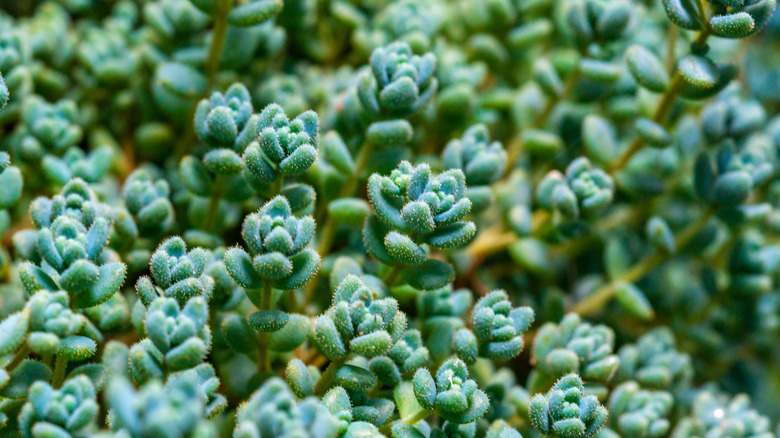
Named for its tight clusters of fleshy, blue-green, teardrop-shaped leaves, Blue tears (Sedum dasyphyllum 'Major') belongs to the family of succulents otherwise known as stonecrops. Named so because they thrive in barren, stony environments where other plants simply don't stand a chance, it's easy to plant a low-maintenance garden with stonecrops. And given the right conditions, this beautiful succulent will quickly carpet an area, bringing hues of lavender leaves and gorgeous, white star-shaped flowers at the beginning of summer.
To determine whether this popular sedum will work as ground cover in your garden, check which hardiness zone you're in. Blue tears sedum is best grown in hardiness zones 7 to 10, where it can withstand temperatures as low as 0°F. Before you go ahead and plant it, it's important when planting sedum ground covers to provide them with poor-quality soil, lots of rock, and a spot with full sun. Finally, while these plants require very little in the way of maintenance, they won't remain happy for long if exposed to too much water. Too much winter wet can lead to root rot, so it's important that you plant this succulent in extremely well-drained soil. If you experience lots of winter rain, then consider bringing your plant indoors until spring.
Houseleek (Sempervivum calcareum)
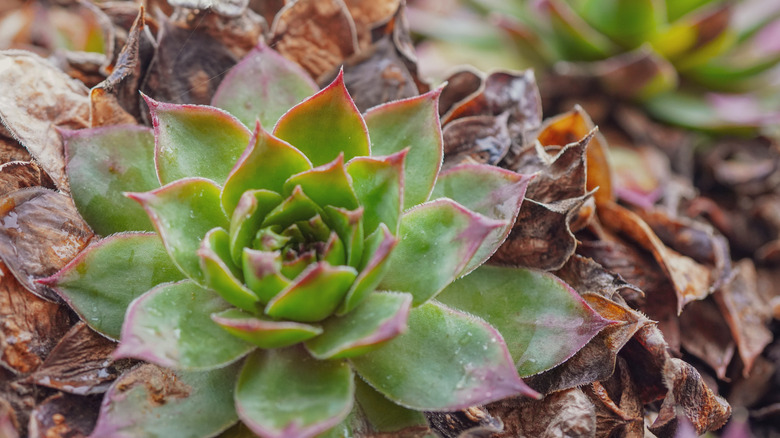
This particular plant grows up to about 1½ feet in height and forms dense mats of green, juicy, red-tipped leaves clustered on 4-inch rosettes. They're stunning to behold, especially when the plant reaches its full, mature size. In fact, the foliage is really the star of the show, but it's also nice to know that it will eventually flower with a gorgeous pink bloom. Known as a death bloom, this final flourish is always a bittersweet moment. It means the end of life for the mother plant, however, it only happens once the succulent has reached a point where it can reproduce. In other words, while you lose one plant, you gain several new ones.
This cycle will continue perpetually, provided you give your plant the right conditions. They thrive in hardiness zones 5 to 8, which means that winter cold isn't an issue. In fact, housleeks (Sempervivum calcareum) can tolerate frigid temperatures as low as -20°F. They also appreciate moderately-fertile soil and a spot with lots of sun.
Like with other succulents in this guide, it's important to avoid exposing your plant to excess moisture. While it's extremely tolerant of drought, it is far less likely to put up with lots of water. If you experience wet winters, you should look for a spot that affords your plant the above conditions while sheltering it from the worst of the rain. And if you can't, consider wintering it indoors.
Gold moss stonecrop (Sedum acre)
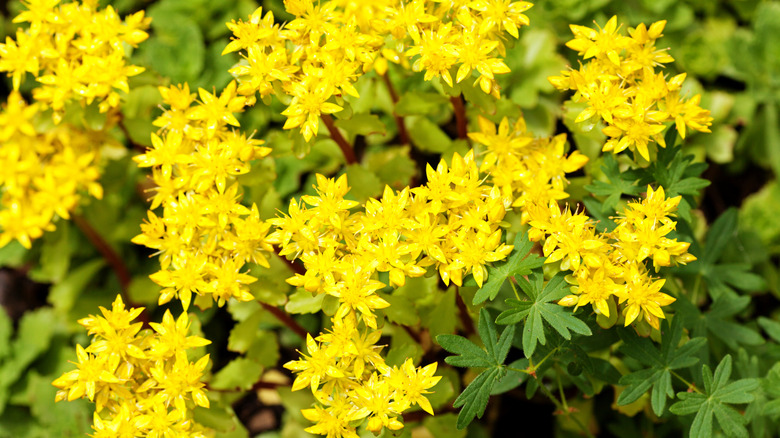
If you want to bring the color of sunshine to your rockery, then golden moss stonecrop (Sedum acre) is a superb choice. With lush, fleshy green mats of leaves, this perennial blooms in the summer with glorious, star-shaped yellow flowers. And unlike succulents from the sempervivum family, blooms do not spell doom. In fact, you can expect to enjoy these same flushes of color from the same plant for years and years to come.
And you will, provided that you live in hardiness zones 3 to 8. This plant can withstand winter lows of down to -30°F, and as long as it's given a spot with well-drained soil and full sun, it's sure to thrive. In fact, the benefit of growing a golden moss stonecrop is that, once planted, it's quite happy to take care of itself.
The only downside is that it has the potential to become invasive and spread aggressively. In fact it's considered invasive in several states and provinces. To avoid this, consider installing root barriers around the area you wish to plant it in. Alternatively, consider planting it in pots. The bonus of the latter is that you can easily bring them inside during the winter, which is highly recommended to avoid root rot in areas that experience lots of wet winter weather.
Cobweb houseleek (Sempervivum arachnoideum)
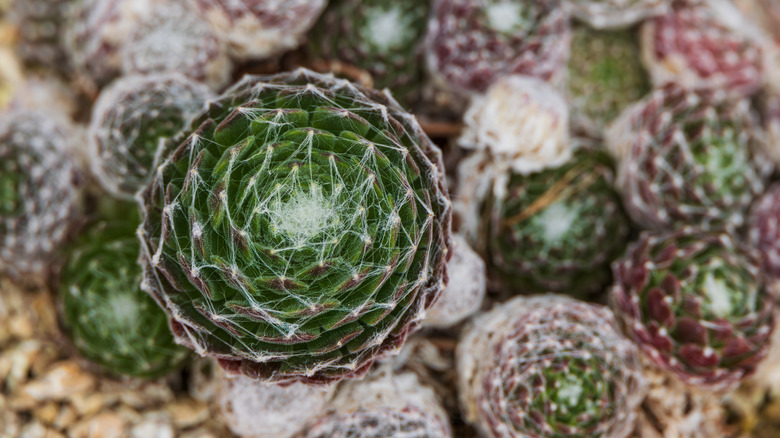
Named for the cobweb-like threads that criss-cross between its gorgeous blue-green leaves, the cobweb houseleek (Sempervivum arachnoideum) is perhaps the most naturally-suited plant to households that love Halloween. Even its eight-legged Latin name is spooky.
Given the right conditions, the cobweb houseleek will readily grow and spread to create a carpet of low-lying and utterly beautiful rosettes. It will also flower after a few seasons, displaying delicate blooms of pink, starry flowers. Like with other sempervivum species, this final flourish is known as a "death bloom," a moment at which it passes the proverbial torch to its younger offspring.
It grows best in hardiness zones 5 to 8, and is able to cope with temperatures as low as -29°C. Just be sure to provide it with a spot that receives full sun, and plant it in well-drained, moderately-fertile soil. In fact, you don't even need soil: This plant is a lythophyte and be grown among rocks, on garden roofs, or on stone walls with just a bit of soil. While it will cope with extreme cold, if it gets too wet — or is allowed to sit in watered soil that doesn't drain freely — then the cobweb houseleek is likely to experience root rot.
Cape Blanco sedum (Sedum spathulifolium 'Cape Blanco')
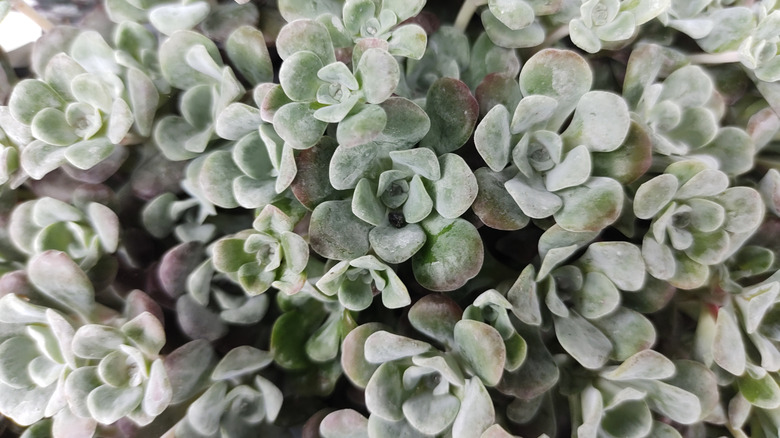
Growing thick, ashy-green leaves, and starry yellow flower clusters, the tiny rosettes that make up this evergreen succulent sometimes also turn a blushing pink color in lower temperatures. In other words, Cape Blanco sedum (Sedum spathulifolium 'Cape Blanco') promises to bring year-round appeal to your garden. It grows well in hardiness zones 5 to 9, however, it's important to consider carefully where you plant this particular succulent.
The good news is that you won't need to worry about extreme temperatures, as Cape Blanco sedum can cope with frosty lows of -20 to -30°C. As for soil and sun, it has similar needs to others in this guide, that is, plenty of sunshine and well-drained, moderately-fertile soil. What you will need to ensure, however, is that it's afforded plenty of shelter away from the worst of the wind.
Finally, while drenching, draining, and then drying your plants on repeat is the trick to great growth in the summer, the opposite is true in the colder months: It's essential to try and keep this succulent dry in the winter, and ideally for several months. If allowed to get (and stay) wet when it's cold, this plant is highly susceptible to root rot. Despite that, this plant thrives in the Pacific Northwest. With that in mind, if yours is in a spot that doesn't drain well, consider potting it indoors until spring.