

Companion Plants That Your Strawberries Will Flourish Next To
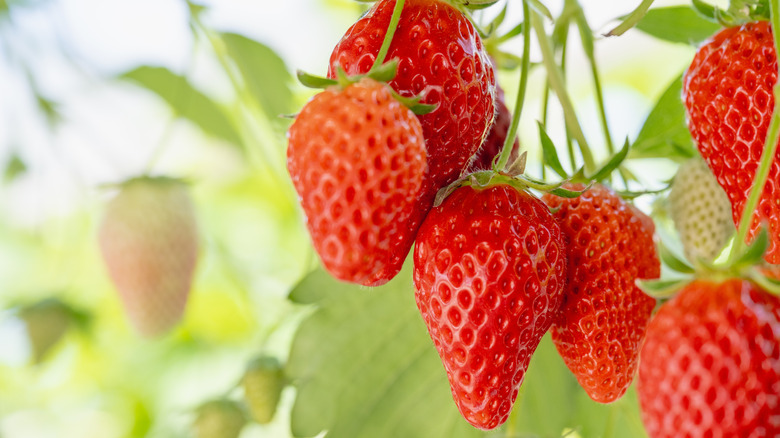
Who doesn't love strawberries (Fragaria spp)? Sweet, rich with antioxidants, vitamins, and other nutrients, strawberries are among the healthiest and easiest plants to grow in your garden. There are numerous varieties that will thrive in different climate zones. On top of that, though the fruit itself is relatively fragile, the plants are vigorous and are known to spread easily once planted. And while there are many tips and tricks you can use to grow the tastiest strawberries in your neighborhood, the best by far is to provide them with companion plants.
Companion planting is a popular practice that can have a tremendously positive impact on your garden. In essence, companion plants are those that work together to enhance one another's growth, protect from pests or disease, and attract beneficial pollinators. It's a mutually beneficial relationship that can yield tremendous results for everything from roses, to tomatoes, not to mention our charge today: the strawberry.
So, if you've ever wanted to get a flourishing strawberry crop in your garden, you really need to consider companion planting. The following 12 plants each offer natural characteristics that will help protect and nourish your strawberries. All are readily available at garden centers or online seed catalogs. So, you really have no excuse not to give these a try, do you?
Nasturtium
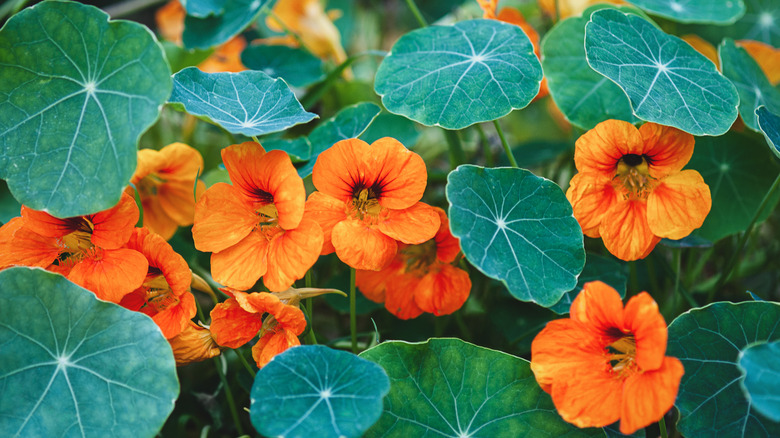
Kicking things off, we have the nasturtium flower (Tropaeolum majus). Though often grown as annuals, nasturtiums can become perennials if you live in an area that does not frost in the winter. Known for their vibrant orange, yellow, and red blooms, nasturtium can be grown in the summertime in virtually all hardiness zones, but thrive especially in zones 10 and 11. The flowers, leaves, and any immature seed pods are actually edible! So they make a wonderful addition to any summer salad.
However, where the nasturtium really shines is as a companion plant. While it can be paired with numerous different other vegetables, herbs, and flowers, nasturtiums are really excellent when planted alongside strawberries. Its natural peppery scent wards off harmful pests like aphids, whiteflies, and squash bugs. Aphids, in particular, have a strong affinity for strawberries. They will feed on the sap of the leaves and sugar from the fruit, draining the plant of its power, and often causing irreversible damage.
On the other hand however, the nasturtiums' bright colors and attractive scent also attract a huge amount of beneficial pollinators. Bumblebees, honey bees, butterflies, and hummingbirds are all drawn in by nasturtiums. As for planting, they will grow in full or partial sun and in soil that is either neutral or slightly on the acidic side, perfect for planting right alongside your strawberries
Borage and other herbs
If there is a class of plant that strawberries work really well with, it is herbs. There are numerous types of herbs, like oregano, sage, dill, coriander, parsley, caraway, catnip, thyme, and rosemary that provide excellent companionship to strawberries. For one thing, they act as natural pest repellents. Rosemary, especially, is an excellent aromatic herb for keeping bugs away from your strawberry patch. If allowed to flower, herbs will also attract numerous pollinators to your yard, which will help keep your strawberry plants vibrant and healthy.
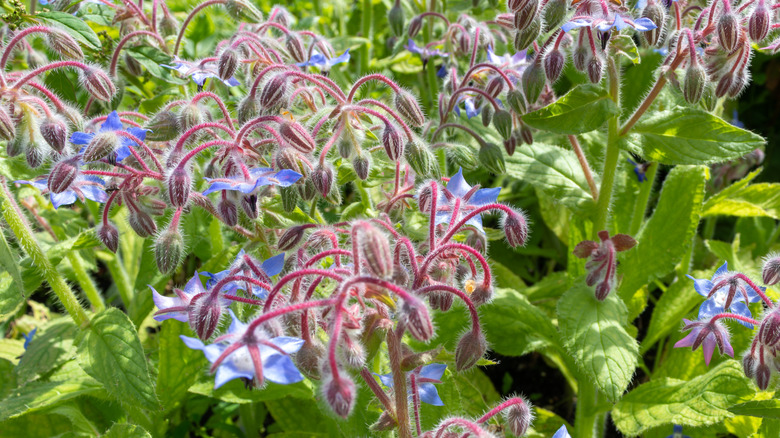
Yet, if there is one herb to plant above all the others in terms of its beneficial relationship with strawberries, it's borage (Borago officinalis) A beautiful herb that grows in long stems of drooping blue flowers, borage is a hardy perennial herb that will grow happily in hardiness zones 3 through 10. An incredibly versatile herb, borage can be used in the kitchen, as well as to make medicine.
As a companion to strawberries, borage does what other herbs do in that it deters insects and welcomes pollinators. It also welcomes predatory insects, like praying mantis, who will help destroy the unwanted pests. However, many growers say that borage also helps improve the taste and overall yield of strawberries. This is subjective, of course, but why not give it a go and see for yourself? You really don't have anything to lose if you do.
Lettuce

It is important to note that companion planting is not a one-way street. One plant doesn't simply help the other. Instead, they help one another. Such is the case with strawberries and lettuce (Lactuca sativa). Strawberries are beneficial to the lettuce because, since they have a tendency to spread out, they turn into a living mulch for the lettuce. The strawberry vines and leaves will help prevent invasive weeds from cropping up among the lettuce crop and choking them out of valuable nutrients and energy.
On the other side of the coin, the lettuce provides ample shade for the strawberry plants. The broad leaves also may protect the fruit from a far larger predator than insects: birds. Numerous species of birds are drawn to strawberries for their color and sweetness. If they can't see the strawberries, they are far less likely to try and peck at them.
Much like borage, lettuce is also one for attracting special predatory insects that will help keep any strawberry nibbling pests away. In this case, the aphids and caterpillars that love strawberries and lettuce will attract what's known as a parasitoid wasp. These wasps lay their eggs inside other insects' eggs or bodies. As the larva grows, it feasts on the host and eventually destroys it. It should be noted, most parasitoid wasp species used by farmers in the U.S. have been introduced from Europe and Asia, and may be considered invasive in your area, so it's worth checking before deploying any army.
Alliums
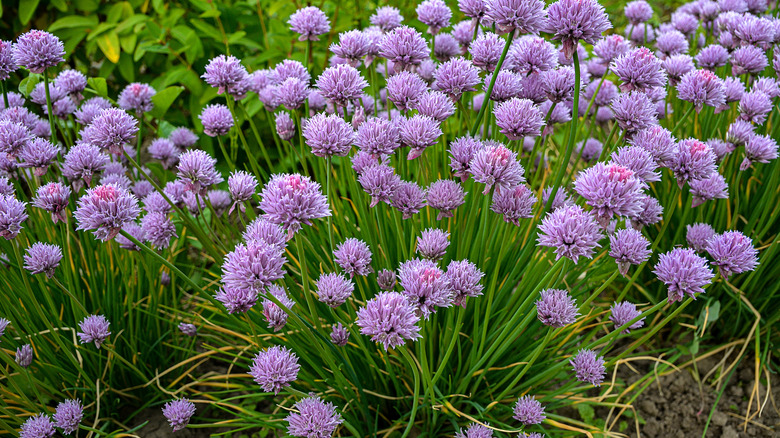
All members of the allium (Allium spp) family — including garlic, onions, leeks, and ornamental varieties — benefit strawberries in a huge way. While both strawberries and alliums are shallow rooted plants, they don't compete with each other for nutrients. Thus, the two will grow compatibly without harming one another. This is part of what companion planting is all about.
Another thing that the alliums do for strawberries is to deter unwanted pests, like slugs and caterpillars. Garlic especially helps keep aphids, cutworms, flies, and mites out of your garden just from its mere presence. in two ways: The strong odor both wards off pests, and masks the attractive scent of strawberries. This is especially good, since all of these pests like to feast on strawberries as well.
Onions are another great allium family member to plant near strawberries. In addition to pest deterrence, the onion's roots will loosen compacted soil, helping the strawberries expand and take on more water. Onions, and all alliums, also have anti-fungal compounds that will help prevent common fungal diseases strawberries are prone to, such as leaf spot, powdery mildew, and black root rot. The strawberries themselves will also filter sunlight and keep the ground temperature cooler, something onions greatly prefer. As a final bonus, some gardeners report that strawberries even taste better when grown alongside allium. But you'll have to report back to us on that.
Lavender
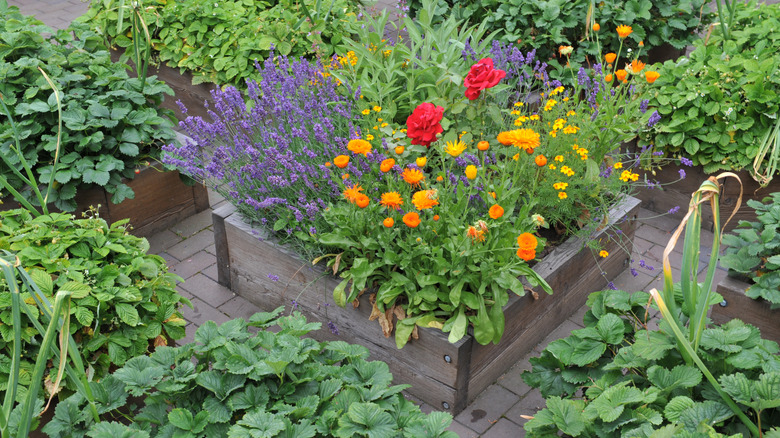
We're separating lavender (Lavandula spp.) from the other herbs on this list because, as a class of plant, lavender is singular: Its distinctive sweet scent and narrow purple blooms are recognizable from anywhere. Known for its medicinal and culinary properties, lavender can be transformed into any number of different products, including tea, scented sachets, and soap. The type of lavender you choose to plant alongside your strawberries will depend on your hardiness zone. Two common types are English (Lavandula angustifolia) and French (Lavandula stoechas) lavender, with the former growing in cooler zones 5-8 and the latter growing in warmer zones 8-11.
Now, when it comes to companion planting with strawberries, you will find that lavender is both a repellent and an attractor, which is a common theme on this list. Very importantly, however, is that lavender does great work at keeping larger pests away. The purple perennial's natural properties repel pests like deer and rabbits, both of which can easily decimate a thriving strawberry patch. It's helpful to have a plant like lavender, in that it means you can engage in pest control that doesn't add harmful chemicals to your garden.
On the attracting front, lavender rounds up all the usual suspects. Honeybees and butterflies love the sweet scent of lavender, its delectable nectar, and its attractive purple flowers. Lavender works best as a border around strawberries, and will even work as a container plant nearby your patch.
Legumes

So far, we've talked a lot about plants that can help reduce the presence of pests and attract the right kinds of insects to your strawberries. However, this next family of plants do neither of those things. Instead, their companionship to strawberries is not based on what they can do above the ground, but what they can do beneath it. You see, the legume family of plants — which includes peas, lentils, green beans, kidney beans, and broad beans — are what are known as nitrogen fixing plants, and they have an incredible benefit on the soil.
How this works is that the roots of the legume plants will help turn the nitrogen that is already present in the soil into ammonia, which is the form of nitrogen plants can actually use. As a result, the soil becomes enriched, providing the nearby strawberries with an excellent amount of nutrition. Legumes, especially climbing beans, also act as shade and protection for the strawberries against birds. Beans also repel harmful beetles, which could destroy a strawberry crop.
As a thank you, the strawberries will again provide an excellent living mulch around the base of the bean plants, keeping the ground moist and weeds at bay. These two plant species form an excellent symbiotic relationship, one that only improves with each successive year of companion planting, as the beans will continue to nitrogen fix the soil even after they've died.
Sweet alyssum
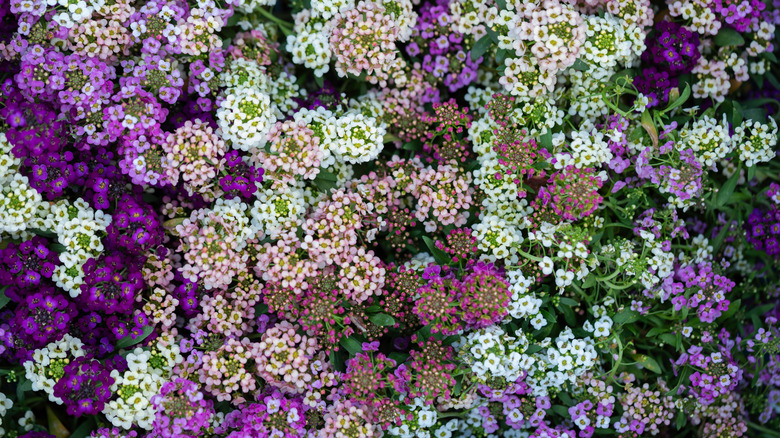
We've talked a lot on this list about how strawberries can provide living mulch for numerous members of its companion family. However, strawberries themselves are also in need of mulching. One of the best ways to get plump, well-hydrated strawberries is to apply mulch to the base of the plants. While you can use things like straw, wood chips, and even raw sheep's wool, you can also use other plants, like sweet alyssum (Lobularia maritima), to form a living mulch under your strawberries.
Sweet alyssum is a low growing, clumping flower that will thrive as a perennial in hardiness zones 5 through 9. In northern climates, it can only be adapted as an annual due to its cold sensitivity. However, seeing as summer is prime time for strawberry growing, having some blooming sweet alyssum is not only going to improve your strawberry crop, but make that patch in your garden all the more beautiful.
The beautiful white, pink, and purple blooms of sweet alyssum are going to attract numerous pollinators to your strawberry patch. The sweet alyssum will also grow low to the ground and provide strawberries with a living mulch that helps suppress weeds, all without drawing any energy or nutrients away from the strawberries. Sweet alyssum flowers also draw in parasitoid wasps and other predatory insects, who can help take care of those strawberry-loving aphids who could easily ruin a crop.
Spinach
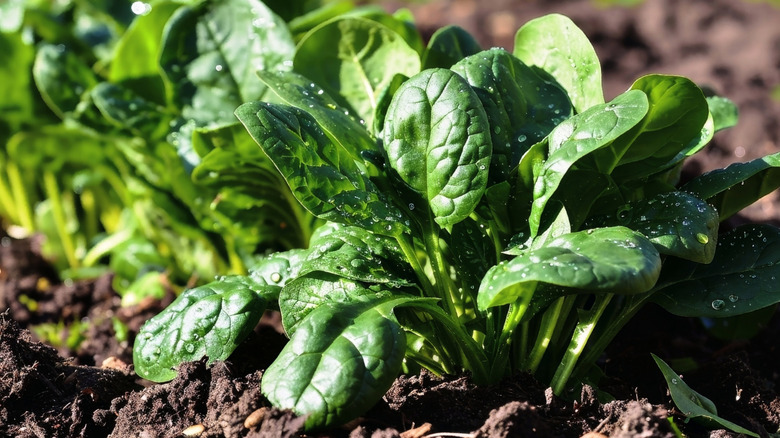
We all know that, from a culinary standpoint, spinach and strawberries make for great companions in a salad. Chopped up with candied pecans, some feta cheese, and a little bit of balsamic vinegar and you are on your way to summer salad nirvana. But this is about companion planting, and you will be happy to know that strawberries and spinach (Spinacia oleracea) get along just as well in the garden as they do in the salad bowl.
Unlike some of the other companions on this list, spinach is a plant that does well in colder weather. In fact, you can plant spinach as late in the season as September without any real issues. Still, most of us are going to do the majority of our gardening in the summer, and spinach will actually be incredibly helpful in this case as it provides strawberries with some of the same benefits as its broad leafed, lettuce cousins.
Spinach provides ample shade for strawberries, as well as protect them from larger predators like birds. However, it is in the spinach roots where the really great companion benefits come forward. The roots grow at different depths, so they're not competing directly for nutrients, but there's still another benefit: You see, spinach roots produce saponin, which has anti-fungal and anti-bacterial properties. These can help protect strawberries from numerous different kinds of diseases. While they don't directly remove fungi or bacteria from strawberries, spinach's nearby presence is known to help create additional barriers that will aid in keeping fungi at bay.
Rhubarb
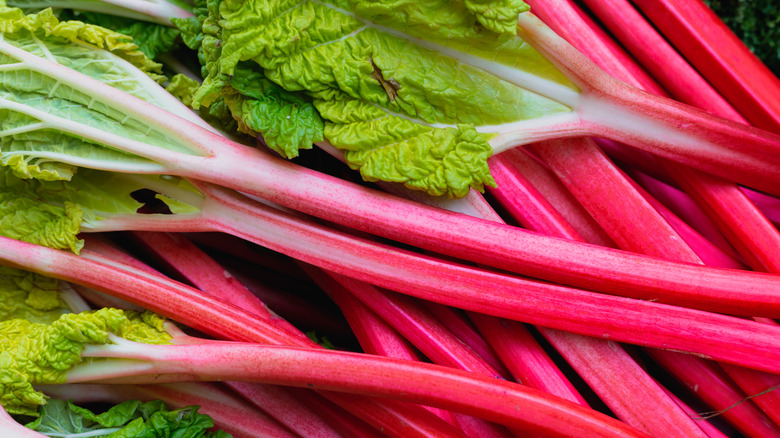
Strawberry rhubarb pie is an excellent treat that you can make from your own garden if you plant these two nearby one another. Rhubarb (Rheum rhabarbaram) is a notoriously hardy, and pest resistant plant. Able to grow from the colder climates of hardiness zone 3 all the way up to the heat of hardiness zone 10, rhubarb is one of those perennials that you can plant once and not have to worry about for years at a time. Just remember, only the stalks of the rhubarb are edible. The leaves are toxic, which is actually part of what makes them an excellent companion for strawberries.
One of the biggest pest problems many gardeners have is with rabbits. They can very easily ruin a strawberry patch, which is why you'll want to do your best to prevent them from getting at the fruit. Both the scent and toxicity of the rhubarb are said to help keep bunnies away from your garden. This is far from certain, but rabbits generally avoid rhubarb, so it's worth planting anyway.
While rhubarb and strawberries do share the same soil requirements, they don't compete for nutrients thanks to the fact that their roots grow at different lengths and times. The strawberries also provide ground cover around the rhubarb, suppressing weeds and ensuring moist, enriching soil for both plants.
Yarrow
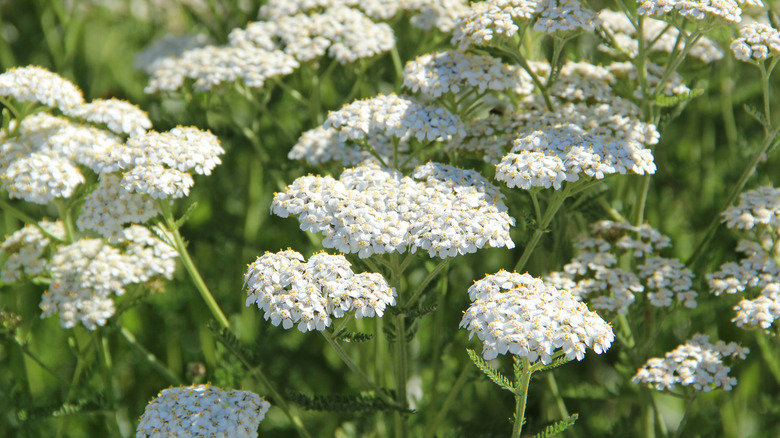
Yarrow (Achillea millefolium) is another excellent flower to put next to or nearby your strawberries. Apart from being incredibly low maintenance and pest resistant, this hardy perennial grows in tall shoots of clustered pink, red, white, and yellow flowers which emit a beautiful scent. That scent will have beneficial pollinators like honeybees, butterflies, and hover flies swarming to the yarrow, while also stopping off to pollinate your strawberry plants.
While the yarrow is pest resistant, we know for a fact that strawberries are not. As we've seen numerous times on this list, aphids are a particularly persistent pest that can do great amounts of damage to your strawberries. Thankfully, yarrow is a top-line of defense against aphids because it also happens to attract ladybugs to your garden.
Ladybugs are one of those insects you'll want to think twice about before killing them. They are absolute aphid eating machines. Consuming upwards of 50 aphids in a single day, the sight of ladybugs in your strawberry patch should fill you with immense joy. Yarrow's unique scent, which can be described as herbaceous and sweet, is what attracts the ladybugs and the pollinators. So, do your patch a favor and plant some yarrow near your strawberries.
Marigolds
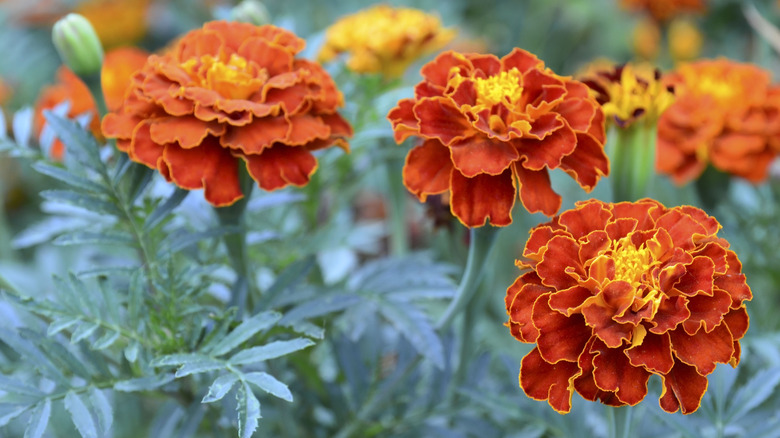
Marigolds (Tagetes spp.) are truly the ultimate companion plant. They work well with nearly everything from tomatoes and cucumber, to garlic and asparagus, to watermelons and strawberries. Apart from being absolutely stunning — their flowers bloom in bright orange and yellow — marigolds are healthy for your strawberry patch in numerous different ways. They bring pollinators buzzing, which is always excellent, and act as a repellent to aphids and whiteflies.
Yet, much like with spinach and beans, the true power of the marigold is what they can do underground. The roots of the marigold plant release a specific toxin called alpha-terthienyl, which works to prevent root-knot nematodes. French marigolds (Tagetes patula) seem to be particularly effective. These pests can wreak havoc on a garden, especially tomatoes and other nightshades. They can also affect strawberries by eating away at the roots and causing stunted growth and yellowing foliage.
Extremely hardy from zones 2 to 11, marigolds are practically indestructible. Whether you plant them as an annual or have a warm enough climate to keep them as perennials, make sure you are planting marigolds in your garden. Your plants, especially your strawberries, will thank you.
Lupines
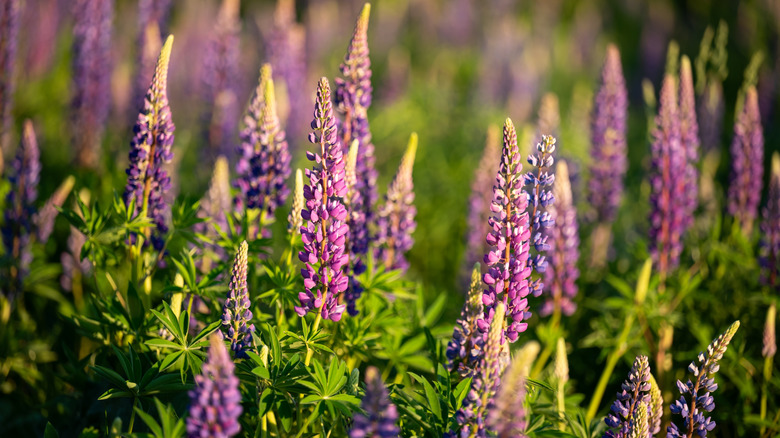
Though more commonly found growing in meadows, there is a place for lupines (Lupinus spp.) in your garden. Specifically, right next to your strawberries. Known for their tall, exceedingly colorful flowers that come in an array of blues, greens, reds, and purples, lupines offer two specific benefits. The first we all know well: they attract pollinators to the garden. The reason pollinators are so important is that they provide all necessary pollination required for plant reproduction. As such, any means you can use to create a pollinator-friendly space, you should do.
The second benefit has already appeared on this list. Can you guess what it is? If you said 'nitrogen fixer' you are correct! Like their legume cousins, lupines are excellent at transforming nitrogen into ammonia and feeding the soil. This benefits the strawberries by giving them extra nutrients, as well as a myriad other plants, all of which rely on nitrogen for survival.