

DIY A Beautiful Fountain With Your Leftover Patio Pavers
We may receive a commission on purchases made from links.
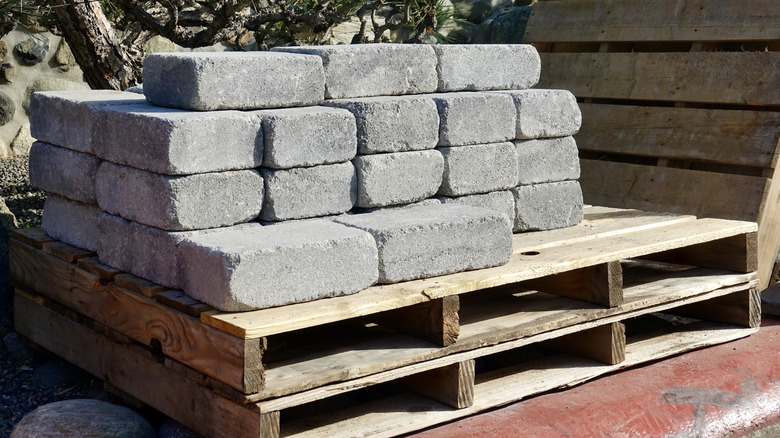
After a project, you often end up with some extra pieces, like pavers after designing a patio or walkway. There are plenty of ways to use them in DIY projects and take your landscaping to the next level, but one of the most interesting is turning your pavers into a fountain. Many fountains are made to stand out, catching attention as the water spills out of a statue or a beautiful bowl. However, you can take a simpler, more down-to-earth approach by creating a hidden fountain with materials you already have. A hidden fountain is essentially just one that comes up directly from the ground instead of a basin or large statue. To make it look nicer and to hide some of the components, it's usually surrounded by pavers, such as beside a walkway or in the middle of a patio. Since you're using leftover pavers, though, you can set it up anywhere in your yard as an eye-catching feature.
One advantage of this design is that it doesn't take up much space and won't get in the way. Though a fountain sounds like something that would be complicated to design, they're actually pretty easy. After all, you can DIY a garden fountain on a budget with two simple items. An in-ground fountain can be a little more complicated, but it still isn't too technical.
There are a few different ways to go about a fountain design. For most of them, you'll want a reservoir. This usually involves some kind of sturdy container that you place underground. In addition to a reservoir, you will need a water pump, your pavers, and probably some stones to fit between them. You'll also need tools like a shovel, a tamper, and waterproof sealant.
Starting your underground fountain
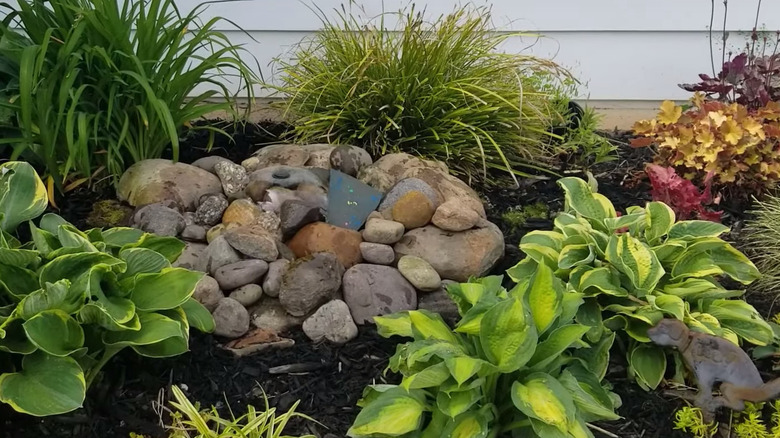
For a smaller fountain, something like the Laguna Decorative Water Reservoir is a great choice, since it doesn't require deep digging or a large water fill. However, there are also larger reservoirs if you want to ensure you have water to draw from all the time. The idea is similar to adding a pondless water feature to your garden. The reservoir is going to go directly under your fountain, and the sides will be flush against the soil's surface, or just beneath it. You can cover up any visible parts with your paver and your fountain.
Before placing the reservoir, you need to set up your piping and wires, which means you have to decide the kind of fountain you want. If you choose electric, the SZMP fountain is a great option. It is small, but powerful, and lets you choose between several nozzles. A few options also come with LED lights if you want your fountain to be even more attractive.
The easiest option, however, is solar power. Because it runs on the power of the sun, you don't have to fight extension cords and a bunch of wires. It does have downsides, though. The two biggest are consistency and power. Because solar-powered fountains depend on the sun, they may not work when it's cloudy or at night. They also struggle to create strong water streams, so if you're looking for a large display, then solar might not have strong enough options. There are many different solar-powered fountains available online. Something like the POPOSOAP solar fountain pump is a good option. It also comes with different nozzles, so you can get the design and water flow you want.
Finishing up your underground fountain
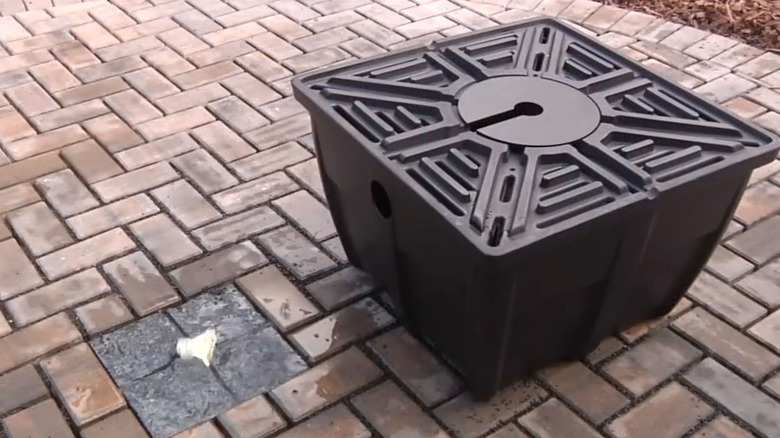
After you've picked out your equipment, you'll need to connect your reservoir to the pump and set up the power, which may involve moving around wires. Most reservoirs come with holes made for this purpose, making it a lot easier. Seal any extra gaps with waterproof sealant to prevent leaks. Be careful not to plug up the openings that allow the water to drain back into the basin. Then, you'll need to put the reservoir underground. Dig out a hole plenty big enough for the container. To make sure the reservoir is level and reduce the chances of cracking, tamp the ground so it's nice and compact before setting it in place. Fill in any open spaces with some of the dirt. The fountain will sit on top of the reservoir, and then you can hide the parts with pavers.
Once you've got all the fountain components set up and put in place, the next step is to decorate around it. This is when you're going to use your leftover pavers. Arrange a small design to complement the centerpiece, covering up everything but the nozzle. Also, while sand is a popular option to fill the space between stones, you may want to choose something larger, like pebbles, so that they don't fall into the reservoir.
It is possible to design your own pump by hand. However, if you're looking for something a little easier and more guided, then some companies sell kits very similar to what you're looking for. Depending on the tools you have lying around and the pavers you own, you can also build a rounded paver patio that elevates your backyard and highlights a fountain in the center.