

Overseed Or Reseed: How To Choose The Best Method For Fixing Your Patchy Lawn
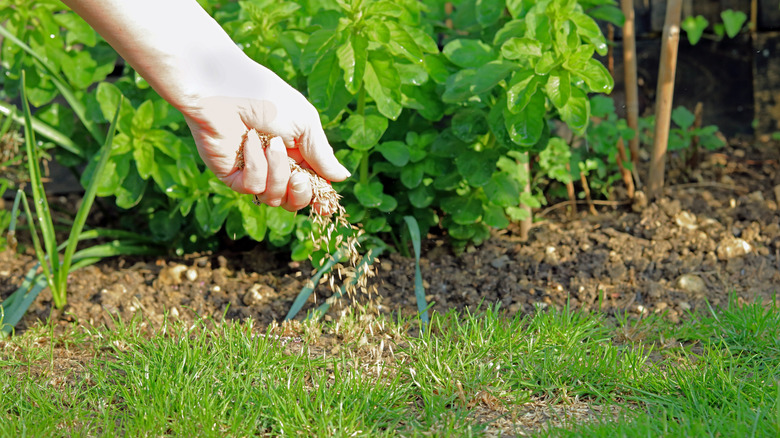
When it comes to maintaining the outside of your home, few things compare to a lush, green lawn. Of course, even the healthiest yards can show signs of wear. Heavy foot traffic, harsh weather patterns, pests, or simple aging can leave your lawn looking patchy or downright bare. When this happens, most homeowners are left with two methods to get their grass up to snuff: overseeding, or reseeding. Both of these tried and tested methods can breathe life into a struggling lawn, though they work in vastly different ways. Overseeding can be a great option for those looking to thicken grass, improve color, and increase resistance to fungal diseases. Reseeding is generally reserved for severely damaged lawns, in order to start fresh. As such, you're best advised to research which method is right for your specific situation before pulling the trigger.
If you're new to lawn maintenance, overseeding involves spreading new grass seed over the existing yard without tearing up any of the soil. This is frequently used as a preventative measure to boost a thinning grass that's mostly still healthy. Reseeding, by contrast, is a more intensive process which completely replaces sections of grass that have died off or become too damaged to recover. This may require landscapers to clear out the original patches by tilling the soil, depending on the size of the project and your expertise. Choosing the right approach for your lawn depends on numerous factors, including your yard's current condition, your personal goals, and how much time and effort you're willing to extend. It should also be noted that some types of grass, like St Augustinegrass, can be neither overseeded nor reseeded, since the lawn can't be grown from seed. In those cases, you're going to need tips on installing new sod.
Why overseeding might be right for you
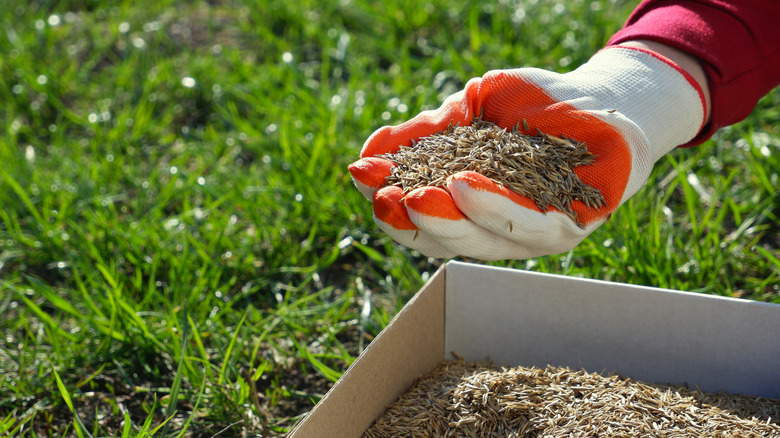
As noted, overseeding is an ideal method for handling lawns that are dimming or beginning to thin, as long as they aren't completely dead. It's also fairly easy, making it an excellent choice for gardeners with little time on their hands, or those who have trouble bending down and tearing up soil all day long. To begin head to your local gardening supply store or nursery for fresh seed. Consult with an expert if you're not certain what kind of grass you've got already. Overseeding is particularly effective with cool-weather grasses like fescue and ryegrass. Once you've got your seeds in hand, prep your lawn for overseeding by mowing the grass to a shorter-than-normal height. Experts recommend dropping the whole yard down to about 1-2 inches, in order to give the new seeds ease of entry into the soil. Rake up any debris away from the afflicted area, and slightly agitate the soil beneath to boost seed growth. If you want to go above and beyond, you can also aerate the lawn to improve the flow of nutrients. In fact, overseeding following aeration is ideal, since you're also sending seed down below the thatch.
Once you've got your lawn prepped, spread fresh grass seeds with reckless abandon. Using a seed spreader can help to evenly distribute them over a large area, but overseeding really isn't a perfect science. Some of these seeds will quickly take root, while others will inevitably become fodder for local birds and rodents. As such, it's important to throw down quite a large quantity of seeds. Water heavily the first time, then keep the soil and seeds moist for at least two weeks. When you're done overseeding, you can promote better growth applying a starter fertilizer.
When to opt for reseeding instead
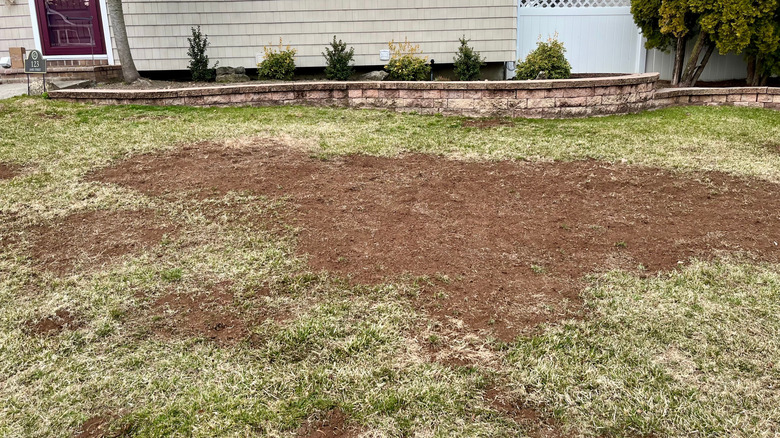
While overseeding is ideal for lawns that need a little added thickening, sometimes your lawn is just too far gone for a quick fix. That's where reseeding comes in. This process is a bit more involved than the former, and often requires input from a landscaping professional. Opt for reseeding as a last resort, if your lawn is severely damaged, completely bare in large swaths, or overrun with invasive weeds.
Begin by entirely removing the top layer of grass, weeds and other detritus, and tilling the soil from the ground up. Depending on how serious your problem is, you may want to invest in some heavy duty weed killer, or even a flame weeder to banish weeds from your yard. You'll want to test your soil to make sure there's no nutrient or chemical imbalance inhibiting new lawn growth. Once you've got everything spilled, killed, and tilled, you can start fresh with a new batch of grass seed. This is a great time to aerate and amend your soil to encourage lush growth.
Spread seed with a large spreader, covering every square inch of soil. As stated above, some of these seeds are doomed to failure, so don't be afraid to spread them quite liberally. To ensure your brand new lawn comes in quickly and in good health, make sure to apply your preferred starter fertilizer in the days after you drop the seeds, and water daily. It's important to keep the ground evenly moist as your fresh coat comes in, until the blades reach a height of roughly 2 inches. When it's all said and done, you should have a brand new layer of grass that will make your lawn the talk of the town.