

Gas Or Electric: Which Type Of Ryobi Grass Trimmer Tool Is Right For Your Lawn
We may receive a commission on purchases made from links.
The weed eater market can be broken down between electric and gas string trimmers. Despite the fact that gas-powered trimmers have a little more power, neither option is inherently superior to the other. Despite being known for its battery-operated tools, Ryobi produces both. The main thing you need to keep in mind when choosing between an electric and a gas trimmer is the size of your lawn. Gas trimmers are great for large properties because they offer a lot of power, and they run longer. Smaller yards or even apartment patios are great places to use electric trimmers because they are lightweight and don't produce as much noise.
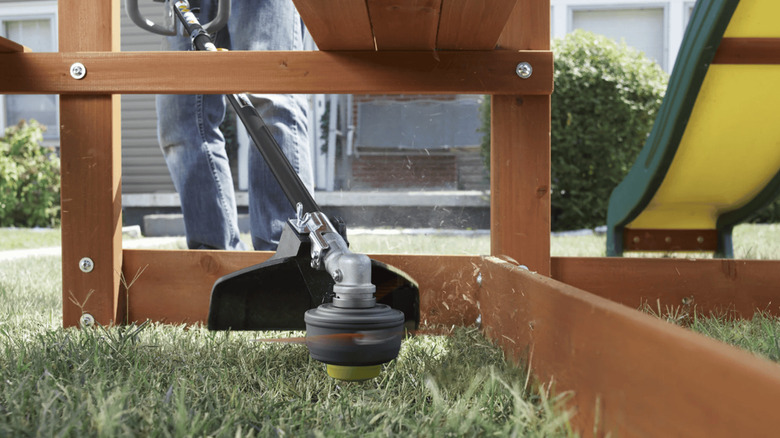
Ryobi sells a 2-cycle as well as 4-cycle gas-powered options, and it also has a line of 18-volt and 40-volt battery-operated trimmers. All of these options will allow you to reach spots that would be impossible to reach with your lawn mower. You can use them to trim along fence railings, around dog houses, and under porches. Your decision should come down to several factors, including how much maintenance you're willing to do (generally electric trimmers require less maintenance) and the size of your yard: Different types of trimmers work better for different property sizes. Price will also be a factor, since the ranges in cost vary broadly among different trimmer types.
The pros and cons of gas-powered trimmers
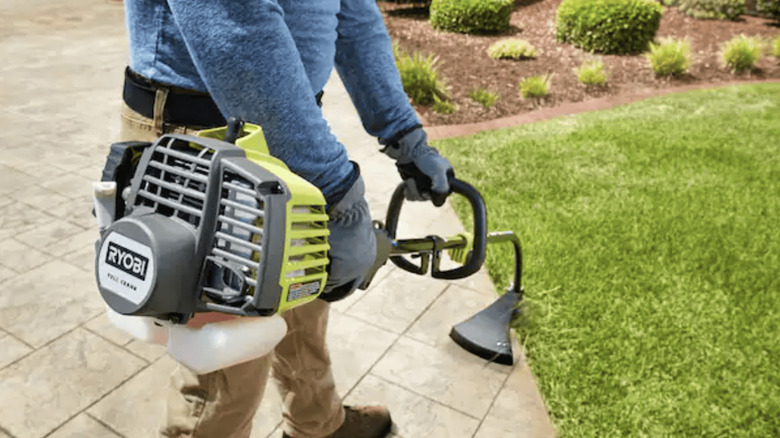
Gas-powered trimmers are best for larger properties because you won't have to stop and charge a battery midway through the job. However, they are heavier and generally require more maintenance. You'll have to change the gas and oil regularly, and periodically check, clean, and change spark plugs, fuel lines, and the air filter.
If you decide to go with a gas-powered trimmer, your next choice is whether to purchase a 2-cycle or a 4-cycle engine. Essentially, a 2-cycle engine completes its power cycle in two piston strokes while a 4-cycle engine completes its cycle in four strokes. The result is that 4-cycle engines are more fuel-efficient, quieter and better for the environment, but they are heavier because they have more engine components. The relative complexity of the 4-cycle engine makes it harder to repair, but 4-cycle engines tend to last longer and require fewer repairs. If you live in a rural area on a larger property where noise probably isn't an issue, you might want the lighter 2-cycle option when covering a lot of space.
But there are cons to gas-powered string trimmers. In addition to more maintenance, they tend to be more expensive than many battery powered options. Ryobi's gas-powered options run between about $170 and $270. While there are pricey battery-powered options, you can find a broader range, with some models as low as $60. You also have to contend with refilling a gas-powered trimmer and the mess, smell, and pollution aspect of gasoline. In addition, many communities are starting to ban noisy, gas-powered landscaping gear.
The pros and cons of electric-powered trimmers
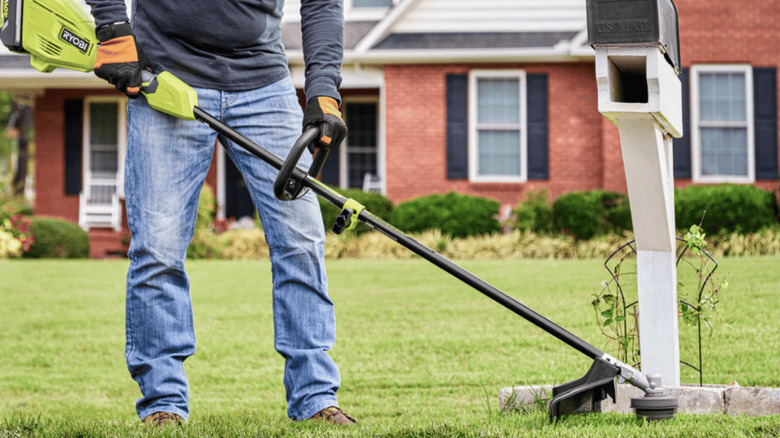
The range of Ryobi electric weed eaters is a great option for smaller lawns (under 1 or 2 acres). Keep the battery charged, then click it in and get to trimming. If you don't have much space to cover, it shouldn't run down before you finish the job. These trimmers tend to have less power, but as long as you don't have tall, thick grass or dense brush to hack through, you should be fine.
You should be able to clean up small lawns with any of Ryobi's 18-volt models (a single charge will give about 20 minutes of run time). But if you have a larger lawn, there are several 40-volt trimmers that compete with gas-powered models with a full hour on one charge. If you already have Ryobi One+ batteries for other tools, you can keep spares charged for large projects. Ryobi also offers one corded electric string trimmer. This spares you from having to rely on batteries, but limits your mobility and requires access to outlets. This model do not come with an extension cord, so you'll need to pick one up.
While battery-operated models are quiet, lightweight, and generally less expensive than gas-powered models, they do have their drawbacks. The short run time is one, as is the generally lighter workload capability. Dense and wet weeds and brush are challenges for all but the most powerful electric trimmers. And while there's less maintenance, proper battery care is vital to ensure you get the full 3 to 5 years' use out of it. To complete your lawn care, consider using an edger rather than a string trimmer to edge your lawn. If you need to remove small trees or bushes, it may be worth purchasing a brush cutter.