

Should You Keep Watering Your Lawn During Fall? Here's What We Know
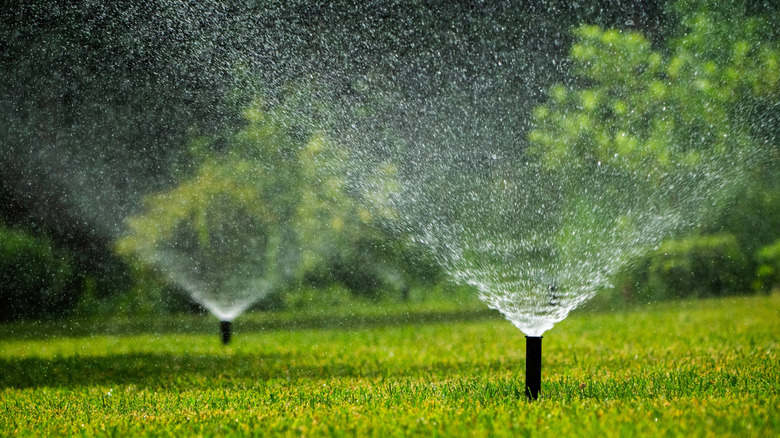
Grassy lawns need a lot of water in the summer if you're looking for a rich and green area. However, it's what you do during the other three seasons that can get a little confusing. In the fall, for example, there is a lot of debate on whether you should continue watering your lawn or let it dry out. Unfortunately, there is no short and sweet answer. While it's not always necessary to continue watering in the fall, it can be very helpful, depending on where you live and your precipitation. That said, most grass types will likely benefit from some watering during at least part of the fall season.
One of the biggest reasons to water in the fall is to help your grass recover from a particularly stressful summer. If your lawn was struggling during the hotter months, it might be a good idea to continue watering for a few extra weeks just to give it time to heal. Additionally, if you live in the south, the warm temperatures in fall can continue to promote grass growth, and the lawn may do best with continued watering around this time. Some grasses, like fescue, also do better when given water throughout the fall season. Perennial ryegrass may also benefit from the additional watering to help it grow fast and combat a weed-prone lawn.
Another perk of continuing to water after summer is that it can help the grass roots to develop more, creating stronger plants next year. It will also help moisten the soil so your grass has enough water stored for winter. Additionally, fall is the perfect time to overseed your patchy lawn with cold-season grasses, like ryegrass.
The few reasons you may not want to water your lawn in the fall

The reason many people choose not to water in the fall is that it comes with some risks, such as overwatering. Since the grass is in a dormant state, it doesn't require as much water as it does in summer. Trying to keep your normal schedule could lead to a high risk of root rot and other diseases, which can be one of the reasons why your grass is growing in patchy.
Some people also worry that it's a waste to care for your yard in the fall. However, in most situations, this isn't the case. Watering once or twice a week for about 20 minutes is usually sufficient, depending on your grass type and region. Near the end of summer, sometime in August, you can look at decreasing the amount of water you give your plants regularly so they gradually get used to the difference.
Additionally, pay attention to the weather. If you're expected to get more than an inch of precipitation, there is no need to water that week. This can mean the amount of rain or snow throughout the season is more than enough. There are some things to keep in mind, though. If you are watering in a cooler climate, you want to be sure not to water when the soil temperature is supposed to dip below freezing, or you risk damaging your plant. You may also want to stop for a while before cold temperatures are expected, giving the soil time to dry.