

Why You Should Adjust Your Hummingbird Nectar Recipe For Cooler Weather
We may receive a commission on purchases made from links.
When it comes to the best time to put out hummingbird feeders, as well as when to take them down, most backyard birders err on the side of caution. That means not only putting them out before the first birds arrive, but also leaving the feeders up and filled throughout the entirety of the fall migration. In fact, in order to ensure all the migrating birds have an opportunity to fuel up along their flight path, it is typically recommended to leave feeders out for at least a couple of weeks after the last bird is spotted. However, doing so can at times expose the feeder and the nectar within to relatively cool temperatures. Adjusting your nectar recipe for cooler weather can not only negate the effects of the temperature on the liquid nutrition, but also provide the hummers with plenty of calories to fuel their flight and help them fight off the chill.
While you may be reluctant to adjust your perfect DIY hummingbird nectar recipe, it is beneficial for the birds to do so. This seasonal change is actually simple to make. During the hotter portion of the year, it is typically recommended to use a four parts water to one part sugar in order to keep birds hydrated. This less sugary mix also helps keep bees away from hummingbird feeders during the spring and summer months. But as cooler weather sets in, simply add less water, utilizing a three to one water to sugar ratio for your nectar blend instead. The same holds true if you are using a premade powder, such as Perky Pet Hummingbird Instant Nectar, in your feeders. Simply reduce the amount of water you are mixing with the powder to increase the concentration level.
Protecting your nectar during cooler weather
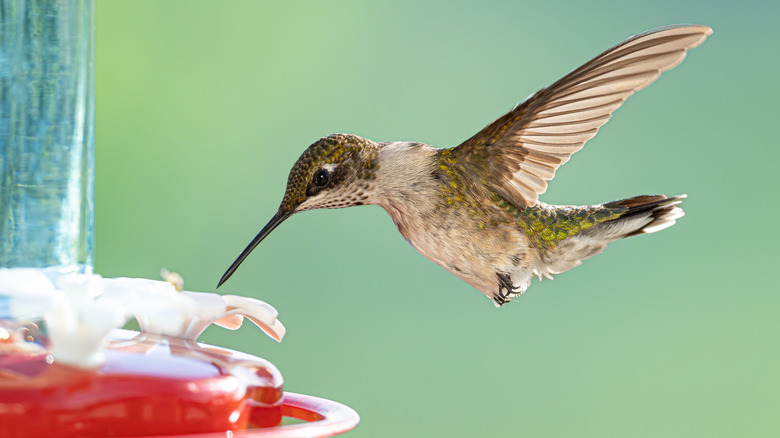
In addition to reducing the amount of water you use in your nectar mix, there are other ways to protect your nectar during cooler weather. For one, even though the temperatures are dipping, you still need to replace the nectar every few days and regularly clean your hummingbird feeders. It is also a good idea to take your feeders inside at night if the overnight temperatures are predicted to be particularly cold. This will ensure the nectar is at a suitably warm temperature when hummingbirds begin looking for breakfast — just make sure you have them back outside early in the morning.
As daytime temperatures begin to drop significantly, you may also find yourself needing to find ways to keep the nectar warm throughout the day. Where you hang your hummingbird feeders can help with this. Be sure to pick a spot that is protected from chilling winds. Additionally, you can insulate the nectar reservoir with materials such as cloth, foam, or bubble wrap.
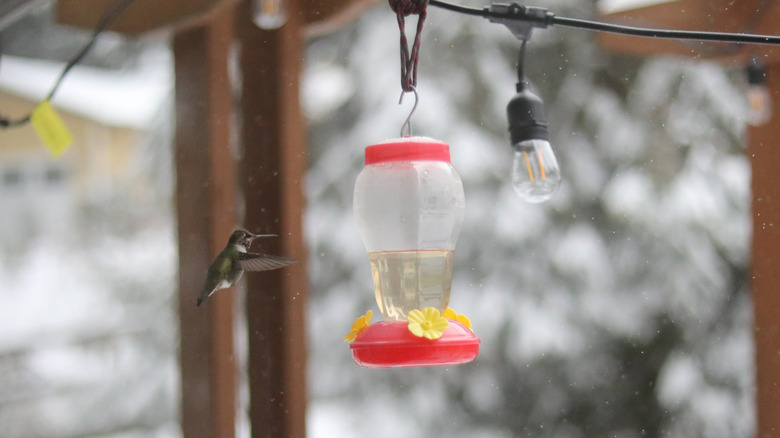
It is also helpful to place lights near feeders, as the heat radiating from the bulbs will help keep the nectar warm. Various styles of lights, ranging from Christmas lights to heat lamps, can be used for this purpose. One other option is to invest in an electric heater, like the Mr. Hummingbird Electric Hummingbird Feeder Heater, which can be attached to the base of your feeder.