

How To Choose The Best Type Of Hedge Trimmer For Your Yard
We may receive a commission on purchases made from links.
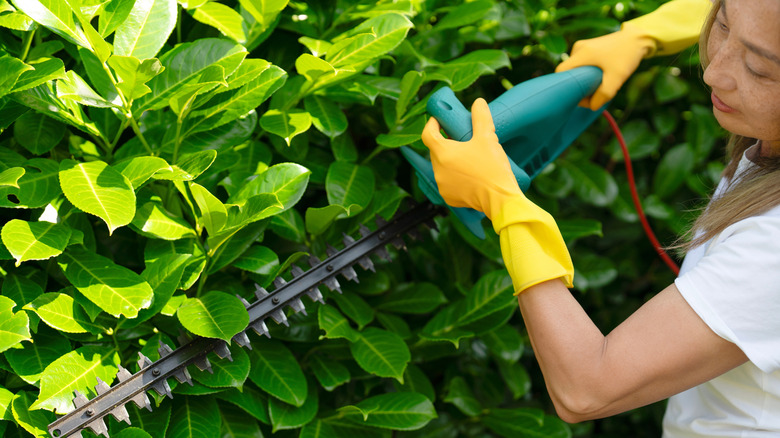
A set of well-trimmed hedges can make or break the visual aesthetic of your property line. Whether you're shaping privacy-adding boxwood shrubs along your garden path, maintaining a privacy hedge along your yard, or just trying to keep your foliage from growing out of control, the right hedge trimmer is a must. Not only are they perfect for shaping bushes, you can even use a hedge trimmer to cut an overgrown lawn. The right trimmer can save you hours of effort, while providing you with professional grade results.
But there are many options, each with its own pros and cons. Manual shears tend to be the most budget-friendly of the bunch, and can provide excellent precision, though they're exhausting to use on large spaces. Electric models offer a consistent cut, but can be limited by power cords or slow-charging batteries. Gas powered hedge trimmers provide the best torque and power for heavy duty applications, but they can be quite noisy, heavy, and require regular maintenance. On top of power options, you have a plethora of features from which to choose, including blade styles and lengths, and whether or not you can articulate the blade's angle or extend the length of your trimmer.
By understanding the pros and cons of each type, you'll be able to choose the hedge trimmer that is best suited to your lawn, routine, and intended workload. Since a solid hedge trimmer like the Husqvarna 322HD60 24-inch trimmer can run several hundred dollars, and a trimmer with an articulating cutting head can approach $700, it's worth investigating in advance to ensure that you're making a wise investment.
Identifying the different types of hedge trimmers
The strengths and limitations of each style of hedge trimmer depend on your yard's size, the plants you're trimming, and the amount of power you need. Manual hedge shears, resembling oversized scissors, are perfectly fine for gardening, small shrubs, and basic upkeep and generally run under $50. For larger yards thick with shrubbery, however, the manual variety simply won't cut it.
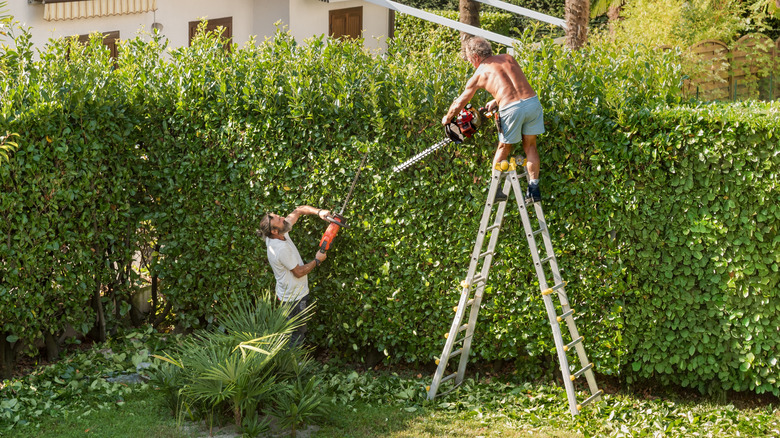
For large, imposing hedges, consider a corded or battery-operated hedge trimmer. Corded trimmers tend to be the least expensive powered option and require minimal maintenance (clean and sharpen blades from time to time), but you are limited by the cord: You need available outlets and a very long extension cord. Also, pay careful attention to where your cord is at all times, as these can sometimes be snipped on the job. Battery-powered trimmers are a great option, but quality models tend to get a little pricey. (though you can save some money with combo tools like the Ryobi Expand-It tool system). Also, consider buying a spare battery to leave on the charging dock while you work, preventing down time.
Gas-powered hedge trimmers are heavy hitters, ideal for commercial landscaping, pruning tree branches, and servicing large yards with tons of bushes. They pack a powerful punch, but also create a great deal of noise, and require the same periodic engine maintenance needed to extend the life of your gas-powered lawn mower. Gas trimmers tend to be expensive, generally clocking in at several hundred dollars, particularly for shafted models with articulated cutting heads. While the Poulon Pro PR2322 22-inch trimmer runs around $200, you'll find cheaper models as low as $150.
Features to look for in a hedge trimmer
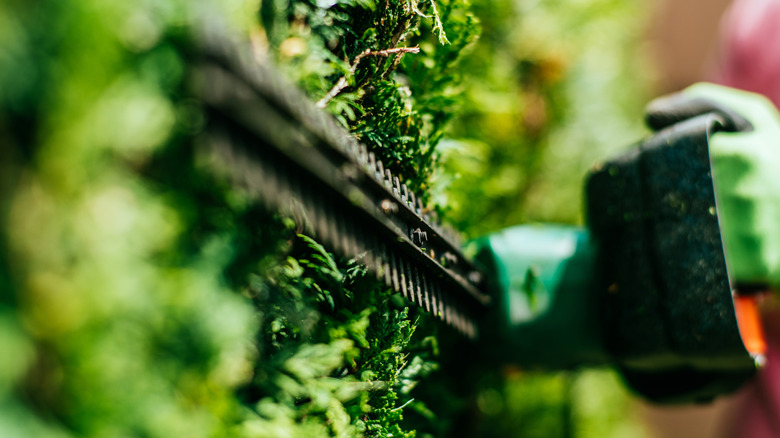
Beyond power, consider exactly what characteristics your trimmer needs to get the job done. When it comes to blade length, longer blades (24 inches and up) cover more ground quickly, and are ideal for larger, straight-edged hedges. By contrast, shorter blades (12 to 22 inches) work best with smaller bushes, tight corners and intricate shapes. Cutting capacity refers to the maximum thickness of branches and roots your trimmer can handle. While most trimmers can cut through a ¾-inch branch, you'll want a pro-grade 35mm cutting capacity for big jobs. Weight and balance are also necessary factors to think about, as heavier models will leave you fatigued after hours of use. If you use your trimmer a lot, many models come with ergonomic handles and rotating grips. Look for features like T-shaped handles and dual-action blades that vibrate less.
How your blade handles is another key factor. Fixed and articulated trimmers provide different benefits: Most trimmers are fixed: With fewer moving parts there is less to break down. But an articulated cutting head means you can set specific angles when shaping bushes, particularly when there's a reach. When you do need to reach tree limbs or tall hedges, look to trimmers with long or extendable poles or shafts. Debris sweepers and shields limit blades to one side, but makes clean-up much easier. Finally, be sure to carefully review the safety features associated with the device that you purchase. Many models come with blade guards and other safety functions, which can help to prevent any landscaping accidents.