

How To Choose A Durable Wood For Your Outdoor Shed
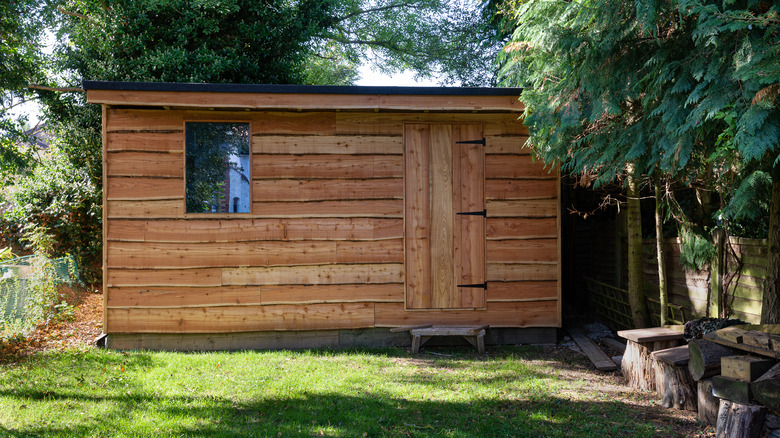
There are plenty of reasons to build yourself an outdoor shed. You could use more storage for your outdoor tools, or just need a special oasis to call your own. Whatever you want to use a shed for, you need to consider the kind of material you'll use to build it. And seeing as the vast majority of outdoor sheds are made out of wood, choosing the most durable wood for the project is the most important decision you're going to make.
Several factors are at play when it comes time to choose the wood for your project. Budget considerations likely first spring to mind, but things like weather and rot resistance are equally important if you're looking to save money in the long run. In general, you'll want to go with pressure-treated lumber for your framing and exterior-graded plywood for your exterior trim. Both are chemically enhanced to withstand and slow the effects of weathering, including heat, rain, snow, and wind.
You want your shed to remain intact as long as possible. Significant repairs just a few months or years into ownership can be costly and time-consuming. While no shed will be able to stay standing forever, it's always better to choose the right materials from the start as opposed to dealing with rot or leaks far sooner than you'd like to.
Types of durable wood for your shed build
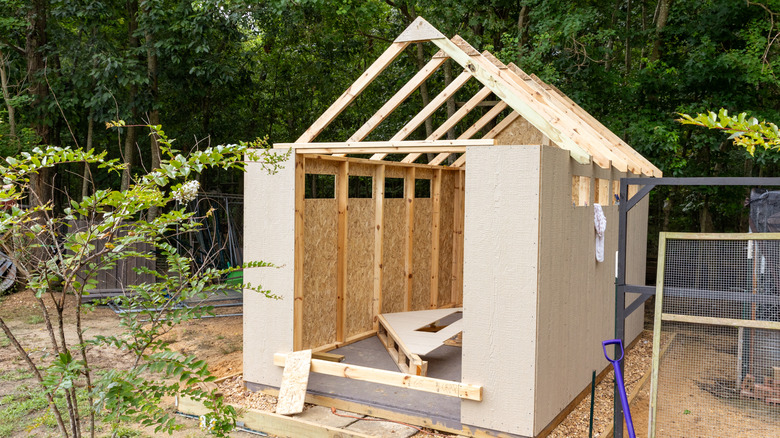
Any visit to a lumber yard or hardware store is going to yield plenty of wood options for you to choose from. One of the best budget-friendly options out there is pressure-treated pine. One of the most common building materials available, pine is affordable, strong, and durable, making it a go-to candidate for outdoor sheds.
Going beyond pine, you've got plenty to consider. Building with red or white cedar, redwood, Douglas fir, and cypress offers varying advantages. Cedar and redwood are going to be more expensive than pressure-treated pine, but they make up for that cost in terms of attractive grain colors and excellent resistance to rot and moisture. Plus, if you're averse to building with chemically treated lumber, they make an excellent choice, as their natural oils and scents deter insects.
Oriented strand boards (OSB) are great in terms of strength for value. These are made out of softwood chips that have been glued together to make boards. They're a decent option for exterior sheeting, but should not be used for anything load-bearing, as they age quickly. For flooring and roofing, use top-quality, exterior-grade plywood. This tough stuff can be pricey, but it is well worth it in terms of value. And when you're done, consider adding a little privacy to your porch with a DIY wood privacy screen.