

How To Incorporate Woodscaping Into Your Backyard
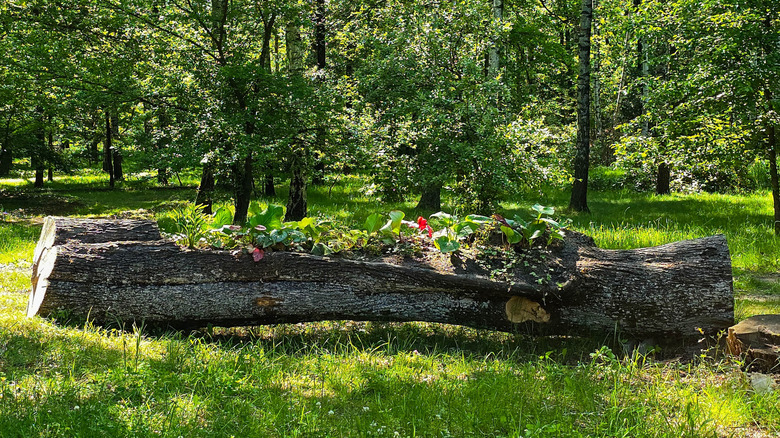
Wood is an incredibly popular building material when it comes to backyard projects. Whether you're building raised garden beds or your own deck, wood is a go-to choice because it's both adaptable and easily sourced. In addition to finished planks from the hardware store, you can use found wood from your own yard for a number of garden projects. This is called woodscaping — and it's a form of hardscaping that can be used to bring a more natural feel to your backyard.
Woodscaping uses all manner of wood materials, such as logs, branches, and even processed lumber as design elements. The wood elements are meant to help enhance the landscape with contrasting structure and texture. There are several benefits to woodscaping. Not only will the natural look of the woods blend well with other timbers like small trees and shrubs, but woodscaping can also help cut down on lawn maintenance by creating pathways or structures that replace grass, lessening the need for consistent mowing.
This type of hardscaping is also an excellent way to repurpose any fallen wood or timbers you have harvested from your yard. This makes it a sustainable option for anyone who has a small wood lot or several trees on their property, as the repurposed wood can be used for all sorts of different projects.
Woodscaping uses and tips
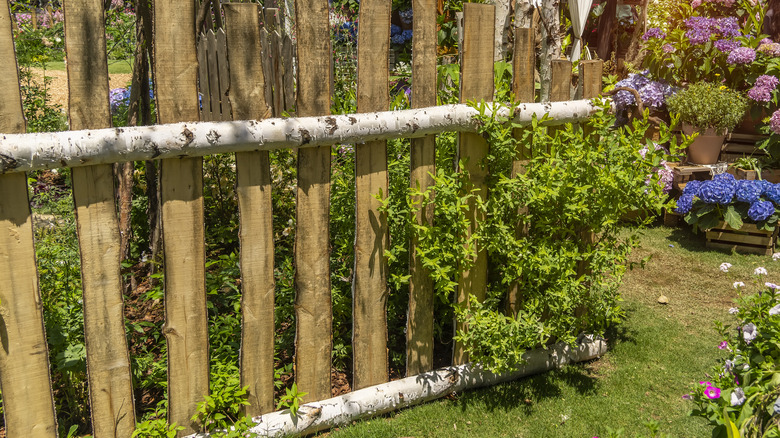
You can incorporate woodscaping into your backyard in many unique and creative ways. While processed and pressure-treated lumber is the way to go for any major construction projects, like DIYing a floating wood deck, natural logs or larger sticks can be used both decoratively and functionally. This is not to say you can't use processed lumber for woodscaping. They are excellent as foundations for garden beds or arbors. Organic lumber is best used to create stump seating or twig trellises for climbing plants. You can even build natural walkways using circular wood slices. You can also create great play structures for kids and livestock with fallen branches or cut stumps.
Before you do any of these things, however, you need to make sure that your wood is in good enough shape to be used. Any branches or stumps should be free of rot and pests before they are used, especially if they are going to be climbed or played on. If possible, try to use rot-resistant varieties like cedar, oak, black locust, birch, and black walnut. These woods are also resistant to pests and are incredibly sturdy.
But ultimately, when it comes to woodscaping, beggars can't be choosers. Whatever you have available on your property, or what you can source from friends and neighbors, is going to be sufficient. The key is blending textures, colors, and shapes with existing structures in order to create a cohesive and inviting space.