

What To Consider Before Using Self-Binding Gravel In Your Yard
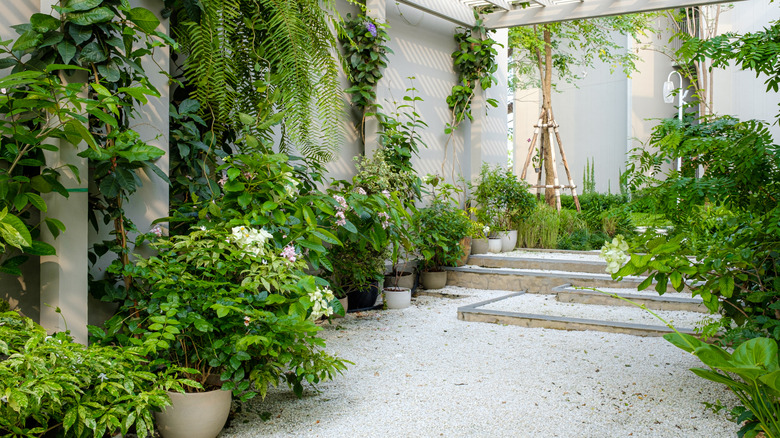
When you're tired of mowing your yard, gravel can be a perfect solution that's not only inexpensive and versatile, but can also look lovely and is relatively easy to take care of, too. Before you rip up all that sod, there are some important considerations to bear in mind prior to using gravel in your next landscaping project, including deciding what type of gravel to furnish your yard with. One popular choice is self-binding gravel, which can be a great option for patios, garden pathways, and even driveways, but also has some pros and cons to consider.
So what is self-binding gravel? Where loose gravel is generally all a uniform size and often has the fine particles such as sand and clay filtered out, self-binding gravel is an aggregate that keeps all those elements. Essentially this enables the gravel pebbles and other materials to settle as the gravel's compacted and (as the name suggests) naturally bind together. Because it's so much more compact, self-binding gravel tends to move around a lot less than traditional gravel and provides a much firmer surface. On top of all that, it's available in many different rock types, stone colors, and textures to match your yard's needs.
The benefits of self-binding gravel
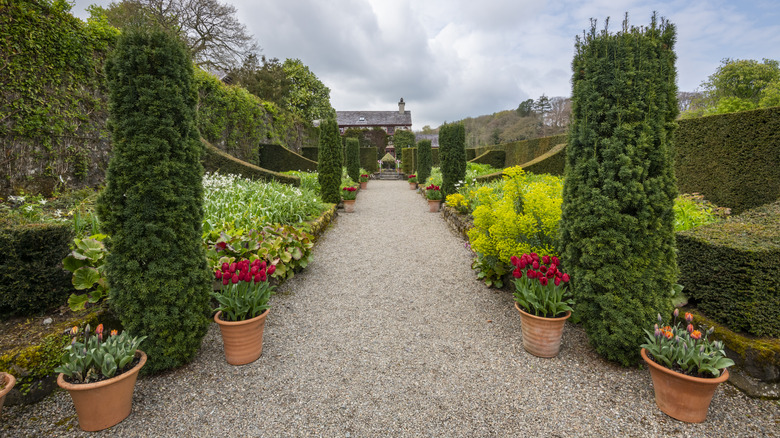
There are several benefits to using self-binding gravel. This porous material is firm yet permeable, allowing water to drain easily and reducing the risk of flooding, yet it's also less penetrable than traditional loose gravel — meaning it's tougher for weeds to sprout up through it and wreak havoc on your yard. Self-binding gravel also has more of a tendency to stay in place than loose gravel, so it requires less maintenance such as raking and redistributing to fill in spots where the gravel has shifted. Plus, because self-binding gravel conjoins naturally to create a firm surface, instead of relying on synthetic materials like cement, it's also a more sustainable landscaping option, leaving a smaller carbon footprint and allowing your graveled spaces to blend in more seamlessly with nature. On that theme, it also absorbs and radiates less heat than asphalt or concrete, and can act as natural erosion control.
And let's not forget about the impact on your wallet. Compared to concrete, resin, or asphalt, self-binding gravel tends to be the more affordable option. Not only are the materials usually cheaper, gravel also requires less expensive equipment to install and can often be done as a DIY project, saving labor costs. For example, according to Angi, the average cost of a gravel driveway in the U.S. is $1.25 to $4.00 per square foot, versus $4 to $15 per square foot for a concrete driveway.
Some disadvantages to consider
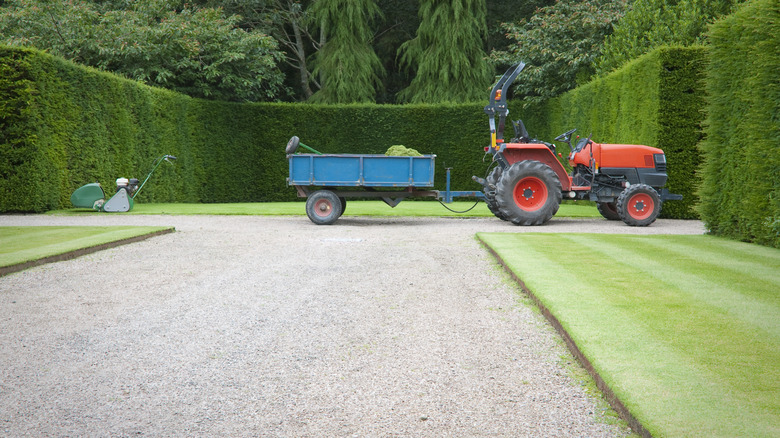
Of course, no type of landscape material is perfect. While it's more difficult for weeds to pop up through self-binding gravel than its traditional gravel alternative, it's still possible for unwanted visitors to peek their way through, so you'll want to check out some simple tips and tricks to keep your gravel areas weed-free. And while self-binding gravel is a pretty compact material, it's not as sturdy as substances such as cement, so may not be the best choice for steep inclines or areas with very heavy traffic where it can easily be eroded. And unlike traditional gravel which can be poured in three, six-inch layers and raked thin, self-binding gravel must be set down in multiple thin layers to achieve the right compaction (which might be best done by a pro). Where traditional gravel may be a foot or two deep, a self-binding gravel surface shouldn't be more than about 2 inches thick.
There are safety concerns to consider when using any type of gravel in your yard, such as keeping your lawn mower away from it while maintaining grassy area on your property, as those tiny rocks can easily damage your lawn mower's blade, or become fast-moving projectiles. You'll want to keep these downsides in mind when considering self-binding gravel for your yard, and read up on other common mistakes to avoid when using gravel in your landscaping.