

How To Choose Which Popular Birdbath Type Is Best For Your Yard
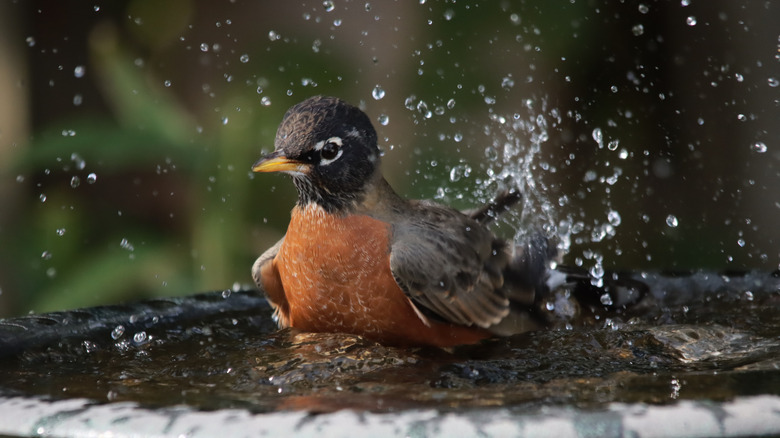
Picking out the right birdbath is an important part of designing a bird-friendly backyard. Birdbaths serve utilitarian and decorative purposes, so it's important to prioritize both aims while selecting the right product. If you have a lot of predators in your yard, like snakes and cats, you're going to want to elevate your bath on a sturdy pedestal, or hang it, in which case, you probably need to consider a lightweight material. If you want to encourage larger birds, like peacocks and geese, or birds like swallows, warblers, and waxwings to access to your bath, you're going to want a basin that sits at ground level.
The aesthetic component is also important, because you want your yard to be inviting not just for birds, but people. For birdbaths, material and design are often closely linked. Elevated stone baths often evoke a Greco-Roman atmosphere, while clay baths conjure more of a Mediterranean or Southwest vibe that can be a birdbath style that will suit local wildlife, depending on where you live. Wrought iron pedestal birdbaths are ideal if you're going for a Victorian look. While choosing the correct birdbath is always a matter of aesthetic taste, the No. 1 priority should always be to purchase the bath that is best if you're looking for a simple hack to get birds to flock your yard.
Pedestal birdbaths are heavy but provide predator protection

A pedestal birdbath is a great choice because it helps protect birds from predators that lurk on the ground. One drawback is the weight as many versions are made from concrete or stone. These baths often come in two piece — the pedestal and the bath itself — and there's a risk of the basin falling, particularly if children or pets play in the area. Pedestal birdbaths require even ground, or they may tip. In fact, the weight is one reason a concrete birdbath might not be right for your feathered friends. But as long as the bath is on flat ground, their weight usually keeps them firmly in place, even in heavy wind. A major benefit of most pedestal birdbaths is their rough, shallow interiors giving birds safe, non-slippery access to water. Pedestal baths give birds fairly good protection against snakes and cats, but they're not foolproof. These baths are attractive to songbirds like robins and bluebirds (especially if they feature a small fountain or moving water), but they aren't accessible to larger birds on the ground or very small birds, for whom the basins may be too deep.
Whether made from concrete, cast iron, resin, or stone, it's important to clean your birdbaths properly and often, especially in the summer when bacteria thrive. In most cases, youcan clean most birdbaths with a scrub brush and a solution that is nine parts water and one part vinegar. Avoid using soaps and detergents: Residue can strip valuable oils from a bird's feathers.
Hanging birdbaths are portable but sway in the wind
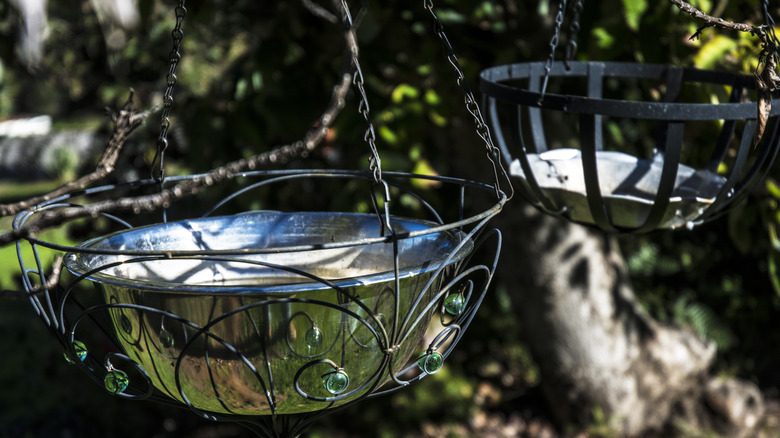
Hanging birdbaths are useful in protecting your birds from cats and some snakes (though not from squirrels). Another perk is that you won't have to move it out of your way when it's time to cut the grass. They usually feature shallow basins made of stainless steel or ceramic, so they are easy to transport. A number of birds seem to dig hanging birdbaths, including bluebirds, wrens, orioles, and titmice. If you don't have trees in your yard, hang your bath from an awning or porch, or install a shepherd's hook. In fact, they're a great option for small spaces, apartment balconies, and tiny gardens.
There are a few drawbacks to this type of bath. If you hang the bath too high, it can be harder to change the water (which you should do every few days for the health of your birds). These baths are usually small, so they tend not to hold as much water as pedestal baths. The baths also sway in the wind, which may deter larger birds from visiting. And of course they exclude the myriad of birds who prefer their water sources on the ground.
Ground-level birdbaths are accessible to birds and others
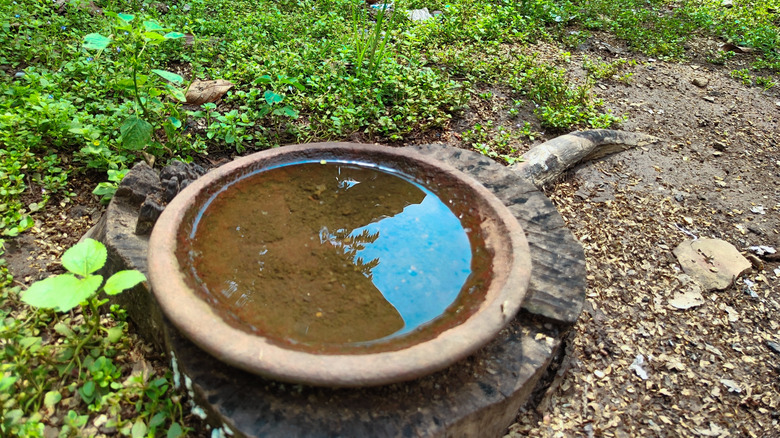
Ground-level birdbaths appeal because they are similar to natural water sources. One of the most obvious perks of this type of bath is that it won't ever tip over. Larger birds like geese and ducks are more likely to be drawn to this type of bath, but so are a wide variety of smaller birds that prefer their water sources on the ground. Woodpeckers, warblers, swallows, quail, and more prefer taking their baths at ground level. The nice thing is pretty much anything can be used for a ground birdbath: terra cotta basins, steel or plastic bowls, or a garbage can lid. Even an old fire pit can become a DIY ground level birdbath, rather than tossing it. Ground birdbaths tend to be steadier than pedestal versions, and if one does tip over, it won't hurt either visitors or bystanders.
There are challenges with ground-level birdbaths. They're more prone to filling with leaves, dirt, or other debris. They're also likely to attract other wildlife, including deer or frogs, which can be a pro or a con depending on your goals. Predators not only have easier access to birds on the ground, but if there's no drop, it's harder for birds to escape when attacked. Break up ice regularly in the winter if you live in a cold area, because water freezes quickly on the ground. These baths also have some unique cleanliness issues since they collect drainage water during foul weather. That's why it's best to keep these baths uphill.