

What To Know Before Replacing Your Dead Grass With New Seed Or Sod
We may receive a commission on purchases made from links.
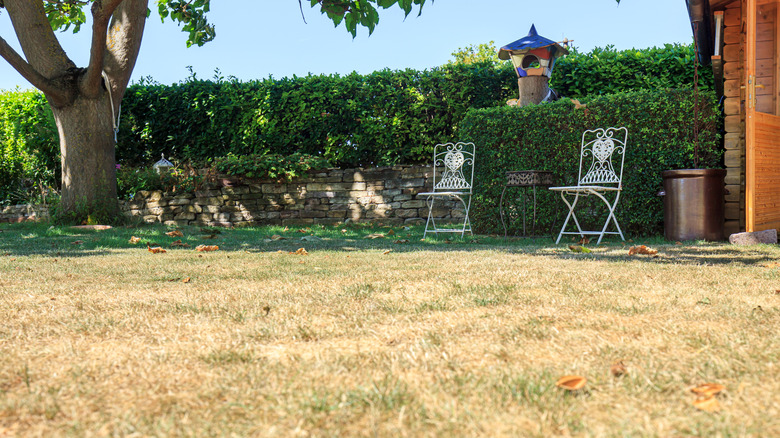
Maybe you've been watering your grass too much. Maybe you're prone to cutting it too short. Maybe you've fertilized it too heavily. These are just a few practices that can secretly ruin your lawn, leaving you with patches of dead grass. If you find yourself with a lawn that's more dead than alive, it's time to make an action plan. Prior to stripping away damaged grass and replacing it with new sod or seed, determine when you're going to install your new lawn. Whether you're going the sod route or the seed route, make sure to figure out which type of grass is right for your lawn before going full speed ahead.
Getting rid of weeds before introducing seed or sod is a wise choice, says Bryan Clayton, CEO of GreenPal, a service that matches lawn care pros with prospective clients. "You don't want weeds popping through your fresh lawn," he told Outdoor Guide in an exclusive interview. "Definitely do a good weed kill-off with a non-selective herbicide like Roundup about two weeks before seeding or sodding," he adds. Clayton also recommends wearing personal protective equipment (PPE) when using glyphosate-based herbicide since it's a suspected carcinogen.
Throughout his 25-year career in the landscaping industry, Clayton has found sod preferable to seed for lawn replacements. He advises choosing "sod if you've got the cash, seed if you're patient." In other words, turning grass seed into a lush, green lawn requires a bigger time commitment than sod does. "Sod gives you instant results — two days and it looks amazing. Seed takes patience — two full seasons of care, fertilizer, and re-seeding before it looks comparable," Clayton explains.
When to install fresh sod in your yard
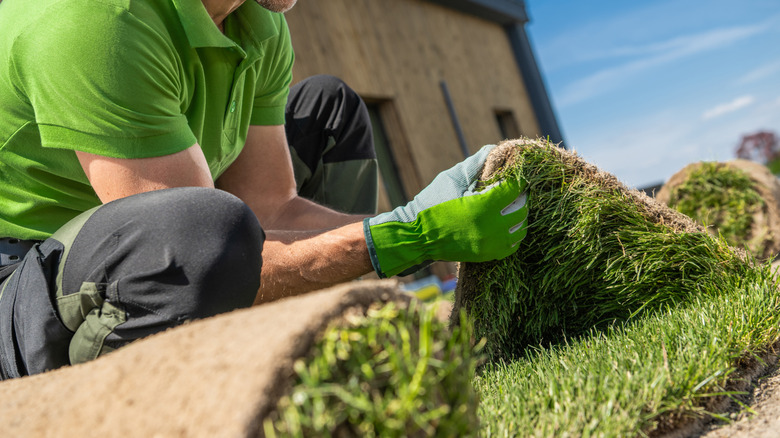
Sod is happy to make its debut nearly anytime during the growing season. If plants start waking up in late winter where you live, it's probably a good time to redo your lawn with sod. "Winter is best, spring and fall are okay," says Bryan Clayton, noting that you should "never lay sod in peak summer unless you've got irrigation to keep it alive."
Keeping new sod hydrated is crucial no matter what time of year you install it in your yard. Avoid placing sod strips on top of parched soil, which can suck the moisture out of them. Instead, water the ground before the fresh sod touches it. Your sod is most likely to thrive if you place it in its new home when the soil temperature is on the cooler side. This makes early-morning and evening installation your best options. When the ground is hot, grass roots are likely to experience shock, which can threaten their health. Watering your sod on a regular basis also regulates its temperature. Plus, a steady supply of moisture helps your new lawn establish itself.
Since new sod needs to get accustomed to your yard, it's important to let a little time pass before mowing it. "Wait about two to three weeks so roots can set," Clayton says. Generally speaking, the best length to aim for when mowing your lawn depends on the type of grass you have.
When to sow grass seed to grow a new lawn
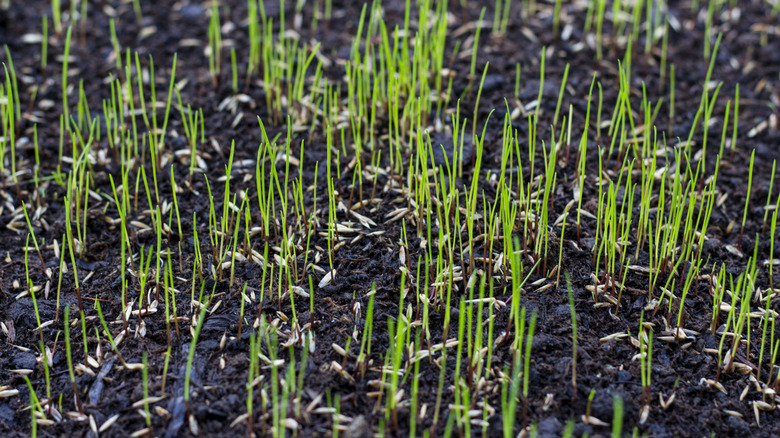
Sowing grass seed on top of soil is a little trickier than installing sod in your yard. It's important that the seed is distributed evenly and rubs up against the soil as much as possible. Also, grass seed needs a specific set of environmental conditions for optimal performance. This makes the window for sowing it fairly narrow. "Your best bet is late August through mid-September," says Bryan Clayton. "You really want to get your seed out while it's still warm [enough] to germinate and before it's too cold to freeze it out."
One caveat to keep in mind: If you choose a warm-season grass and live in a mild climate, sowing seeds in the spring may be ideal. This is true for bermudagrass, centipedegrass, and a few other warm-season varieties that excel in USDA hardiness zones 7 through 10. Cool-season grasses such as bentgrass and tall fescue are better suited for fall planting and hardiness zones that are further north.
Be gentle when you start mowing your new grass. "When it hits about 4 inches, cut it high, around 3 inches, and be gentle on turns," says Clayton. "If you can afford to do it or put in the extra work, you're going to want to push-mow the first two or three yard mowings," he adds.