
12 Plants That Will Actually Make It Through Winter
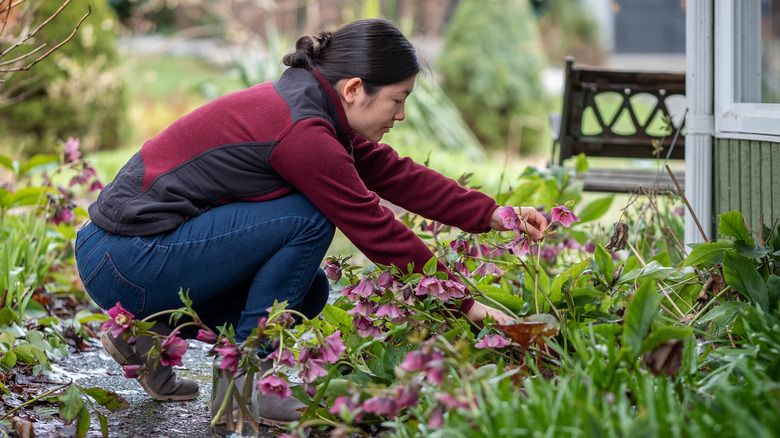
Winter can be a tough time for plant lovers. It's a seemingly endless season when not much (if anything) is growing, and the cold weather keeps you shut indoors longing for the bloom of a new spring. However, don't write winter off just yet. There are ways you can make your garden and outdoor space come alive in the cold season, and one of those is to choose plants that will survive the winter in your USDA Hardiness Zone.
You don't have to live in the balmy regions to enjoy plants in the wintertime. Yes, there are plenty of more sensitive plants that need protecting in winter, but then there are those such as winterberry, holly, and red-twig dogwood that will provide you with foliage and color in some truly frigid temperatures. Then there are the likes of hellebore and snowdrops that can make the drab days of late winter and early spring tolerable by bursting forth from the ground in a pretty display of blooms.
This list is a compilation of 12 plants that will a) make it through the winter in various regions of the U.S., and b) liven up your garden in dreary months. Each of these cold-season picks is hardy in zones that see snow, and they offer gardeners a tremendous chance to maintain the vibrancy of their yard all year long.
Hellebore
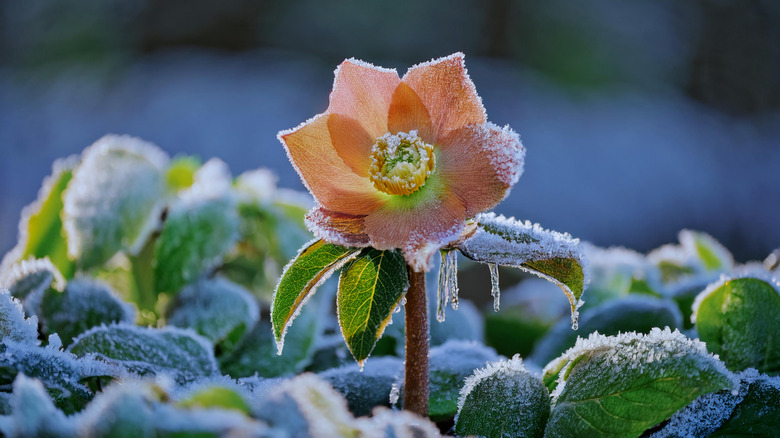
Though often referred to as the Lenten rose because of its propensity to appear during the Christian season of Lent, hellebores (Helleborus spp.) can actually begin blooming as early as December, in milder zones. Hardy between zones 4 and 9, hellebores have a wide climate range and will perform well in colder areas. The flowers come in a variety of different colors, including red, green, pink, and purple. They are a sight for sore eyes when they emerge from the snow and bring a pop of color back to the yard.
Coral bells
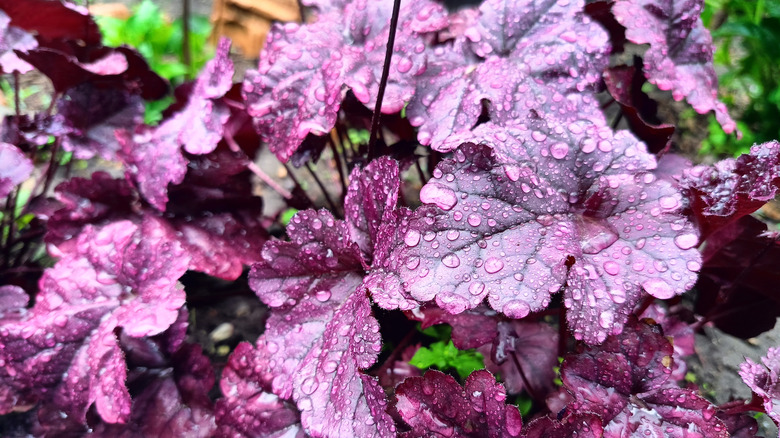
It's all about the foliage when it comes to coral bells (Heuchera sanguinea). This dramatic, low-growing plant can bring its own unique flair to an otherwise dull winter landscape. Capable of lasting as a semi-evergreen winter plant between zones 4 and 9, cultivars like 'Black Pearl' can showcase strikingly moody black foliage throughout the winter, even on the cooler end of their climate range. Coral bells is prone to frost heave, but you can help mitigate this by applying a layer of mulch.
Snowdrop
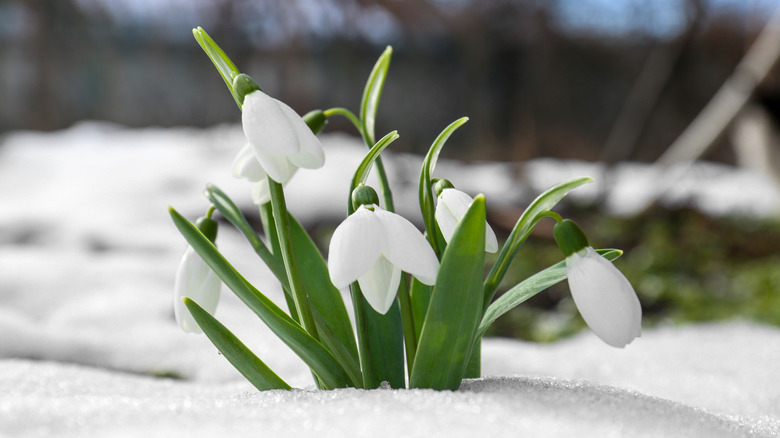
Everyone knows snowdrops (Galanthus) for their adorable, drooping white flower heads that can burst up through the snow as early as December in the Northern Hemisphere. You can either plant them as dry bulbs in the fall or in late spring as the leaves yellow and get ready to die back. Hardy down to zone 3, snowdrops are particularly attractive if planted among rocks or under late-leafing trees. Their presence in the garden is bound to make anyone smile.
Holly
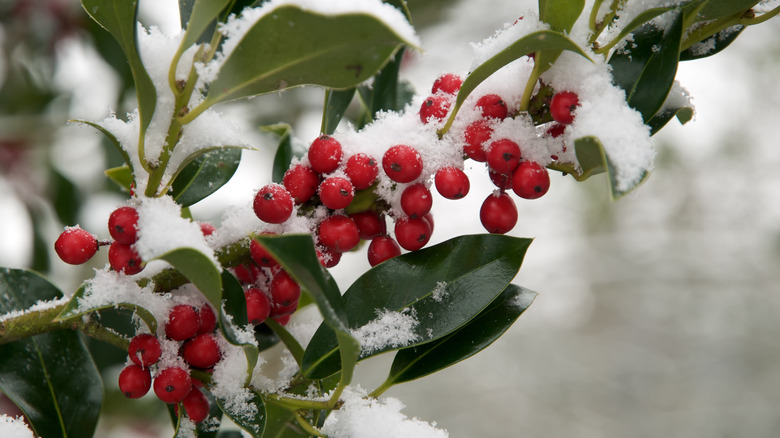
If you want a species of shrub that is going to give you not only excellent, deep green foliage throughout the winter, but also burst forth with brilliant red berries, holly (Ilex spp.) is a great pick. Most types of holly are evergreen. This means that they don't lose leaves or change color throughout the year. These are tough shrubs, with some varieties — like Meserve hybrid hollies (Ilex x meserveae) and American holly (Ilex opaca) being cold hardy all the way down to zone 5. The berries make a wonderful sight on grey winter days, and are especially beautiful under a layer of snow.
Winterberry
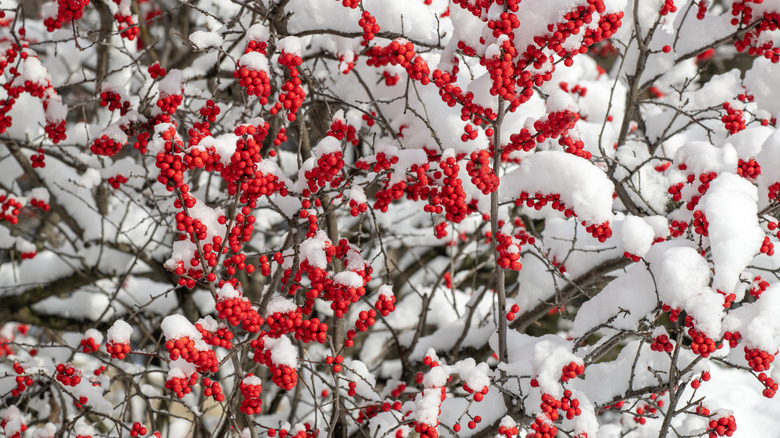
Winterberry (Ilex verticillata) is another berry-producing shrub that will bring exceptional winter color to your yard by way of its deep red berries. Though technically a type of holly, winterberry is not evergreen. It is deciduous, meaning that it will drop its leaves in the fall. The berries, however, will remain throughout the winter, providing food for birds and generally being a bright spot in a bleak winter landscape. They are hardy in zones 3 to 9, and you need both male and female plants in order to ensure berry production.
Boxwood
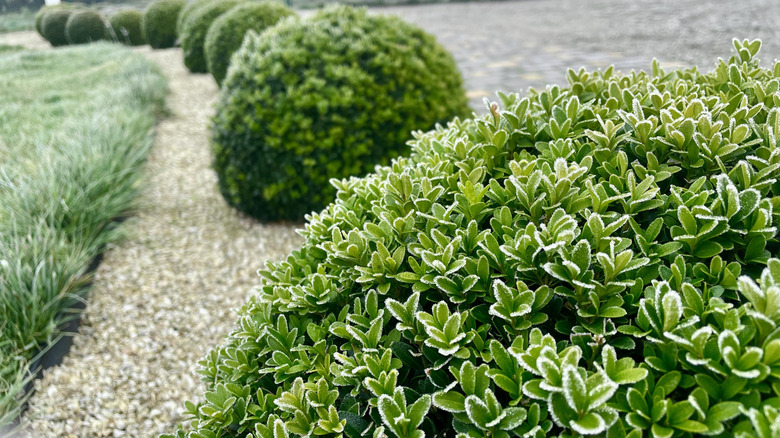
Boxwoods (Buxus sempervirens) not only grow incredibly thick, making for excellent hedging, but they can maintain their deep green color and shape all winter long. This is especially true of cultivars like 'North Star' which is hardy between zones 5 and 9. Being an evergreen, boxwoods can make great border plants, or be grown as a standalone shrub, either in the ground or a container. Just note, containers offer roots less insulation against the cold, so you might need to give the boxwoods some protection, or choose a variety that's especially cold-hardy.
Winter jasmine
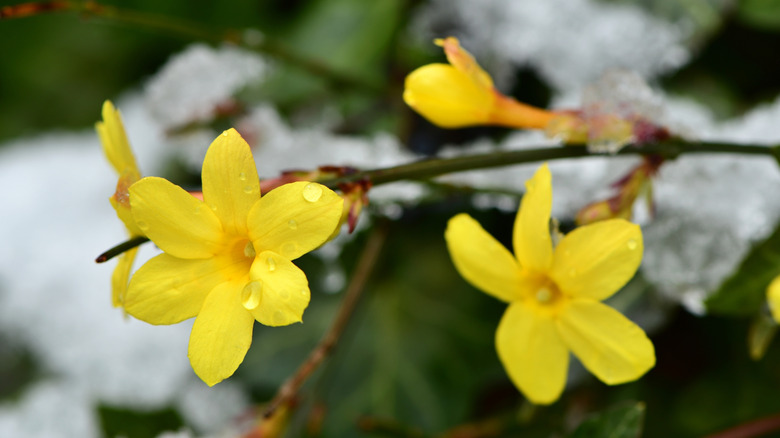
Though not fragrant like other varieties of jasmine, winter jasmine (Jasminum nudiflorum) does have a few features that make it an excellent cold-season plant. The primary reason is the fact that its bright yellow flowers will burst forth from the shrub's woody limbs in the late winter or early spring of its planting zones (6 to 10). The lack of scent is made up for with those beautiful yellow blossoms that can start coming forth in late January. The arching branches root on contact with the ground, making them a great stabilizer for sloped properties.
Winter heath
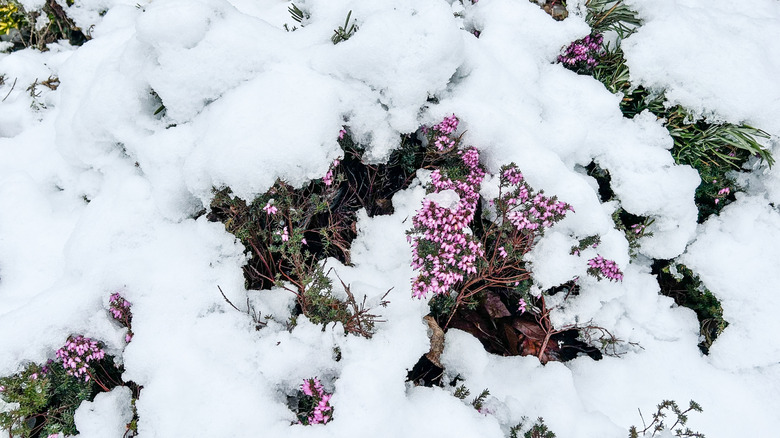
If you are looking for a plant whose flowers will give you consistent color even in colder climates, consider winter heaths such as Erica carnea and Erica x darleyensis. Hardy down to zones 5 and 6, respectively, these winter heaths form a mounding, dense ground cover and can maintain their flowers (which appear in winter or early spring) for months. They come primarily in shades of pink and white and cluster densely together. While cold hardy, heath does protection from harsh winter winds, especially if there isn't enough snow to form an insulating blanket.
Lily of the valley shrub
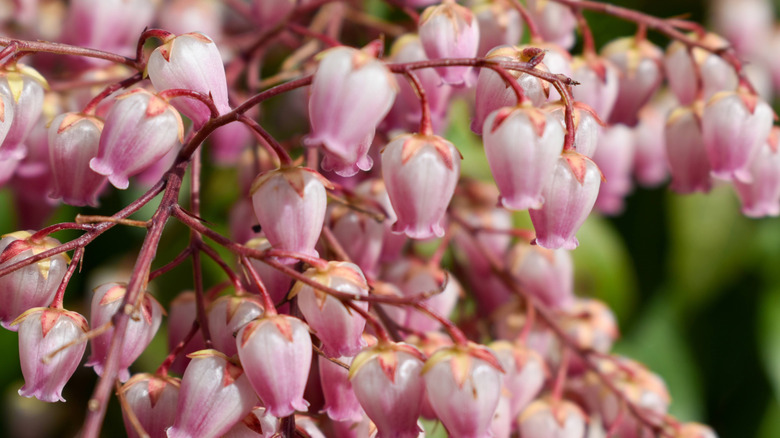
Though they won't actually bloom until the very end of winter, having a lily of the valley shrub (Pieris japonica) in your yard is going to bring you some joy when you need it most. The flower buds form in the fall and are visible during winter, before bursting forth in white to pinkish bells in the spring. These will eventually give way to some stunning red foliage. The shrub is hardy from zones 4 through 8, and can be a great wind block growing up to 10 feet in height.
Winter aconite
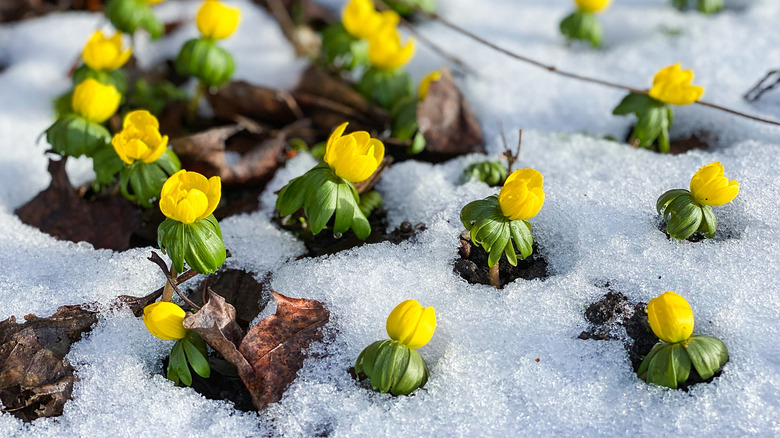
Here's the thing about flowers that bloom in late winter or early spring: They wake up at the same time as the deer, rabbits, and other hungry plant chewers. Thankfully, winter aconite (Eranthis hyemalis) is a plant that both deer and rabbits tend to avoid. Hardy between zones 3 and 7, winter aconite pushes out bright yellow, buttercup-shaped flowers that actually serve to attract pollinators to your yard. However, be wary because winter aconite is highly poisonous to humans and may not be best for gardeners with curious kids.
Red-twig dogwood
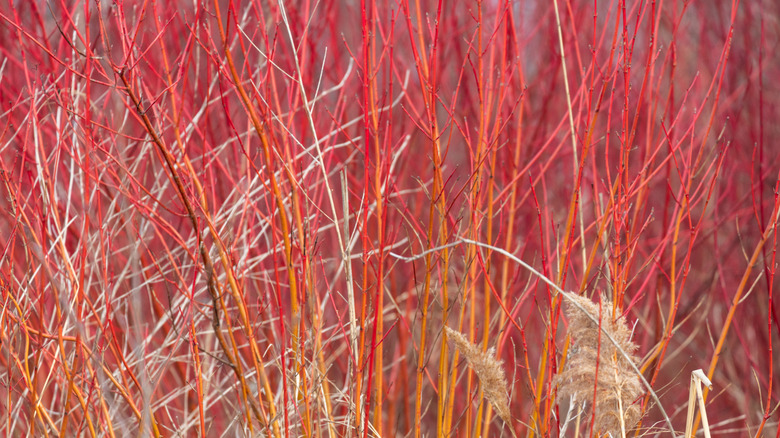
If you really want to make your yard look amazing during the winter, then you need to be planting red-twig dogwood (Cornus sericea), which is hardy in zones 2 to 7. Though the leaves will drop in the fall, as is typical with dogwood shrubs and trees, the branches on the red-twig dogwood truly live up to their name. They shine vibrantly red throughout the entire winter, making those gray and snowy days a little more tolerable with some snaps of amazing color. Prune your dogwood in the early spring to encourage next year's red growth (new stems are the most deeply colorful).
American beautyberry
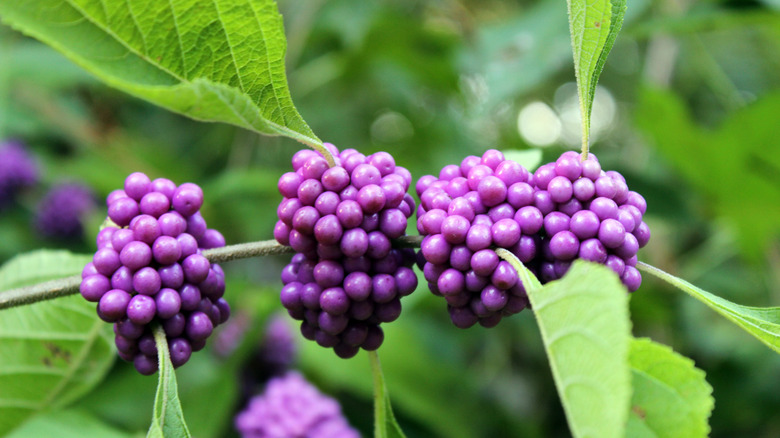
The American beautyberry (Callicarpa americana) is an interesting native shrub that will add some dimension and visual interest to your yard if you're in its cold hardiness range, which spans zones 6 to 10. American beautyberry puts out small delicate flower clusters towards late spring — however, it's not the flowers we're interested in for the winter — it's the deep purple berries. These will stick around throughout the fall and early winter next year, add striking visual interest, and are a great feature for attracting birds.