

Not Birdseed: The Feature That Can Attract Birds To Your Birdbath
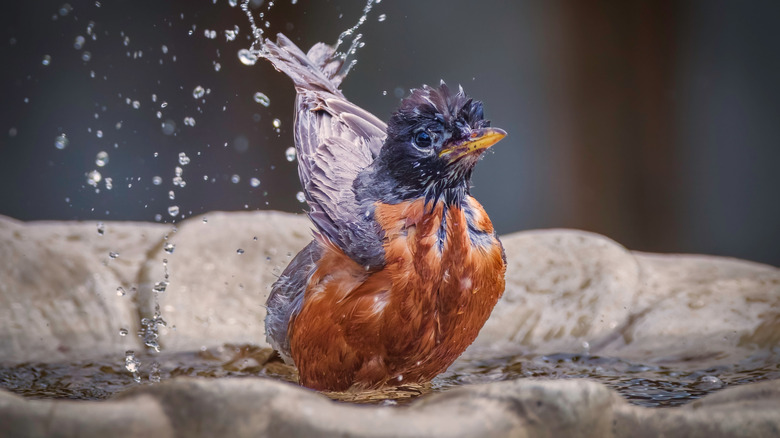
It is quite common for backyard birders to add birdbaths and other water features as a way to keep their feathered friends hydrated throughout the year. However, rather than instantly drawing visitors, birdbaths sometimes remain underutilized well after installation for a variety of reasons. In such a situation, placing a feeder nearby may be the obvious way to attract more birds to your backyard and, thus, to the water. An even better solution, however, is to plant native flora around your birdbath. Native plants not only provide attractive food sources the way feeder seed might, but they also create a welcoming, familiar environment for both local and migrating birds to perch, nest, and hide in a way that a tube full of seeds can't.
To be clear, placing bird feeders around your yard with the right seed mix will likely attract a variety of birds to your birdbath as well. However, there are pros and cons to having multiple feeders. Even with just one feeder, you have maintenance and upkeep — such as cleaning and filling it on a regular basis — that must be done in order to continue attracting birds. Native plants, on the other hand, are disease resistant, generally require less water and care on your part, and can actually bring in a greater variety of birds than feeders alone. About the only downside is that it can take time for these plants to become established. However, once mature, you will have curated a beautiful, bird-friendly environment around your birdbath.
Native plants near your birdbath means more food options
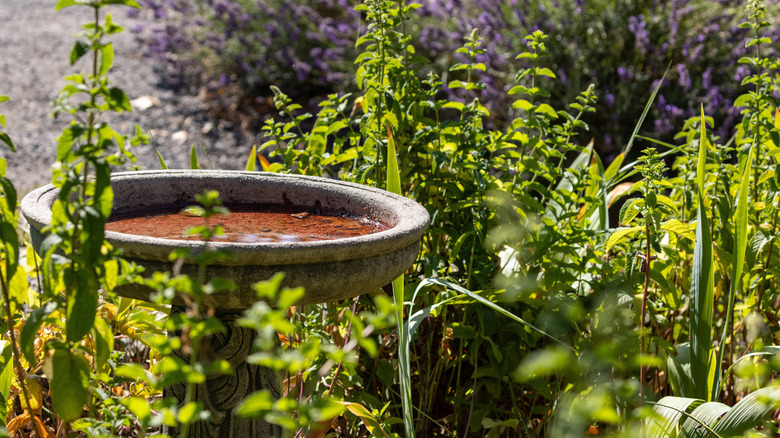
Growing native plants in your yard and around a birdbath is more than just a nod to nature, it's practical. To start with, they benefit your local ecosystem. Flowering plants attract local pollinators along with other bugs, and host larvae such as caterpillars. Some songbirds, like orioles, don't eat birdseed, but bulk up on insects during nesting season, while visitors like bluebirds and robins enjoy insect-heavy diets (bluebirds also love wild berries). Even some seed-loving birds like cardinals forage for caterpillars for their young. So it only stands to reason that growing native plants will attract a greater variety of feathered friends to your yard and birdbath. In fact, a 2017 report in Biological Conservation demonstrated that native plants provide better foraging and nesting opportunities for many bird species.
To begin, you'll want to check with your local botanical garden or university extension office for information on which plants work best in your USDA hardiness zone and in your yard. For example, the University of Illinois extension site, partnered with the Morton Arboretum, offers up a list of regionally native shrubs like purple chokeberry (Aronia x prunifolia), which cedar waxwings and many other bird species in the Midwest love for its berries. Other indigenous plants, like creeping Oregon grape (Mahonia repens) can be integral to berry-rich gardens that attracts birds into the winter.
Keep your birdbath in mind while planting. It's fine to tuck a birdbath among flowering plants, but even better is to give about 2 or 3 feet of space making it easier for you to maintain and for birds to keep an eye out for predators (especially cats that hide in low growth). Plant shrubs and trees about 10 feet away from a birdbath — far enough that predators can't surprise them, close enough for nesting, foraging, and shelter. And avoid spraying insecticides, since those are bad for bugs and hungry birds alike.