

Help Birds Stay Cool In Summer With This Simple Trick For Birdbaths
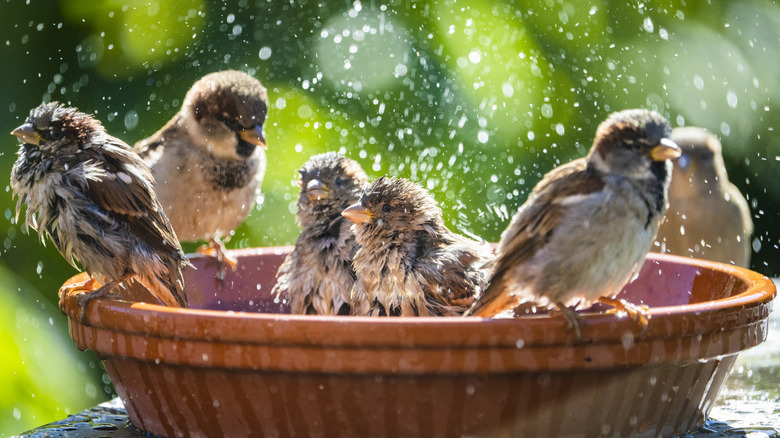
Intense heat is one of the most dangerous weather conditions for both humans and wildlife — including birds — and we've seen an uptick in extreme summer temperatures in recent years. In order to help birds stay safe when the temperature rises, many people install a birdbath. This gives your winged visitors a water source for drinking and bathing. However, if the water gets too warm, birds may actually skip using the feature. One simple trick to help the water stay cool and attract birds throughout the summer is to add a chunk of ice to the birdbath each day.
Though it may melt fairly quickly, a block of ice on a hot day cools down the water long enough for birds to want to take a dip. Otherwise, even if you do not place your birdbath in a sunny spot and remember to avoid easily-heated metal basins, the ambient air temperature can warm the water uncomfortably. This combination of heat and lack of use can quickly transform a birdbath into a pool of stagnant water, encouraging algae, bacteria, and mosquitoes, posing a health hazard. Believe it or not, when it's hot out, this transformation from clean water to cesspool can occur in as little as a day or two. So, while you may spend a good amount of time next winter trying to keep your birdbath from freezing, during the peak heat of summer, it's actually a good idea to add ice to the water in order to curb climbing temperatures.
Block ice is the best way to cool your birdbath
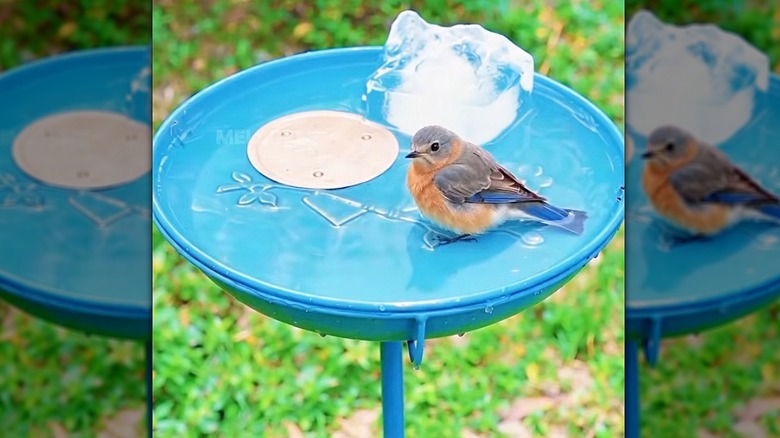
Adding any type of ice to your birdbath on a hot day will help. However, a singular block of ice is typically a better choice. This is because a pile of cubes or pebbles will melt much more quickly than a large chunk. The longer melt time ensures the water remains at a more moderate temperature throughout the day. The best practice is to add a block of ice to your birdbath in the morning, while the water is still relatively cool. As the ice melts, it adds fresh, cool water to the basin, which helps offset any loss from evaporation or avian activity.
The easiest way to create ice blocks for this purpose is to fill a plastic bowl and place it in your freezer the night before. Use a plastic or silicone bowl that has some flexibility in order to make it easier to remove the ice block. Once you dump the ice block from the bowl, simply refill it and place it back in the freezer. Depending on the size and style of your birdbath, you may want to add an additional ice block on extremely hot days. However, most often one block will suffice.
Another option is to use small, frozen water bottles. With this method, remove any labels before bottles are placed in the birdbath. The upside is that water bottles can be used repeatedly, refreezing them each night (although they should be rinsed off before being placed back in the freezer). They can also provide a handy perch for visiting birds. The downside is that while they do keep the water cool, they do not add any water to your birdbath.