

This Fireweed Lookalike With Gorgeous Long-Living Flowers Is Banned In Most Of The U.S.
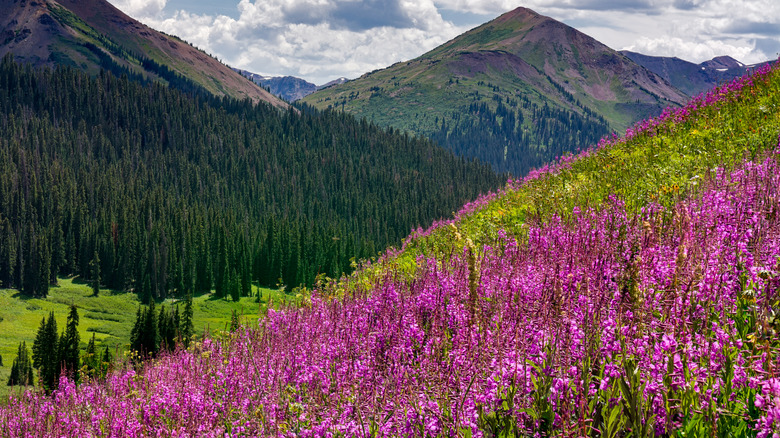
Fireweed (Chamerion angustifolium) is a wildflower native throughout much of the continental United States. This indigenous plant not only looks striking, it also provides a number of benefits. In the wild, it's often the first plant to grow following a fire, preventing soil erosion and providing an early food source. We also benefit from the plant: Fireweed tea is high in vitamins A and C and its blooms make a spicy honey. It also attracts a wide variety of beneficial pollinators. In fact, many backyard birders consider fireweed a must-plant perennial to attract hummingbirds. However, fireweed has a gorgeous doppelganger that's not so welcome: Purple loosestrife (Lythrum salicaria L.) is a fireweed lookalike that is actually banned in most U.S. states.
Outwardly, purple loosestrife — native to Europe and Africa and making its way to North America in the middle of the 19th century — is very similar to fireweed. Both plants are tall, capable of stretching upwards of 6 feet. Additionally, both feature pinkish-purple blooms and elongated, lance-shaped leaves. To the uninitiated, purple loosestrife is every bit as striking as fireweed. As a result, it is a popular plant to grow in gardens and flower beds. However, doing so can have negative ecological ramifications. In fact, depending on where you live, planting purple loosestrife may be against the law. So, there are both legal and ethical reasons to avoid this invasive lookalike.
Why purple loosestrife is widely banned
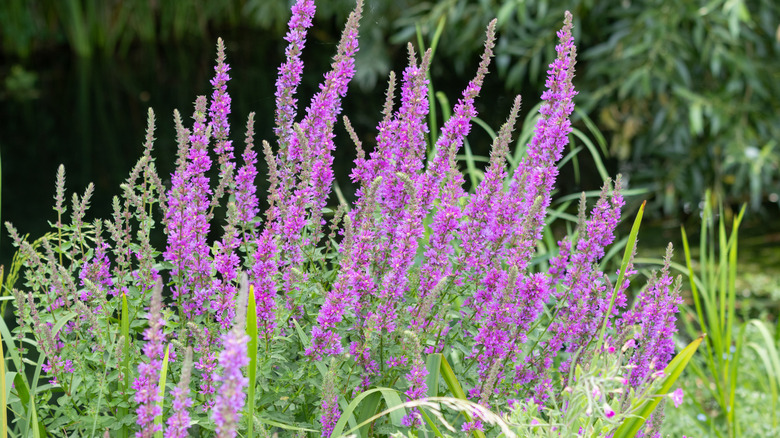
You may be wondering why purple loosestrife is so widely banned if it is essentially a fireweed mimic. Simply put, it is an extremely aggressive, non-native plant that spreads rapidly. As it does, purple loosestrife crowds out many beneficial native plant species, including fireweed. As the availability and diversity of native flora begins to dwindle, so does the food source and nectar supply for an array of wildlife and insects. Additionally, since it is particularly prodigious in wetland areas, purple loosestrife can choke off currents, creating stagnant, standing water.
Because of these issues, several states including Minnesota, North Carolina, and Pennsylvania have classified purple loosestrife as a noxious weed and prohibited invasive species. That makes it illegal to buy, sell, transport, introduce, import, or possess purple loosestrife depending on a state's given legislation. While this invasive imposter is not listed on any federally restricted plant lists, a total of 25 states have regulations restricting purple loosestrife.
With that in mind, identifying purple loosestrife is something you should know before buying plants at a garden center, as some places do actually sell the plants. Purple loosestrife flowers have five to seven slender petals, while fireweed flowers have four round petals. The leaves of a purple loosestrife are arranged opposite each other where fireweed leaves alternate. But the stems are the biggest giveaway. Fireweed stems are octagonal or roundish. Purple loosestrife stems are square. If you spot purple loosestrife at a store, don't buy it. Should you be growing it at home, replace it with fireweed or another native plant. If you spot this invasive species in a national park, don't pull it yourself: Instead, make careful note of its location and report the sighting to a ranger.