

How Long It Actually Takes To Revive A Dying Lawn
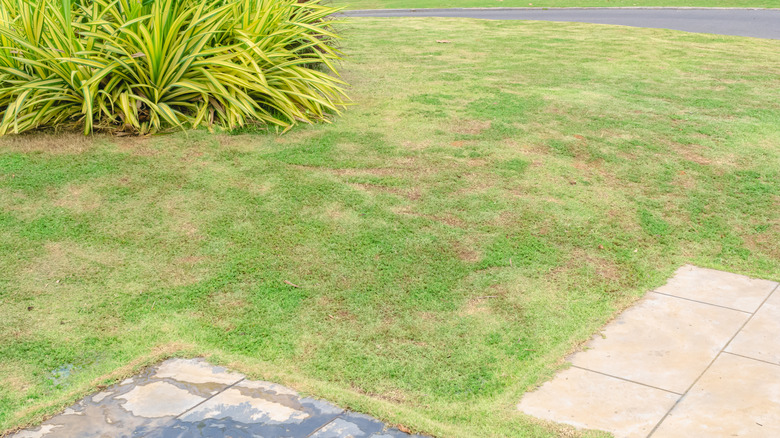
If you see signs you lawn is dying, such as changes in color, brown spots, or areas where grass is coming in patchy, you may be wondering if it can be saved. Beyond that, you're likely curious when you'll have lush, green grass again. Unfortunately, there is no universal answer: The timeline for your lawn's recovery is based on several factors including the underlying cause of the problem, the prescribed treatment, type of grass, and the time of year the issue arises. No matter what, it won't happen overnight. It could take anywhere from a few weeks to an entire season to see results.
When you notice brown or discolored grass, the first thing to do is figure out if the grass is actually dead or just dormant. Depending on the type of grass, various factors will cause it to go dormant, including heat, cold, and drought. Dormant grass isn't dead, it's conserving energy until conditions improve. Most often, dormant grass will change color throughout an entire lawn rather than in patches. To determine if grass is dormant or dead, apply the pull test by grabbing a handful of grass and gently pulling. Firmly rooted, the grass is dormant. If it pulls out from the ground easily, it's dead.
Dormant lawns will typically come back to life within a few weeks of conditions improving. While you cannot control the weather, if drought stress was the cause for the dormancy then a return to a proper watering schedule will get your lawn back on track. Bear in mind that while dormant or drought-stressed grass may be on the mend within a few weeks, it needs a full growing season of up to 6 months in order to complete its recovery.
Overseeding or reseeding may be necessary to fix a dying lawn
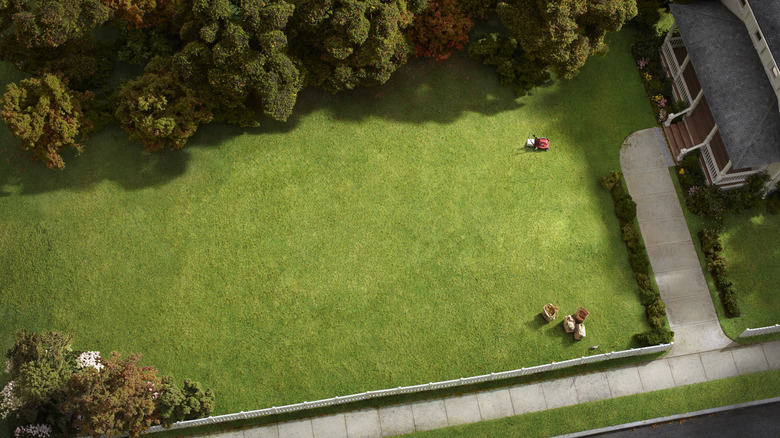
If you've determined that you're dealing with dead grass, first address the underlying problem to prevent it from recurring. This can range from grubs or dog urine to fungal infection and disease. Once that issue is taken care of, assess how much of your grass is dead. If your lawn is sprinkled with bare spots and dead areas, you can typically just overseed those patches. However, if the majority of your lawn has been affected, it's usually best to get rid of the remaining grass and start over by reseeding your entire lawn.
Overseeding is a relatively fast fix for lawns that have dead grass in a confined area or several small spots. Typically, new grass will germinate and begin growing in the bare spots within a couple of weeks. While overseeding can be done throughout the year, keep in mind the best time to overseed is in early fall and spring. Overseeding during these shoulder seasons allows newly planted seeds optimum conditions for growth, decreasing the time it takes to revive your dead lawn.
If you have to completely reset your lawn via clearing and reseeding, it will take more than a month for your new lawn to begin growing. Obviously, the faster you get the old grass gone and new seed planted, the shorter the timeline. However, four to six weeks is a reasonable estimate when it comes to starting a lawn from scratch. Additionally, your new lawn won't be fully established until it has gone through a complete growing season. In extreme cases, it may take an entire year to have your whole lawn back and thriving.