

Get Rid Of Termites With An Ingredient They Can't Survive
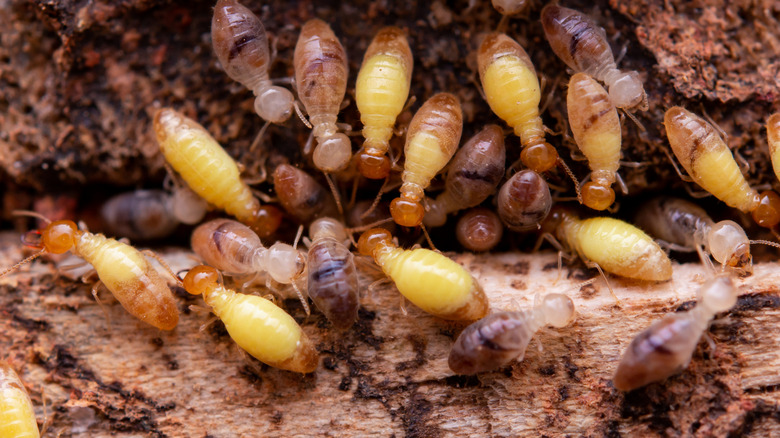
If you've had the misfortune of dealing with termites, you likely understand the importance of snuffing them out before they attack your wood deck, foundations, or fencing. Though many people assume the only effective solutions involve harsh chemicals or expensive professional treatments, there are other hacks to banish these pests from your property. One surprisingly common ingredient that has earned a place in termite control for decades: boric acid.
Unlike fast-acting insecticides that kill on contact, boric acid (also found in Borax laundry detergent) works gradually. As termites tunnel through wood or other materials infused with the compound, the acid enters their digestive system, interfering with their ability to process food. Unable to extract nutrients, the insects eventually die of starvation or dehydration (as a bonus, borate crystals damage insect exoskeletons). This process can several days, up to a few weeks. Because termites continually feed on wood, lumber treated with boric acid can provide ongoing protection against future attacks, while a properly applied dusting of boric acid can be used to fend off a burgeoning infestation.
Whether you're looking to prevent a termite infestation, or fending off an existing horde, it's worth looking into boric acid: It's found in over 200 common pesticides, making it a highly effective technique for curbing infestations before they begin. The advantage of using Borax or pure boric acid powder is you cut out unnecessary chemicals in favor of a natural substance. Be aware that it is considered a desiccant, and mildly toxic. Avoid dumping it on plants in garden beds, or on anything you're planning on eventually eating such as herbs or fruit saplings. It's best employed as a preventative — surface applications of boric acid can provide supplemental protection, but severe infestations may still require professional help.
How to use boric acid to effectively get rid of termites
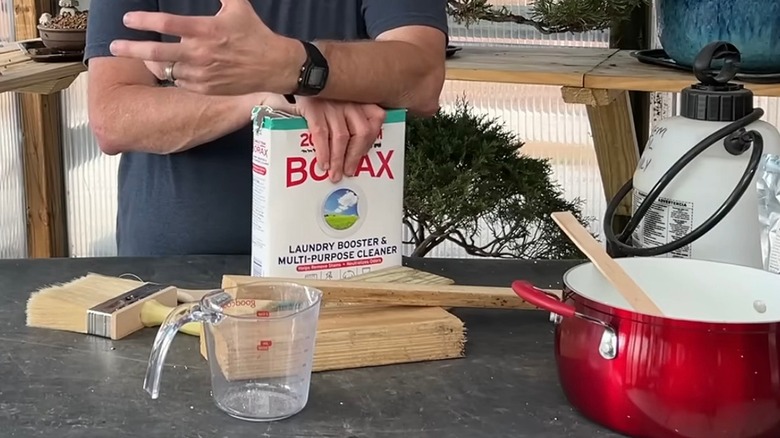
The most important thing to understand is that application matters just as much as the product itself. Borates are most effective when they're used in solution to penetrate the wood that termites are likely to feed on. It's why boric acid is commonly used as a wood preservative and infestation preventative during construction, renovations, or repairs. Treating exposed framing before drywall and insulation are installed, or before erecting fences, allows the solution to soak into the lumber, creating long-lasting protection that's in place before termites arrive.
The substance is best applied to exposed, unpainted wood when possible. You can make a DIY solution by adding about 1 cup of Borax or boric acid per gallon of very hot water, and infusing the wood completely (especially cut ends) while the liquid is still hot. You want to apply this solution — by soaking, spraying, or painting it on — before any paint or stain is applied, ideally prior to construction or repair. Unfortunately, simply scattering the powder around a home's foundation is unlikely to stop a subterranean colony of termites once it has already established. Topical boric acid still has a role in fending off the creepy crawlies, but expectations should remain realistic.
Ultimately, boric acid works best as a preventative measure, or as one part of a broader termite management plan, paired with natural termite repellants such as lavender. If it's too late to treat your wood, you can take other precautions against termites, by reducing excess moisture around your foundation, repairing leaks, and keeping firewood and pruning debris away from your home. But if an inspection reveals widespread termite damage, your best bet is still to contact a licensed pest control professional.