

Challenging Misconceptions: Why You Shouldn't Pull Weeds In Your Yard
We may receive a commission on purchases made from links.
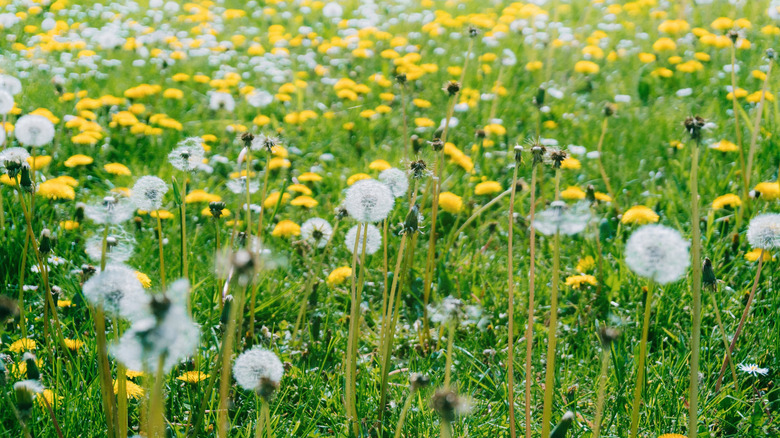
Whether you've been gardening for decades, or picked up a spade last week, you likely know one of the cardinal rules: banish weeds from your yard and garden with extreme prejudice. For generations, we've been taught that the best-looking yard is one completely free of these pesky invaders. However, as interest in native landscaping and pollinator-friendly gardens rises, some experts have begun questioning what actually qualifies as a weed, and whether every unwanted plant deserves to be removed. In fact, it's something of a common misconception that you should be clearing your yard of all weeds.
Botanically speaking, the term weed is not a scientific classification. Instead, it's a catch-all for any plant growing where it's not welcome. In fact, the same species might be considered a nuisance in one yard and intentionally cultivated in another because of its beauty, ecological value, or ability to support local wildlife. For example, native wildflowers, self-seeding annuals, and volunteer plants often provide nectar that will attract helpful pollinators or shelter beneficial insects, even if they don't fit the traditional image of a perfectly manicured lawn.
Obviously, that doesn't mean every uninvited plant that sprouts in your yard or garden is a weed that shouldn't be pulled. Some invasive plants can spread so aggressively that they crowd out native vegetation and disrupt the local ecosystem. Identifying these problem plants and removing them remains an important part of responsible yard care. The challenge comes when learning to distinguish between genuinely harmful weeds and those that may actually contribute something valuable to your landscape. For those interested in creating a more natural yard, this shift in perspective can be surprisingly liberating, allowing you to turn your yard into a wildlife haven through "rewilding" all or part of your outdoor space.
How to decide which weeds stay and which should go
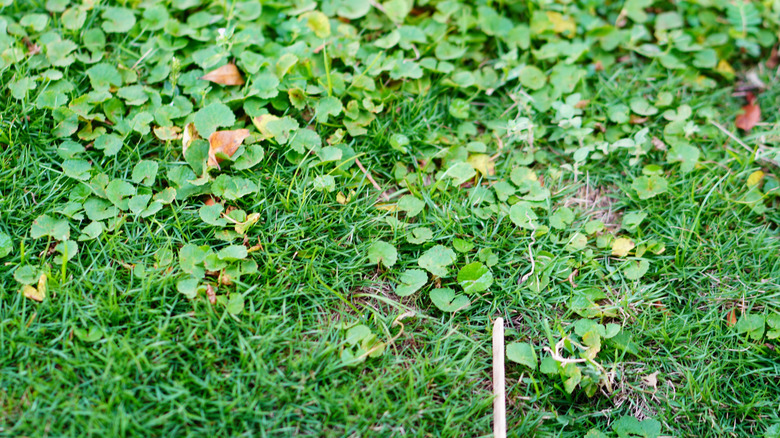
If you're interested in creating a more wildlife-friendly yard, the first step isn't to stop pulling weeds entirely. Instead, take the time to research the alleged invaders you're seeing, and treat each on an individual basis. One of the biggest benefits many so-called weeds provide is supporting local and native pollinators. Early-blooming plants such as dandelions, violets, and clover can offer nectar and pollen at times of year when few other flowers are available, helping bees and other beneficial insects emerge from their winter dormancy. Others — like milkweed — act as host plants, providing food for the caterpillars of butterflies and moths, and other beneficial larvae.
Some weeds benefit the soil: Plants with deep taproots, such as dandelions, help break up compacted ground and draw nutrients from deeper layers of the soil. As their leaves die back and decompose, some of these nutrients are returned closer to the surface, where neighboring plants can use them. Low-growing weeds can also reduce erosion, shade the soil to slow moisture loss, and occupy bare patches that might otherwise be colonized by more aggressive plant species.
By learning to identify the beneficial plants that appear naturally in your yard, you can replace blanket weed removal with thoughtful cultivation. You may find that some of yesterday's weeds are actually hardworking native plants that create a pollinator-friendly garden, improve soil health, and benefit your landscape with very little active work. You don't even have to wait for "weeds" to show up on their own anymore: Something like Pennington clover and grass seed mix can help create a lower-maintenance, self-fertilizing lawn that reaps benefits from both the wild and the manicured.