

5 Ground Covers To Plant If You Hate Mowing The Lawn
For many homeowners, a lush green lawn is a source of great pride. Keeping it that way, however, can feel like a full-time job. Between frequent mowing, watering during dry spells, fertilizing, and battling weeds, a traditional lawn often demands more time and maintenance than the average homeowner would like. To remedy this situation, some gardeners choose to replace all or certain parts of their lawns with low-growing ground covers. These often require less upkeep while still creating an attractive, functional landscape.
Ground cover plants offer a variety of benefits. They can spread naturally to fill bare spaces, suppress weeds, and can offer a higher drought tolerance than conventional grass. Some ground cover even produces flowers that attract beneficial pollinators, or provides habitat for them. Depending on the species, ground covers can also help reduce erosion, improve soil health, and add visual interest with unique textures and colors that a regular lawn simply can't match.
Of course, replacing a lawn isn't as simple as choosing the first spreading plant you find. Choosing the best ground cover for your specific space depends on factors including sunlight, soil type, foot traffic, and climate. Some popular ground covers can also spread aggressively or even become invasive in certain parts of the country, so it's important to do your research to avoid creating more problems than you solve. Luckily, there are plenty of attractive, lawn-friendly alternatives that combine durability with relatively low maintenance. Whether it's bee-friendly wild strawberries, sturdy blue star creeper, or even mowing-optional microclover, these ground covers can help you create a stunning, no-mow lawn without the constant work of maintaining traditional grass.
Blue star creeper
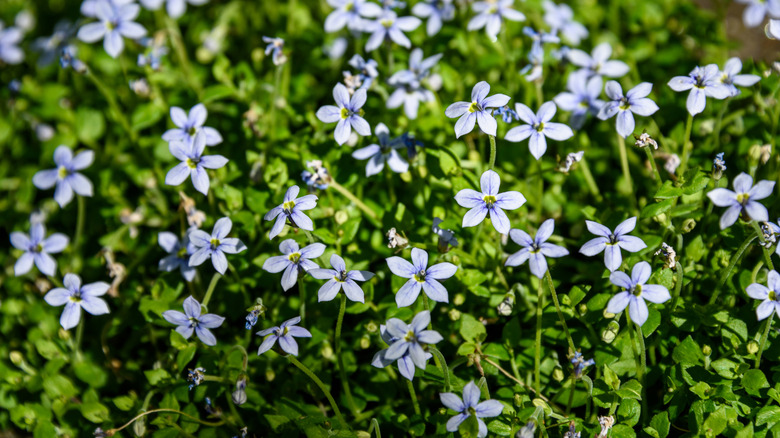
Homeowners searching for a lawn alternative that offers both greenery and seasonal color may be drawn to blue star creeper (Isotoma fluviatilis). This low-growing perennial forms a dense mat of tiny green leaves reaching just 2 to 3 inches in height, making it an excellent choice for those looking to reduce their mowing schedule. During the late spring and summer months, the foliage becomes dotted with delicate, star-shaped flowers, giving the plant its common name and transforming the lawn into a colorful mosaic.
Blue star creeper is a dense, carpet-like ground cover which thrives in full sun to partial shade and prefers well-drained soil. The recommended USDA Hardiness Zones for this plant are 6 through 8. Once established, it spreads by throwing runners, gradually filling bare spaces and creating a natural, weed-suppressing habitat. Unlike some of the other ornamental ground covers on this list, blue star creeper can stand up to light foot traffic, making it suitable for pathways, stepping stone borders, and lightly used sections of the yard. Of course, it's not intended to replace a heavily used lawn where children and pets play daily; repeated wear can leave bare patches that take time to recover.
Though it is not an invasive species, blue star creeper does have a tendency to spread quickly when conditions are favorable. The runners can travel underground several feet before emerging, seemingly popping up out of nowhere. As a result, the plant is best contained with buried edging and might require trimming during the summer to keep it from creeping into nearby garden beds or neighboring yards. A light pruning in late fall also keeps things neat all winter. Even with these caveats, you should find that your yard requires significantly less mowing and maintenance than with a standard grass lawn.
Pennsylvania sedge
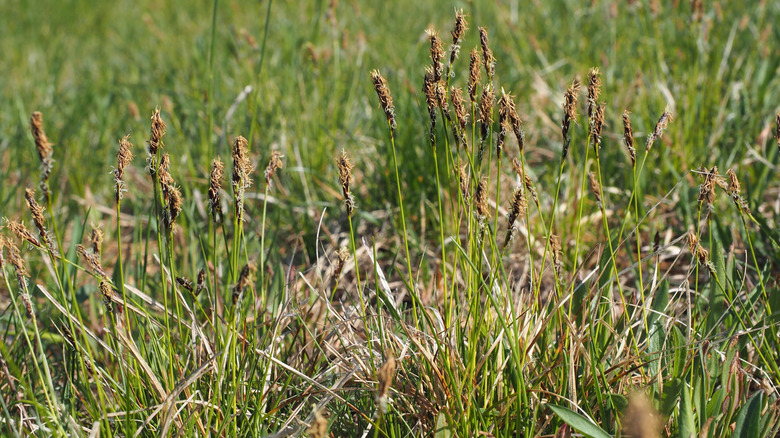
Next on our list of low-maintenance ground cover options, we've got Pennsylvania sedge (Caryx pensylvanica). Native to much of eastern and central North America, this low-growing sedge naturally carpets woodland floors, making it well suited to areas where conventional lawn grasses often thin out or fail altogether. In fact, it's a great option to help rewild your yard into a wildlife haven. Its soft, arching foliage creates a natural, meadow-like appearance while requiring far less maintenance than many turf grasses.
Pennsylvania sedge typically grows 6 to 12 inches tall, in USDA Hardiness Zones 3 through 8, so it's a bit larger than your standard ground cover. But the plant often flops gracefully to create the appearance of a low, even carpet. Because it grows slower than traditional grass, many homeowners can skip mowing entirely or limit it to just once or twice per year for a more manicured look. Once established, this sedge is relatively drought-tolerant compared to many cool-season lawn grasses, making it a practical choice for reducing supplemental watering in shaded landscapes. It also spreads gradually through short rhizomes or by division, allowing it to fill in over time without becoming too aggressive.
While Pennsylvania sedge isn't designed for constant foot traffic, it handles occasional walking far better than many woodland wildflowers. It's an excellent option for quiet corners of the yard, beneath large trees, or in places where maintaining a lush grass lawn has become an ongoing headache. Plus, Pennsylvania sedge is a native species, so it provides ecological benefits. This ground cover supports local biodiversity, blends naturally into woodland settings, and avoids many of the concerns associated with non-native spreading ground covers.
Microclover
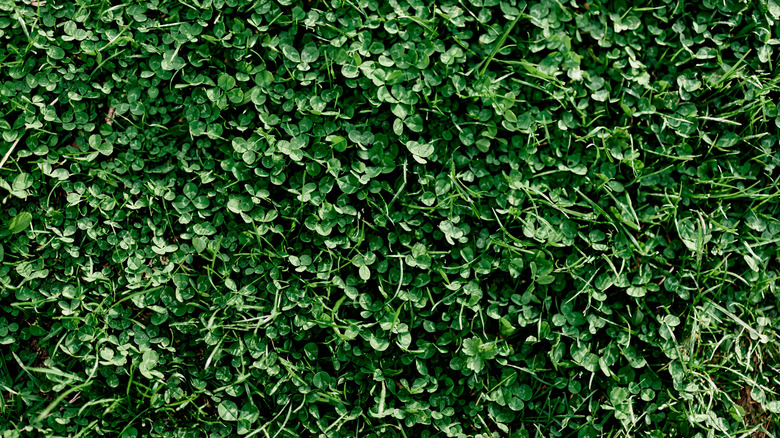
If your goal is to spend less time mowing without sacrificing the look of a lush green lawn, microclover (Trifolium repens) is one of the best places to start. Unlike traditional white clover, microclover cultivars consist of specially selected dwarf varietals that produce smaller leaves and blend more seamlessly into a lawn-like landscape. The result is a soft, low-growing carpet that requires less frequent mowing while remaining attractive throughout much of the growing season. It also mixes well with existing turf grass, making it a popular choice for homeowners who want to reduce lawn maintenance gradually instead of replacing their entire yard all at once.
Microclover grows best in full sun to partial shade and performs well in colder climates, particularly in USDA Zones 2 through 10. It thrives in a variety of soil types, so long as it maintains reasonable drainage. Once established, microclover is generally more drought-tolerant than common grasses because its roots help it access moisture below the soil's surface. Microclover can also tolerate light to moderate foot traffic, making it a good choice for areas that see some consistent use, like garden paths. While it doesn't require mowing, some people prefer to. Even then, it generally only needs to be mowed two or three times each season.
Once microclover propagates, it can flower with small white blooms — depending on the cultivar — that attract bees and other pollinators. Some cultivars, like 'Pipolina' have few or no blooms, but birds, bees, and other beneficial visitors still come to munch on grubs, aphids, or their frass. For anyone looking to cut back on mowing and watering, microclover offers an appealing compromise between a conventional lawn and a more natural landscape.
Creeping thyme
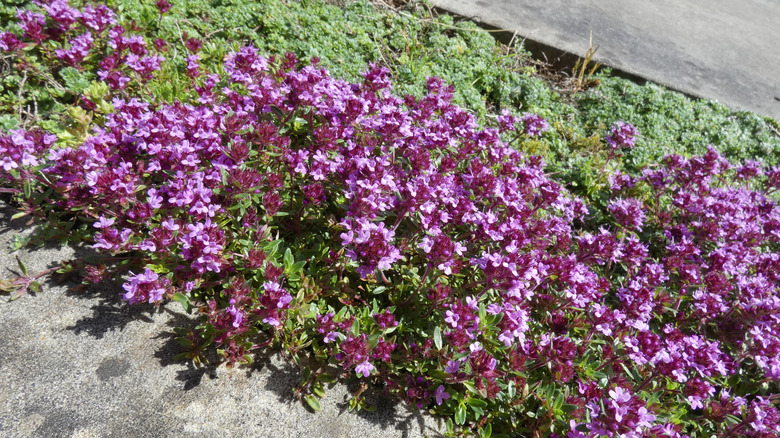
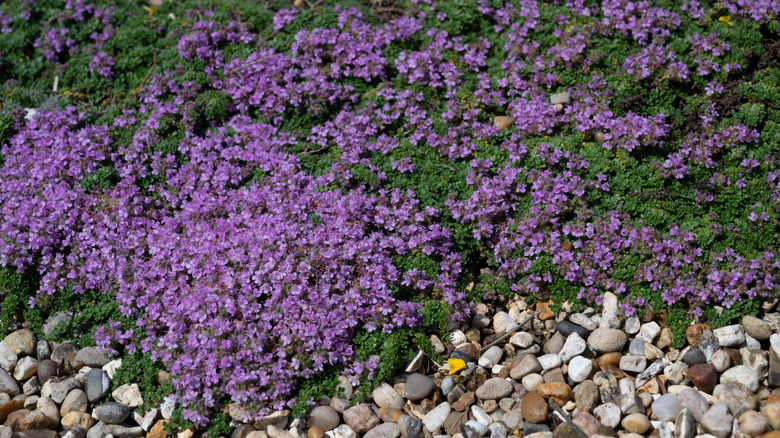
Creeping thyme (Thymus serpyllum) is often cited as a gold standard for attractive, low maintenance ground cover, thanks to its tiny aromatic leaves, dense mat, and blooming pink, purple, or lavender flowers that attract helpful pollinators while adding a splash of color to the landscape. Like some of the other ground covers mentioned above, creeping thyme thrives in full sun and performs best in well-draining soil. It generally thrives best in USDA Hardiness Zones 4 through 9, though some varieties are resilient enough to extend into Zones 3 or 10, under ideal growing conditions.
Once established, creeping thyme is notably drought-tolerant, making it a popular choice for drier landscapes and areas where traditional turf struggles during the summer heat. The cover's ability to spread allows it to fill in open spaces and create a soft, carpet-like appearance without becoming too aggressive. Creeping thyme also releases a pleasant herbal scent that can make pathways, patios, and seating areas feel especially inviting. As a result, it's excellent for areas with light foot traffic, such as stepping-stone paths or garden walkways. Some people even make an entire no-mow lawn out of this resilient ground cover.
To help creeping thyme establish, keep the soil evenly moist during its first growing season. After that, watering requirements will decrease significantly. You likely won't see flowers for the first two years. When you do, removing withered flower stems can keep the planting looking tidy during the off-season, although some gardeners prefer to leave blooms in place to support bees and other pollinators.
Wild strawberry
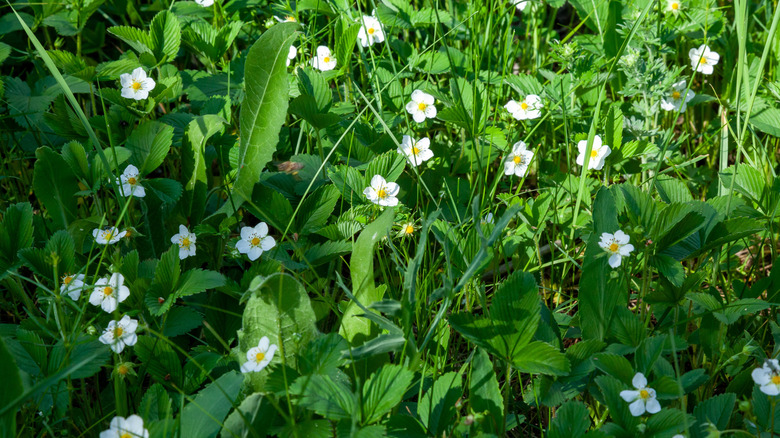
Finally, closing out our list of low-maintenance ground covers, we've got wild strawberry (Fragaria virginiana). This low-growing perennial, native to much of North America, spreads by sending out runners that gradually knit together into a dense green mat. Along the way, it produces delicate white spring flowers followed by small, delicious fruits that will have local wildlife flocking to your yard.
Wild strawberry mats typically grow to just 4 inches tall, making it a practical option for homeowners looking to cut down on their mowing schedule. While this doesn't create the perfectly uniform appearance of a conventional lawn, some gardeners appreciate the more natural look and the seasonal interest it provides, along with the wide variety of birds and beneficial insects it supports.
The plant performs best in full sun to partial shade, especially in USDA Zones 3 through 9. Well-draining soil with consistent moisture is important during establishment, but once settled, wild strawberry can tolerate short periods of drought. Since this ground cover spreads via runners, it gradually fills surrounding empty spaces in the yard, and helps suppress weeds without becoming invasive in regions where it's native. Although its enthusiastic spreading habit means you'll occasionally want to guide it back into place, wild strawberry is generally easy to manage, especially when planted in areas with light foot traffic.