

Not Essential Oils: There's A Smarter Way To Prevent Carpenter Bees From Drilling Into Your Deck
We may receive a commission on purchases made from links.
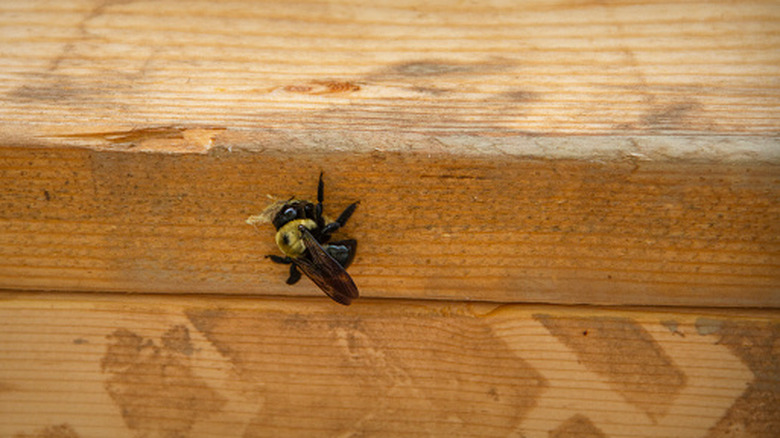
Wooden decks are updates that can add value to your home as well as amenities that add enjoyment to the time you spend outside. However, they are also magnets for carpenter bees, which seek out dead wood and wood structures to create tunnel systems in which they can lay eggs. Although carpenter bees are beneficial pollinators, they are not to be trusted around wooden decks. So homeowners often resort to numerous non-lethal tactics, including essential oils, like almond oil, to say goodbye to carpenter bees. But essential oils need to be applied and reapplied, ideally when existing nests are unoccupied. The smarter solution may be to simply paint the wood on your deck in order to keep these busy borers at bay, deterring them from drilling in the first place.
Carpenter bees are particularly attracted to unpainted and untreated wood surfaces, particularly if that wood is somewhat weathered. That's because such wooden surfaces are typically softer, making it easier for the bee to create holes and tunnels. While there's not much hard scientific evidence, and some pest control specialists consider this an unsupported myth, there is plenty of anecdotal evidence that carpenter bees gravitate toward soft, untreated woods like pine and cedar over hardwoods or pressure-treated pine. Painting your deck can effectively create another barrier, making the planks much less attractive to carpenter bees. While some people suspect a thick coat of paint or glossy sealant tricks the bees into thinking the wood isn't wood, it could simply be that the added coating is not worth their while, sending them off to find easier-to-penetrate targets. In fact, they will chew through painted wood if there aren't better options. But generally, a quality coat of paint means your yard and garden can still glean benefits from these pollinators without your deck paying the price.
Painted wood protects decks against carpenter bees
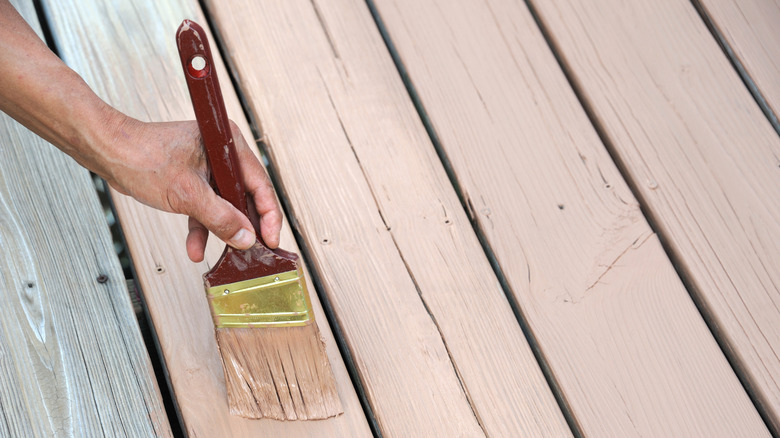
When it comes to painting your deck boards to ward off carpenter bees, the best bet is to utilize an outdoor paint and be generous with it. A thick coat is a better deterrent than a thin one. If you prefer the natural look of wood as opposed to a colored paint, you can opt for a thick coat of clear polyurethane instead. Either choice will not just help protect your deck against carpenter bees, a fresh coat will also make your deck boards look brand new. Additionally, a thick coat of outdoor paint or polyurethane can also help protect your deck from snow and ice during winter.
To make the paint even more effective at deterring carpenter bees, some people choose to add an insecticide to it. Products like Bug Juice paint additive or Bee Gone are designed to be mixed with paint or stain before application. Regardless of whether or not you add an insecticide, the key is complete coverage. Don't paint just the top of each board, but also underneath and along the sides, as best you can. People often leave these unseen portions unpainted. However, carpenter bees will find exposed wood, no matter where or how small. So, it is imperative that every portion of the board be coated in paint. It is equally important to add a fresh coat as the paint begins to weather, peel, or thin.