

Keep Wasps Away From Your Yard With A Crocheted Solution
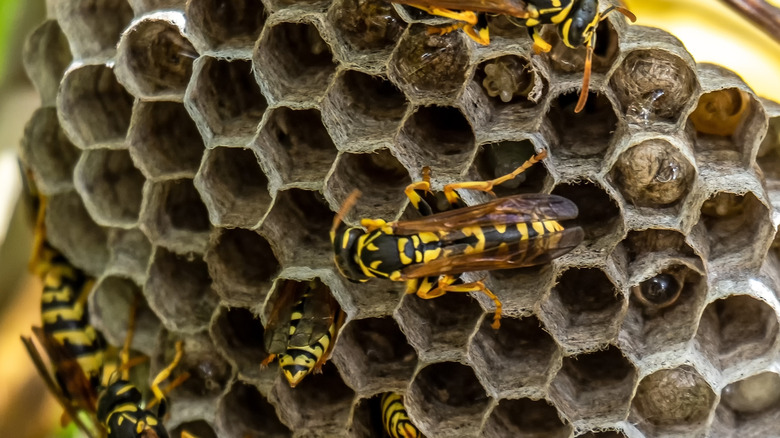
When you're looking to spend quality time in the backyard, few things can stress you out like a swarm of wasps, especially if they build a nest too close to your home. There are a lot of mistakes to avoid when getting rid of a wasp's nest, including some that result in angry residents. So for most homeowners, the best thing to do is prevent wasps from nesting in your yard in the first place. One popular deterrent that's been gaining traction online — even going viral — involves throwing up a crocheted hornets' nest, designed to convince wasps that the neighborhood is already occupied.
The idea isn't new — commercial decoys made from paper or fabric have been marketed for years, and anecdotally, people swear they work. But at $10 to $20 apiece, they're not cheap, and paper succumbs to the weather by the end of the season. Besides, crocheting your own nest is fun if you have the skills.
This tactic leans on the fact that some wasps are territorial. Theoretically, a queen looking to establish her nest in the spring may avoid competition. Setting up a decoy sends her off anywhere besides your porch or garden. The catch is that there is no scientific research to support this strategy, and logical reasons why it might not work. For example, many wasp species don't build these sort of ovoid, hanging nests. In fact, you might find underground wasp nests in your yard. Also, some wasps don't mind setting up house near other nests, sometimes even in the same tree. But again, many folks absolutely swear by the decoys, and it can't hurt to try for yourself. Once all is said and done, the worst-case scenario is that your crocheted nest is a cute, if foreboding ornamental DIY.
Add a personal touch to your own DIY hornets' nest
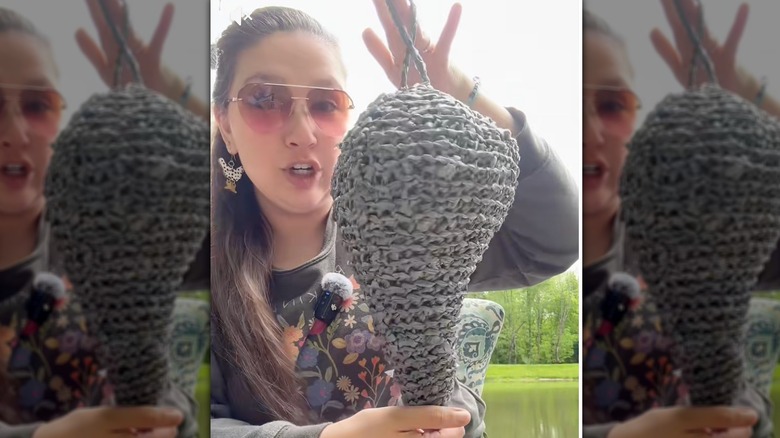
Whether you're hoping to discourage wasps or simply want to try a fun outdoor project, a crocheted hornets' nest is a beginner-friendly DIY that can be completed in a single afternoon. Most versions are worked in the round using easily searchable patterns and basic stitches to gradually create a conical bulb that resembles the layered nests built by paper wasps. Gray, taupe, beige, or light brown yarn creates realism, although there's plenty of room to get creative.
To solve for weather issues, TikToker hollyauna uses plastic yarn (AKA plarn), by shredding and twisting plastic grocery bags into waterproof strips, making it both affordable and reusable for many years. A sturdy loop of yarn or twine on top makes it easy to hang the finished project from a porch ceiling, pergola, or tree branch. To fill it out more, stuff it with plastic grocery bags.
@hollyauna Crocheting a fake hornets nest to keep away wasps! Let's see if it works! #waspdeterrent #hornetsnest #summer
Once you've mastered the basic pattern, it's easy to customize your DIY hornets' nest. For a more realistic look, try varying shades of gray or brown throughout the piece to mimic the layered appearance of a real nest. Self-proclaimed "crochet entertainer" gettohookingcrochet demonstrated a way to whip up a yarn nest using just your fingers. If you're crafting primarily for decoration, feel free to branch out a bit. You could even crochet a version in your favorite colors or patterns to coordinate with outdoor cushions, planters, or a front porch display.
When summer comes around, you should quickly learn whether this DIY is right for you. Make note of any wasp activity in the early morning, and avoid common mistakes that attract wasps to your yard. If you see a noticeable drop in the pest population, keep the fake nest hanging all season long, and consider making more.