

Here's What To Do When You Find A Ground Wasp Nest
We may receive a commission on purchases made from links.
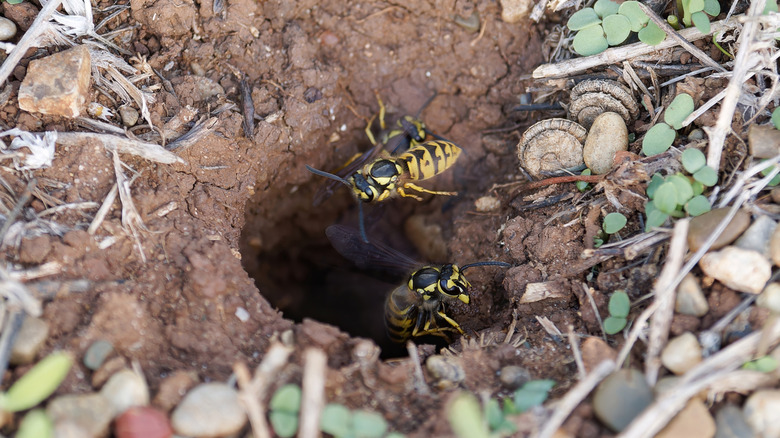
During warm weather months, it's a common practice to scan porches, eaves, and overhangs for wasp nests. While looking up is certainly prudent, it is also worth taking a glance at the ground — some types of wasps, as well as bees, will either burrow or make their nests in existing holes in the ground. Should you find (or stumble upon) an in-ground wasp nest, you will need to figure out if and how you need to deal with it.
If a ground nest is found, the first step is to determine what species of insects are utilizing it. While some dangerous types of wasps exist, there are also some helpful ones. Three groups of wasps tend to live underground: Cicada killers, which are mostly harmless to humans; yellowjackets, which can get aggressive if they feel threatened; and sand wasps, which generally aren't found in yards or gardens. Additionally, the nest's inhabitants could be bees. If you determine the nest belongs to a type of wasp that'll actually benefit your lawn and garden, then you don't want to eradicate them. Instead, you should let them be to go about their business. However, you may want to mark the nests so that you and others can remember to avoid the area.
If the wasps might pose a threat, such as bald faced hornets or other yellowjackets, then you will need to safely remove them. One strategy is to to just wait them out. This is because by late fall, the queens will have mated and abandon the nests in search of a winter hibernation location. When they do, the remainder of the colony will die away. So, if you're discovering the nest later in the year, you may not need to do anything.
What to do if you need to get rid of the ground wasp nest
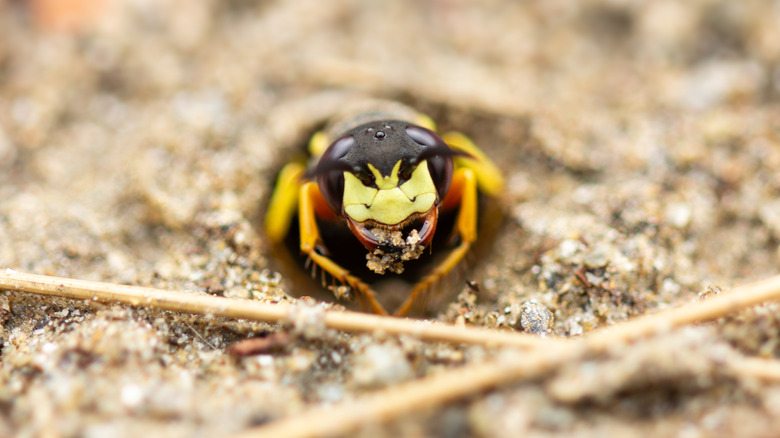
If dealing with an underground wasp nest is more urgent, you have a few options. Regardless of which you choose, take action in the evening, night, or early morning for both safety and efficiency. This is because from dusk until dawn, the entire colony will be tucked away in the nest and can be dealt with at once. Additionally, due to cooler nighttime temperatures, wasps are less active and aggressive, giving you a better opportunity at avoiding being stung.
Once wasps have returned to the nest and settled in, you can then apply one of a few different types of insecticide. One option is to use a spray foam wasp killer. The advantage of this method is it can be done from a distance, as these spray canisters are designed to shoot a stream nearly 30 feet. You will, however, need to be close enough to accurately hit the nest — a flashlight can help, since visibility will be reduced. Fill the hole with foam, then move away immediately.
The other methods require getting closer to the nest. One very effective method is to pour powder insecticide, such as Sevin insect dust killer, into and around the hole or holes. Fill a disposable cup with an adequate amount of powder, quietly approach the hole, quickly dump the dust in, then retreat with urgency. It should work within a day or two, as wasps track the powder down into the nest. You can also pour soapy water into an underground nest, preventing them from flying. A 5-gallon bucket works well here. Placing a piece of mesh screen over the hole prior to pouring the dust or soapy water will help prevent the now-angry wasps from following you.