

Don't Throw Out This Kitchen Scrap: DIY A Fertilizer Your Garden Will Love
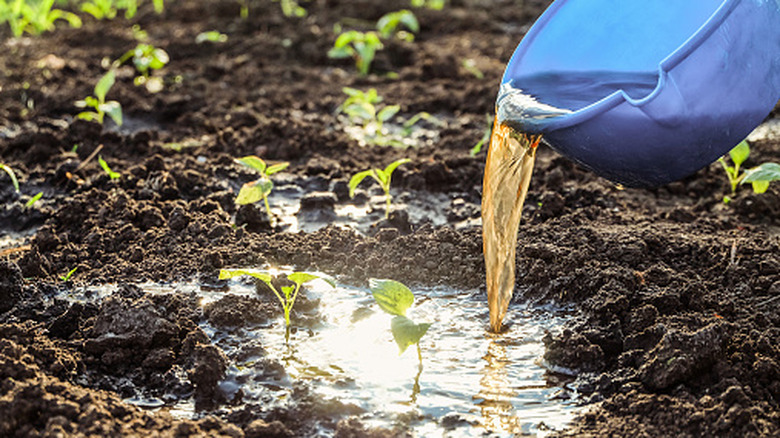
Whether you're adding eggshells to your herb garden or banana peels to your compost, kitchen scraps can be an excellent source of nutrition for fledgling plants. But there's one potential garden resource that often gets poured straight down the drain: rice water. Rice water, in various forms, has become quite popular among gardeners looking for inexpensive, low-waste ways to support plant growth. While freshly drained rice water is an often overlooked fertilizer, there are additional secrets (and nutrients) to be gleaned from fermented rice water.
Supporters of using rice water in the garden claim that the starchy liquid helps nourish plants, improves soil health, and encourages beneficial microbial activity. Fermented rice water, in particular, has attracted attention because the fermentation process breaks up hard-to-use starches and can promote the growth of lactic acid bacteria, which may contribute to a healthier soil ecosystem by fending off diseases and counteracting mildew and mold growth.
Of course, separating concrete science from anecdotal evidence can be a challenge. While researchers have identified beneficial nutrients, carbohydrates, and other compounds in rice water, the scientific consensus on its effectiveness as a garden fertilizer remains limited. That is to say, rice water is not a proven miracle fertilizer, and it shouldn't be viewed as a replacement for proper soil management or balanced plant nutrition. Even so, many gardeners swear by this technique. And the beauty is, whether you're pouring it straight from the rinsing pot or fermenting it for a few days, making your own DIY fertilizer from rice water is an easy process you can start any night after dinner.
Making a rice water fertilizer starts with extra water
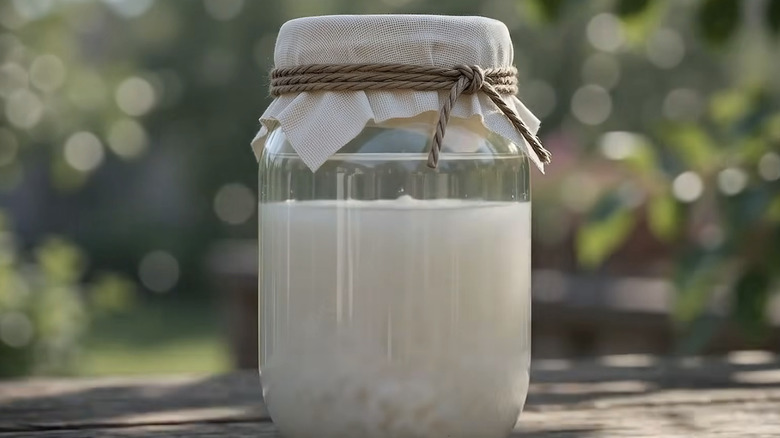
Rice water is useful as a fertilizer because it has trace amounts of starches, minerals, amino acids, and other organic materials. Depending on the type of rice you're rinsing (brown rice is slightly higher in potassium than white, for example), the remaining water will contain trace amounts of nitrogen, phosphorus, and potassium (NPK) along with other nutrients that plants need for growth. This is especially the case if you allow rice to soak for some time before removing it from the water, allowing the liquid more time to leach nutrients from the grains. Fermentation further alters the mixture by encouraging the growth of naturally occurring microorganisms and by breaking down sticky starches.
Making unfermented rice water is easy: Soak unwashed rice in water, or boil rice (don't add salt or seasonings) with more water than it can absorb, letting it cool before use. Fermented rice water has a few more steps. Once you've soaked or boiled your rice, strain off the water into a clean jar or other container. You can add a little milk to aid the fermentation process if you like. Cover it to deter bugs and mask the smell, and let it sit in a warm, but not hot spot from three to seven days. The rice water will go from thick and cloudy to more translucent, letting you know it's ready. It will also smell terrible!
With fermented rice water, it's often best to dilute the mixture before applying it to your garden, to avoid overwhelming the plants or creating unpleasant odors. Using it in concert with mulch, soil conditioner, or other proven soil-building practices is best. As an added bonus, fermented rice water is also touted as an effective pest repellant.