

Prevent Weeds In Your Gravel With This Affordable Solution
We may receive a commission on purchases made from links.
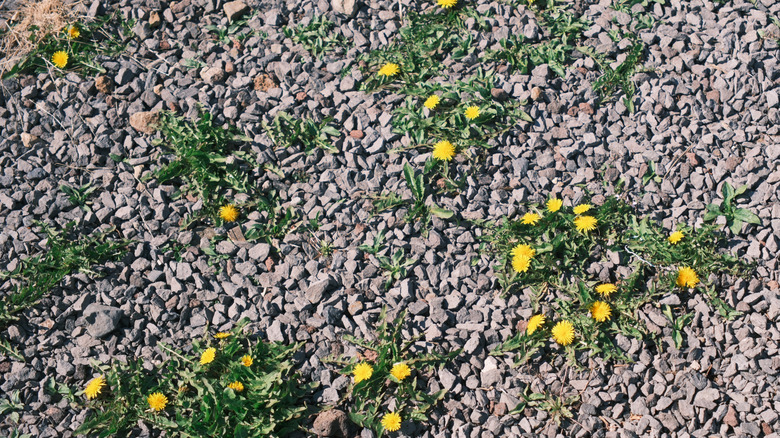
Nothing looks more unkempt than weeds sprouting throughout a gravel-covered area in your yard, garden, or driveway. But keeping weeds out of gravel areas can be a real pain, especially once they're established. So prevention is the key. With that in mind, there are a few things to know before using gravel in your next landscaping project, such as what can be done during the installation process to prevent weeds sprouting through the gravel later. Whether you're laying down a driveway or creating a no-mow yard, one affordable solution to this problem is laying down thick, black plastic sheeting under your bed of gravel.
Laying a sheet of black plastic as a weed barrier beneath gravel is simple enough, if you do it during installation. Once you've cleared and leveled the area in which you intend to place the gravel and laid down the subgrade, simply roll the plastic sheeting across the space. If more than one sheet is required, overlap sheets one or more feet to avoid gaps. Pin the sheets in place with stakes, spreading gravel on top. If you already have a gravel area established and want to place a weed barrier beneath, you will need to remove the top layer of gravel, lay the plastic down, then reinstall the gravel.
This process is essentially the same as it is to install landscaping fabric or any other weed barrier. So, why use plastic sheeting? For one, it is often cheaper: A 4-foot by 100-foot roll of Vigoro landscape fabric is about $60 at Home Depot, while an 8-foot by 100-foot roll of Husky black plastic sheeting runs about $33. If affordability is your main concern, plastic is the way to go. Secondly, it is actually more effective at preventing weeds than woven or permeable fabrics, blocking weeds completely.
What to consider before putting black plastic under your gravel
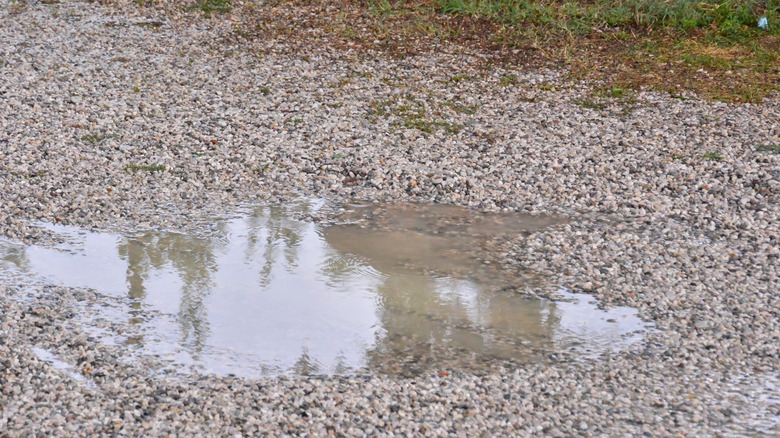
While black plastic sheeting is an affordable, effective method to prevent weeds from popping up in gravel plots or driveways, there are some things to be aware of before laying it down. For one, plastic sheeting not only smothers weeds and other plant life, it also prevents water from reaching the soil. This can be problematic if you are in an area that frequently receives heavy rainfall, as water can pool on top of the gravel.
The non-permeable nature of plastic also keeps air and nutrients from getting to the soil. So not only does it stop weeds, it prevents all plants from growing. So it's not the right solution when choosing gravel mulch for your garden. It's best for areas you are completely graveling over like patios, borders, decorative no-mow areas, and driveways. Additionally, over time black plastic sheeting will degrade, rip, and tear into smaller pieces. Since it is not biodegradable, all of these pieces will need to be picked up. This can become a time-consuming task, and may require total replacement more frequently than landscape fabric, which means periodically removing and redoing the gravel layer. All that said, not putting any kind of weed barrier down is a mistake to avoid when using gravel in your landscaping. The key is choosing the right material for your budget and needs.