

The Rare Type Of Lily That'll Make A Great Addition To Your Shady Garden
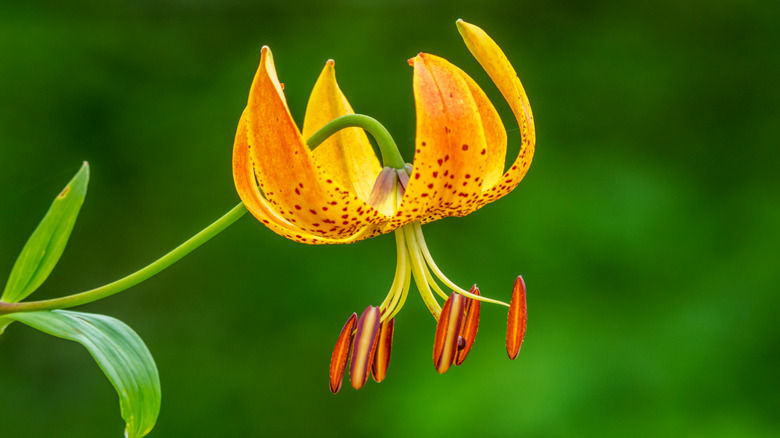
The shade in your garden can be the most frustrating place when choosing a plant. Often, the showiest flowers and most bountiful fruits and vegetables prefer more sun, leaving the shady corners and edges bare and unattractive. Of course, there are many perennials that can brighten up a shaded area, including the Turk's cap lily (Lilium superbum), a lily that is absolutely stunning and thrives in USDA zones 5 through 8.
A type of American lily, Turk's cap can grow 4-10 feet tall and produce up to 40 flowers per plant. Each flower, often closely resembling a tiger lily, bears six yellow-orange petals with maroon or purple freckles, creating an absolutely stunning addition to the shade in your garden.
In addition to bringing beauty, Turk's cap lilies are also great at attracting pollinators while in bloom, helping you DIY the perfect hummingbird haven, or for use in a pollinator garden to attract colorful butterflies. If you love the plant, but have a sunny yard, you might consider a clever fence DIY to create extra shade, giving the necessary conditions for your Turk's cap lilies to thrive.
Planting and growing Turk's cap lilies
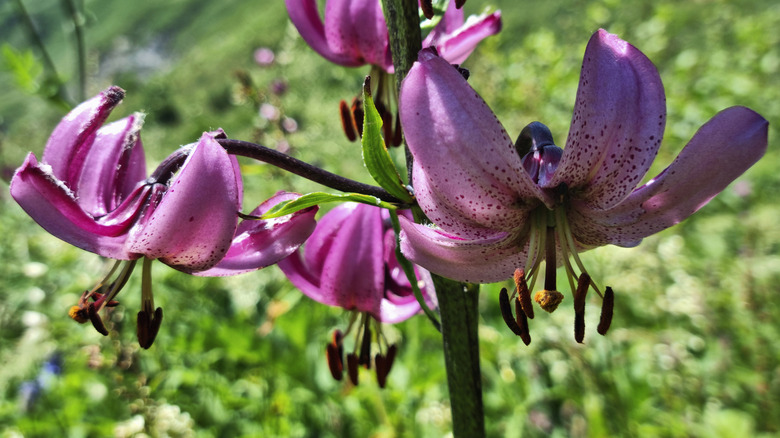
Pick a location in partial shade with slightly acidic, loamy, and fertile soil. Then, make sure there is enough room vertically, as Turk's cap lilies are tall plants. Be sure the space above them is cleared of obstacles.
Planting Turk's cap from seed requires patience: it could take up to seven years before it flowers. Start seed indoors through cold stratification. Use a well-draining container and seed starter, leaving the plant for eight to 12 weeks in a refrigerator or other very cold, dark place before germinating. For a slightly easier and quicker process, plant Turk's cap bulbs in loose soil about 12-18 inches apart. Place one bulb in each hole and cover them. When transplanting established plants, dig a hole twice as wide and the same height as the root mass and place it down before backfilling.
The maintenance for Turk's cap lilies is fairly easy. The soil at the base of your Turk's lilies should be watered regularly and kept consistently moist, but you do not want standing water. Use a balanced, slow-release fertilizer in the spring. To suppress weeds, maintain a 2 to 3-inch layer of mulch, leaving a small circle mulch-free around each plant to let roots breathe. While your Turk's cap lilies shouldn't need stakes, when planted in shade, their stems are not as strong. If they start to droop, they will benefit from the support offered by a stake. Deadhead as flowers droop and fade to create more blooms, and prune to about 3 inches above the ground following first frost in late fall or early winter.