

The Real Difference Between Fertilizer And Soil Conditioner
We may receive a commission on purchases made from links.
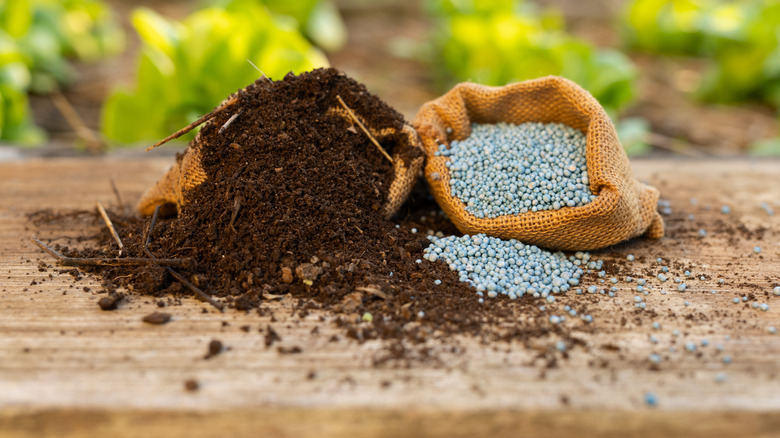
If your garden plants aren't doing as well as you've hoped, the conditions of the soil might be part of the problem. As far as gardening is concerned, soil often needs a little help to become the best version of itself, whether it's the nutrient balance, pH levels, texture, or the ability to properly drain or retain moisture. Correcting these issues so your plants thrive often comes down to supplementing the soil in one way or another. Fertilizers and soil conditioners are both capable of improving conditions in the garden or beneath a lawn, but they're not the same. Fertilizer adds nutrients to the soil, while a soil conditioner — a subset of soil amendments — improves the soil's structure. As one example, NPK fertilizer revitalizes garden soil by adding nitrogen, phosphorus, and potassium in specific ratios, all of which can improve the health of the plants within a nutrient-boosted soil. On the other hand, a soil conditioner added to the soil can make it more porous, less compact, and manages moisture better, which again helps plants avoid receiving too much or too little water.
In some cases, both a fertilizer and a soil conditioner may come in handy for improving soil that's compacted and devoid of nutrients. Other times, you'll only need one or the other, and they're not interchangeable. Knowing what's going on with your garden soil is helpful before you decide to add anything to it to improve it.
Digging deep into fertilizers vs. soil conditioners
Fertilizers typically contain basic nutrients in specific ratios to boost conditions for specific plants in the soil. They may be solid or liquid, organic or synthetic, such as a slow-release fertilizer that, thanks to a polymer coating, releases its natural nutrients over time rather than all at once. Different plants have different nutritional needs: Kale, rhubarb, and spinach appreciate a fertilizer with a lot of nitrogen, while banana peels boost potassium for certain plants, such as tomatoes and peppers. There is some crossover when it comes to which compounds are defined as fertilizer or a conditioner/amendment. Some examples of fertilizer includes commercial products like Fancy Chicken all-purpose organic lawn and garden food, natural nutrient-rich compounds like manure, or slow-release options like coffee. Meanwhile, something like egg shells work more like an amendment than a fertilizer, infusing calcium into the soil, but not much nitrogen (they also serve as a soil conditioner).
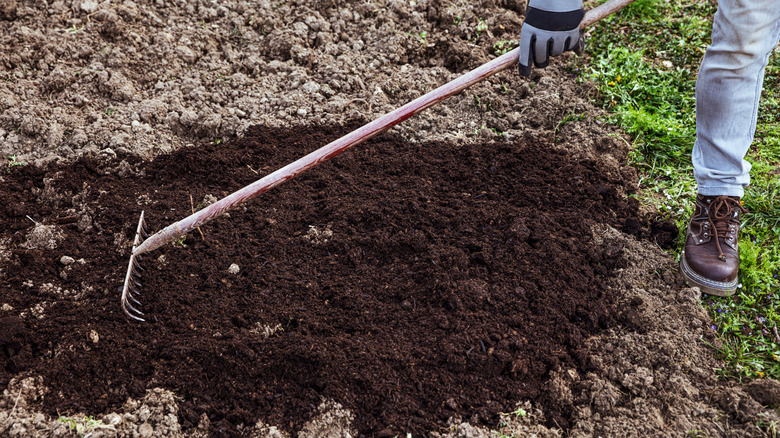
A soil conditioner is a specific subset of soil amendment that improves soil structure. Unlike fertilizer, which is often applied atop the soil, conditioners are typically mixed into it. Soil conditioners includes such materials as compost, guano, sandy loam, worm castings, and even bits of aged bark. Even crushed gravel can serve as a soil conditioner. It's a bit like a potting mix with numerous components that, together, create an environment that makes it easier for plants to grow. Mixing a soil conditioner into dense clay, for example, can greatly improve the ability for water and nutrients— including those supplied by fertilizer — to reach plant roots.