

Attract More Birds To Your Yard With The Help Of A Must-Plant Privacy Hedge
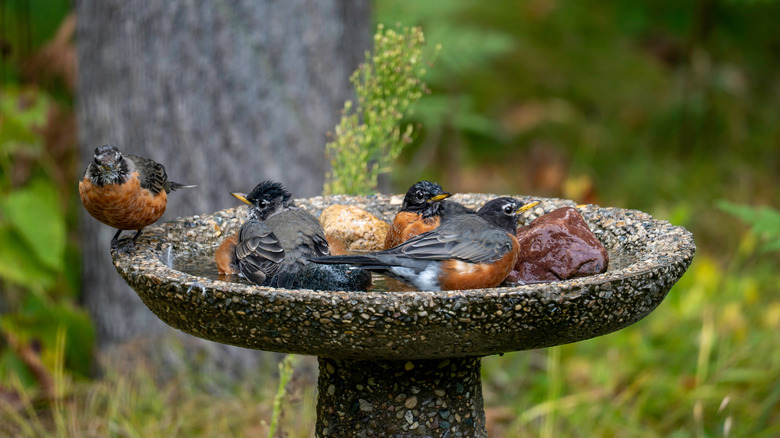
There are plenty of simple tricks and ideas that will bring more privacy to your backyard. One of the best options is to plant several Japanese cleyera shrubs along your fence line or wherever you want to create a living privacy screen. Japanese cleyera (Cleyera japonica) is an evergreen shrub that can reach heights of 10 to 15 feet and features glossy, dark green leaves that are green all year. In the spring, white blooms arrive with a lovely fragrance that attracts birds and other pollinators. After the shrub blooms, it produces small berries that are also a favorite of birds.
This low-maintenance shrub is a nice choice for new gardeners looking for fuss-free plants that thrive in USDA hardiness zones 6 through 9. It tolerates a variety of growing conditions, sun exposure, and soil types, from sandy soils to clay or loam. As long as it has decent drainage, it does fine almost anywhere. Another plus for beginning gardeners is that the Japanese cleyera is mostly disease and pest free. The exception to this is that if watered too frequently or the soil doesn't drain well, they can develop root rot or leaf spot.
Birds love Japanese cleyera for its dense foliage
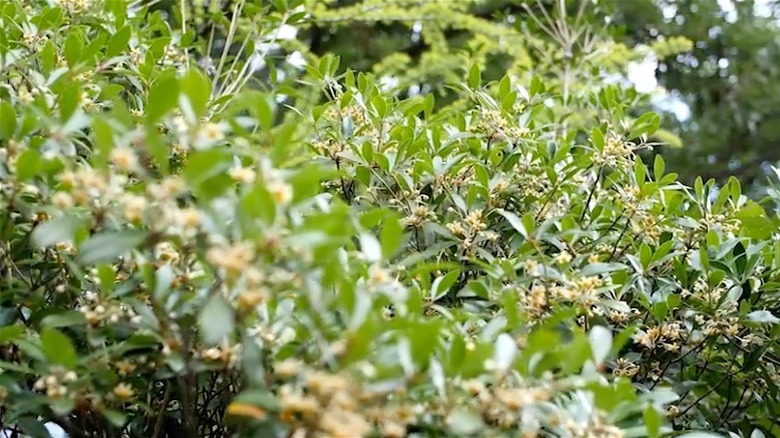
The dense foliage and compact size of Japanese cleyera make it a great choice in or around your yard to create a living privacy screen. Planting this evergreen shrub provides year-round coverage too. The white flowers in spring and summer and eye-catching red-to-black berries in fall attract birds for a large portion of the year, providing not only nutrition, but shelter for birds like cardinals that love to nest in dense foliage.
The other reason birds appreciate this hedge is the same reason you will: It's low-maintenance, so you won't be bothering them all that much. Its tolerance of a variety of sun and soil conditions means you only need to water every few days, and it only requires light pruning and fertilizer in the early spring. Following this simple method for adding mulch is an effective way to help the plants retain just the right amount of moisture, so you won't feel compelled to overwater. It's worth noting that Japanese cleyera can cause mild stomach upsets if the leaves or berries are ingested by humans or pets. It is not considered toxic, but you still may want to pay attention when young children or pets are about.
One caveat when planting this shrub to attract birds: Although it is not considered invasive, it is a non-native plant, which means it may not serve as an adequate host to many butterflies or other insects adapted to local vegetation. Fewer insects and caterpillars mean fewer hungry birds hanging about. Native alternatives you might consider for adding a natural privacy wall include Leyland cypress, holly, juniper, or mulberry.