

Add A Splash Of Color To Your Yard With One Stunning Hydrangea

Landscaping is a delicate balance with factors like depth, variety, and color all coming into play. One way to achieve this while also keeping your garden moderately low-maintenance is by planting hydrangeas. The beauty of this genus is that it includes a variety of different flowering shrubs and trees. While Oakleaf hydrangea (Hydrangea quercifolia) is a beautiful variety that'll fill your garden with stunning fall foliage, another member of the genus adds a cascade of color to your space.
'Pinky Winky' (Hydrangea paniculata) is a panicled cultivar best known for its long conical blossoms: A colorful ombre from pink at the base to white at the tip. The plant is a deciduous shrub, and its blossoms are often observed during the mid- to late summer months, extending your garden's flower fireworks beyond spring. These bushy hydrangeas are best grown in zones 3 to 8 on the USDA hardiness map, which includes much of the continental United States. The plant is also known to be tolerant of urban conditions, making it a clever way to transform your narrow backyard into a useful space.
Proper care will ensure outstanding hydrangea blooms
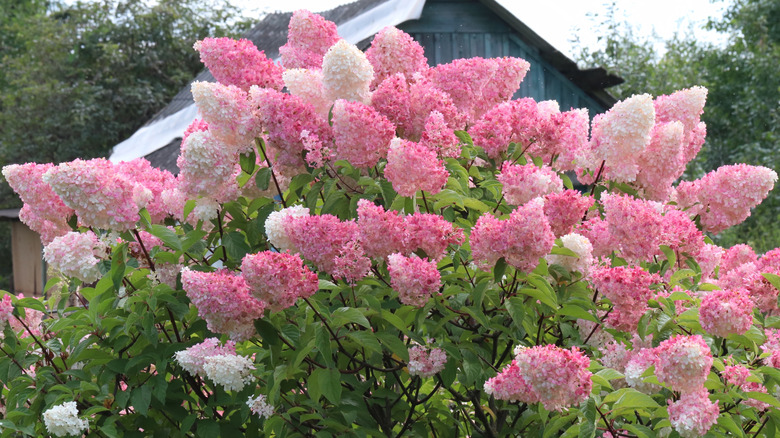
'Pinky Winky' blooms can be extraordinary due to their vibrant and multi-toned nature, with the colorful cones reaching as long as 8 inches. It is important to note that these blooms can be fickle in the genus as a whole, requiring specific watering and pruning. Hydrangeas need semi-regular watering and thrive in moderately moist soil that has the ability to drain easily. This is a particularly important note for those in Southern states, where warm summers means it's worth paying attention to tips that'll help your garden thrive in a heat wave, including slower, deeper watering in the mornings.
Along with the need for consistent moisture, 'Pinky Winky' is best grown in direct sunlight or partial shade — avoid planting the shrub near patio awnings or under dense tree cover. The plant is susceptible to several different issues, including bacterial wilt and invasion from mites. One way to help reduce an infestation is to plant any of the 17 plants that will repel pests from your garden naturally, including lavender or garlic.