

The Obvious Reason Owls Might Not Be Coming To Your Yard
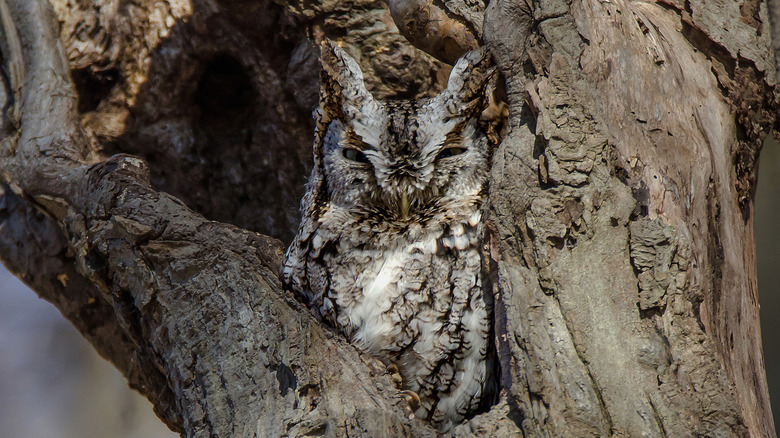
If you put a nesting box in your yard to attract owls and they still don't show up, there might be a little more going on. Owls want the conditions to be just right. As with just about any form of wildlife, owls look for places that have worthy sources of food and shelter. They also want to feel safe and comfortable. If these conditions exist and owls aren't showing up, the issue could be light pollution. Exterior lights of just about any kind can disrupt a nocturnal owl's hunting time, disorient them, or make them feel unsafe.
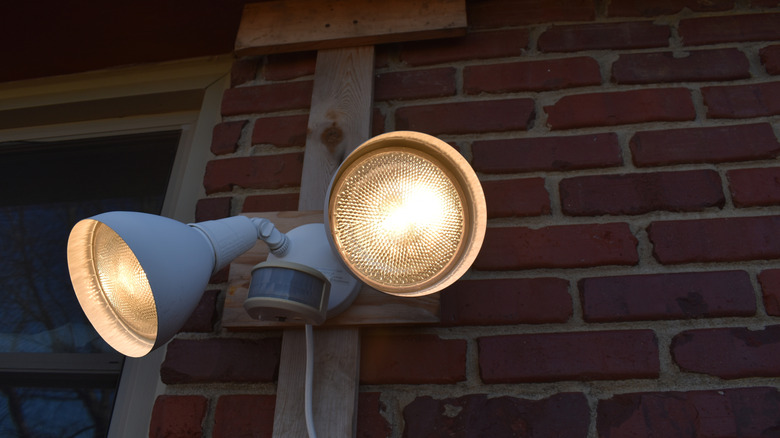
Any owl that hunts at night is used to hunting in dark conditions. Bright lights, accent lights, and just about any constant exterior light source could potentially make owls less likely to visit your yard. Motion sensitive lights can be startling (and deliberately bright), but really any of the creative ways to light up your outdoor space can be enough to send owls headed for a darker yard.
Turn off the lights to attract owls
For some owls, even a little light is too much light. Saw-whet owls might even stay hidden during times of bright moonlight because they're small enough to be prey themselves. Bright light also negatively affects an owl's night vision for about 5 minutes after exposure (think of oncoming traffic with their brights on). Any small nocturnal animal that might be a snack for an owl is also less likely to come out into the open, brightly lit areas if it thinks its life is in danger. Since an owl needs to catch 6 to 12 mice, voles, or other critters each night, the combination of bright-light disorientation and overly alert prey can be devastating. Even larger owls will be more cautious in a well-lit area because they rely on the cover of darkness. If they don't feel safe, they likely won't fly through or stay in an area for long.
There are a number of ways to reduce outdoor light pollution around your house. To make your yard more owl-friendly when it comes to lighting, turn off any unnecessary exterior lights after dark. Flood lights, spot lights, and accent lighting are unnecessary and could interfere with an owl's ability to properly spot its prey. Don't leave porch lights on all night either. If you need some lights on at night, consider a motion-activated light that only stays on for a brief while, and doesn't flood the whole yard with light. For lights that stay on, shade or shield them so they only broadcast where they're needed — illuminating a bit of sidewalk rather than the whole yard, for example. Opting for warmer, low-light fixtures can also help.