

Why Adding Gravel To Your Cucumber Container Garden Could Backfire (And What To Use Instead)
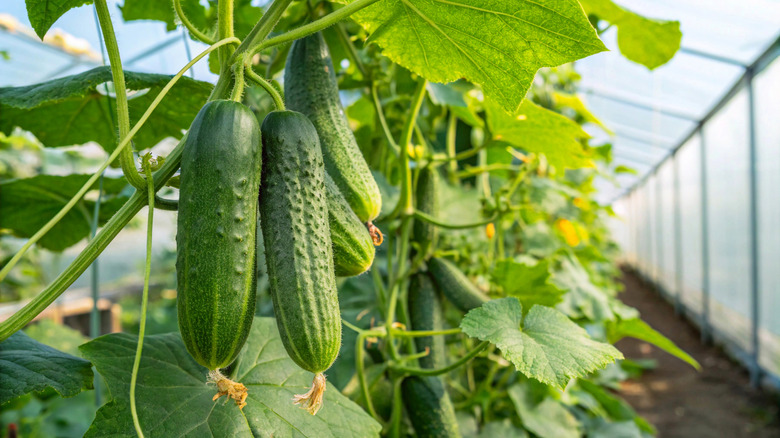
Gravel can benefit your property in many ways if you know how to use it properly. Sharp gravel can get snakes out of your yard, for instance, and gravel paths are helpful for keeping ticks away from your deck or patio. Unfortunately, misconceptions about gravel's benefits in the garden are common. Many gardeners try to improve the drainage of their plant pots by lining the bottoms with this material, especially when growing cucumbers. The roots of container-grown plants are vulnerable to rot if they sit in soggy soil, so good drainage is a must. Cucumber plants are particularly susceptible to rot caused by Fusarium oxysporum, a fungus that targets cucurbits. However, gravel at the bottom of a planter doesn't prevent this issue because it doesn't regulate soil moisture effectively in containers.
According to Deanna Talerico, creator of the organic gardening blog Homestead and Chill, using gravel in plant pots can actually do more harm than good. "It really isn't necessary or helpful," she told Outdoor Guide in an exclusive interview. "Some types of rocks can actually hold excess moisture rather than increasing drainage as intended." Gravel can create other problems as well. One involves gravity's tendency to draw water downward. This creates a deep layer of soil that's too wet for most plant roots. If you place gravel in the bottom of a pot, that overly wet soil layer is moved higher in the pot, closer to the roots, increasing the risk of root rot. Adding gravel also reduces the volume of soil in the pot that roots can inhabit, which may hamper their growth and lead to smaller, weaker plants.
Improving your cucumber pot's drainage without gravel
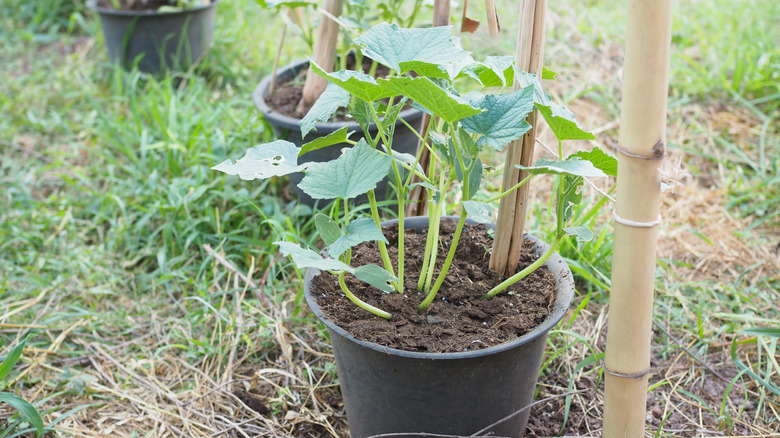
Homestead and Chill's Deanna Talerico recommends giving water an easy escape route rather than relying on gravel for drainage assistance when growing cucumbers in pots. "Always choose containers that have adequate drainage holes," she says, "or add them as needed." You can also help by giving the plants a growing medium that retains just enough water. Talerico suggests using potting mix or another "well-draining fluffy soil that is made for containers." She mixes compost into her container gardens to enhance moisture retention and nutrient levels. "I personally like to amend potting soil with about ⅓ well-aged compost," she says. A budget-friendly DIY compost bin can provide easy access to this versatile soil amendment.
It's also important to consider the material of the pots your cukes call home. Highly porous materials expel moisture the fastest. "Fabric grow bags dry out quite quickly," she says, while glazed ceramic and terracotta pots stay moist longer since they're essentially nonporous, thanks to the glaze. She also notes that "standard plastic nursery pots fall somewhere between." Therefore, you may want to customize your soil by using one that's better at holding moisture when growing cucumbers in grow bags or other porous pots.
When possible, grow plants that aren't terribly sensitive to moisture fluctuations in your most porous pots and put the ones that crave damp soil in less porous containers. In general, cucumbers like lots of water, especially when forming fruit, so grow them in pots that discourage lightning-fast evaporation, with no water-retaining gravel, unless you're able to check their moisture levels each day.