

DIY A Simple 2-Ingredient Fertilizer That Adds Calcium To Your Garden Soil
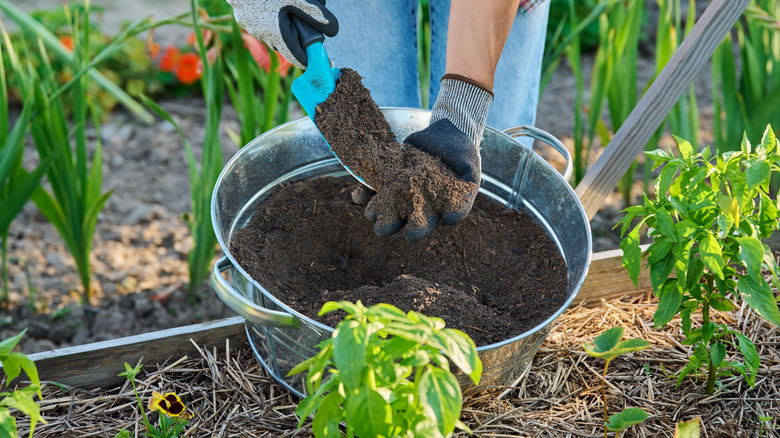
If you're a home gardener, you're probably always on the lookout for some simple, low-cost methods to support your plants' health and increase sustainability by making simple DIY fertilizers. Surprisingly, some of the best DIY garden upgrades can be found right in your kitchen, with some helpful nutrients often going straight down your drain.
You may have already heard about the myriad uses that eggshells can serve in a garden, as their calcium carbonate makes for excellent composting material. What you may have overlooked, however, is the nutrient-rich properties of the water that's been used to boil your eggs. When eggshells are boiled, or when they come into contact with water for an extended period of time, some of their fertilizing properties leach out into the liquid. This usually causes a sort of milky appearance. This eggshell-infused liquid can then be used to water your plants, or combined with crushed shells as fertilizer. Though this doesn't offer enough calcium to completely replace your nutrient-dense fertilizer, using eggshell water really has no downside. It cuts down on waste, improves sustainability, and boosts your garden's health just as well as any standard watering technique. The added calcium can be considered a mild bonus, ensuring that none of those nutrients get thrown out.
This trick can best be applied to soils that are severely lacking in calcium, or in gardens with calcium-hungry crops like tomatoes, peppers, lettuce, or broccoli. Whether you're a morning person who frequently cooks hard-boiled eggs, or you consistently find yourself eyeing a tray of deviled eggs at social events, reserving your eggshell water is a great way to give your garden a little health kick, and give yourself an eggs-cuse to cook a big breakfast.
Best practices for adding eggshell water to your garden
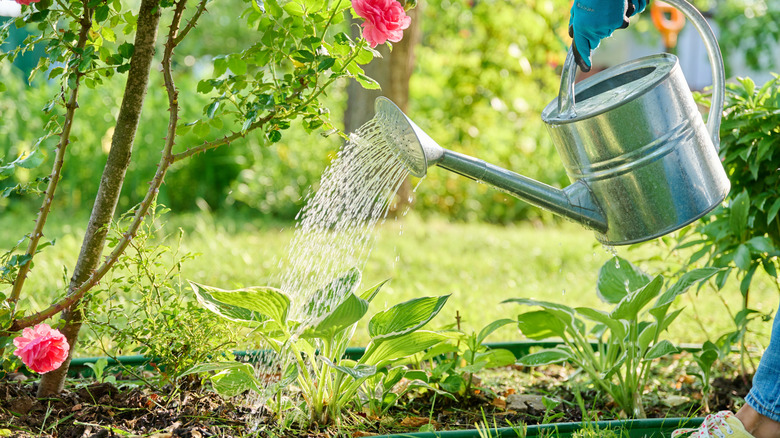
Creating eggshell water is as simple as it sounds, though there are a few minor tips and tricks to squeeze the most out of it. Importantly, though, be sure to always let your water cool completely before adding it to your garden — boiling water will obviously wilt and cook your plants. The two most common methods for producing eggshell water are hard-boiling eggs, or making eggshell tea. The latter involves saving discarded eggshells and steeping them in water overnight in order to soften the shells and pull out more of their nutrients. Either way, the process begins with boiling a pot of water, adding your rinsed eggs/shells, and leaving them to steep. Once you've got your cooled eggshell water, you can give it directly to the plants as a watering substitute, use it to moisten a fertilizer blend, or seal it in a container for later use. Experts usually recommend substituting eggshell liquid for traditional water once every week for the best results.
Of course, if you're really looking to increase your garden's calcium intake, the best option is to grind up your eggshells and use a two-pronged approach. Use the eggshell water as a liquid nutrient booster to spray your plants with mild calcium concentrate, while occasionally dusting powdered eggshell around the stems of your plants to maximize nutrient intake. This won't entirely eliminate the need for standard fertilizer, but it will come in handy if your tomatoes start showing signs of calcium deficiency, such as blossom end rot.