

These Common Driveway Materials Make Snow Removal Even Easier
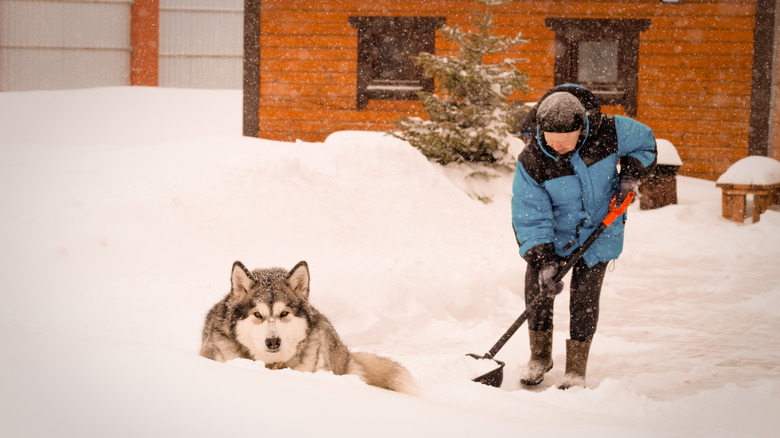
It doesn't necessarily matter which side of the shovel vs. snow blower debate you choose — some driveway materials are simply easier to clear in winter than others. If you're considering a driveway upgrade in an area with heavy winter weather, a more snow-friendly driveway material can make life easier, and help preserve your investment. Asphalt, properly finished concrete, and permeable pavers are practical because their smooth, solid surfaces make shoveling and snow blowing easier than driveways made of rough or loose materials. When clearing snow from something like a gravel driveway, it often requires an extra tool — a garden rake for smaller drives, and a landscape rake for larger ones — to break the snow up so you don't remove part of the surface.
A black asphalt driveway has the added benefit of retaining some heat on a sunny day, so snow and ice may melt faster than on lighter-hued driveway materials. Asphalt is also flexible and can handle freeze/thaw cycles better than concrete at times. Since it flexes, asphalt is less likely to crack. Just remember to seal it from time to time, to ensure a good, long lifetime of smooth shoveling.
Concrete is easy to shovel, until it cracks
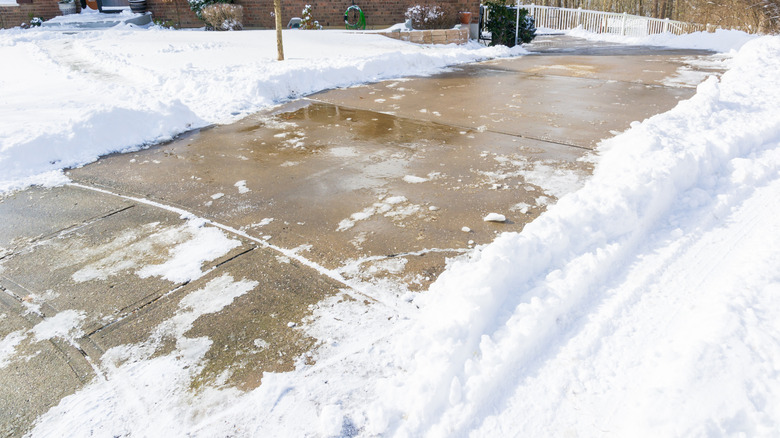
Concrete is one of the most common long-term driveway options and it fairs well in winter since it's easy to just shovel or snow blow right over it. Concrete is strong enough that even a metal shovel blade generally won't harm it, though vigorous scraping or jabbing through ice has potential to scratch a smooth surface. A textured finish on the driveway surface can add a little traction when you're out there clearing snow. It's also important to use the right weather-resistant sealant every two or three years to help prevent water damage and, eventually, cracking.
Once a concrete driveway develops cracks, moisture can seep in. As that moisture freezes and thaws repeatedly, it can damage the surrounding concrete. Shoveling a cracked, flaked, or spalled driveway can create more damage, and it's simply harder to glide a shovel along. Before winter weather sets in, using an inexpensive sealer can help keep existing concrete cracks from getting worse. And if one too many rugged winters and the concomitant shoveling means it's time for an upgrade, remember that repaving a driveway is an outdoor renovation you shouldn't do yourself, unless you really know what you're doing.
Winter pros and cons of permeable driveway pavers
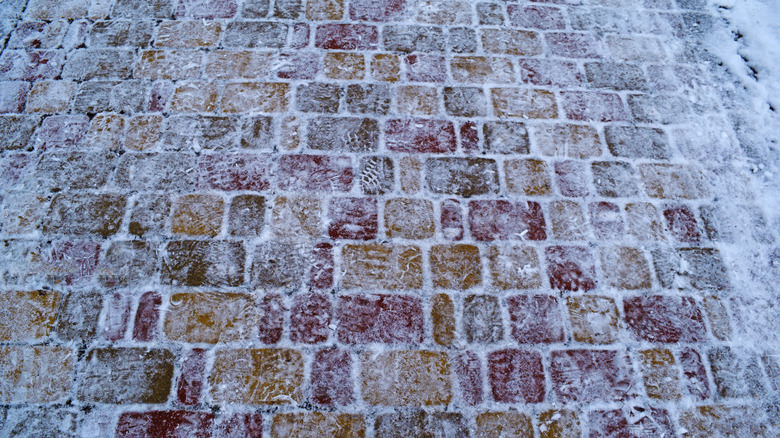
Driveway pavers are a bit unique in that they aren't one uniform surface like asphalt or concrete. Instead, the driveway is made up of a number of smaller materials set in place, in the same way bricks or cobblestones have been used on streets for centuries. Pavers can move and flex with moisture and freeze-thaw cycles, so they're less likely to crack. When they do crack, it's much easier to replace a few pavers compared to a large concrete slab or chunk of asphalt.
Permeable pavers have an added benefit: They're porous, allowing moisture through so it doesn't pool on top creating ice or causing cracks. When polymeric sand is used between pavers, water easily runs down through the channels preventing ice buildup and reducing the chances of your driveway turning into an ice skating rink the next time temperatures drop. Some permeable pavers are made of synthetic materials and retain a higher temperature within them than other driveway materials. This could help melt things faster. There is one downside: With some permeable pavers, you may have to keep your shovel blade or snow blower slightly above the ground to avoid hitting the individual edges of the pavers.
Maintaining your pavers during the warmer months is important for creating a less labor-intensive winter. Weeds may eventually grow between pavers, and if they aren't cleared out, your snow shovel may catch against them. Enough weeds can create an uneven paver surface, further complicating your winter chores.