

Add Year-Round Color To Your Yard With A Flowering Shrub Cardinals Love
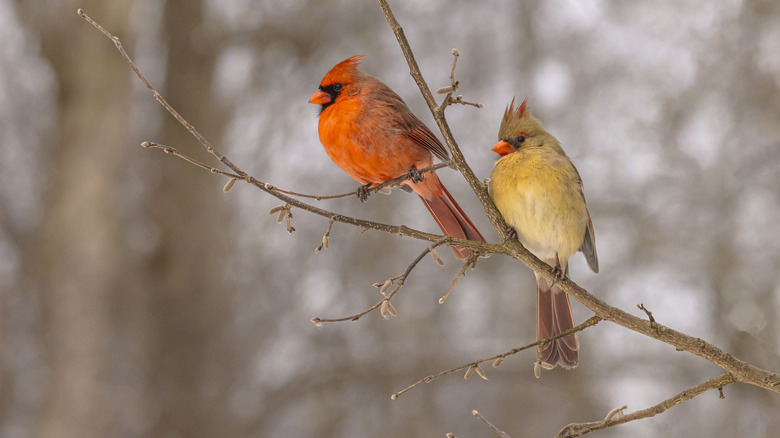
Cardinals are beautiful songbirds that can add cheer and color to your garden, so it's no wonder people often want to see more of them. You can attract more cardinals by moving your bird feeder, but to take your garden to the next level there's a flowering shrub you should consider planting. Simpson's stopper (Myrcianthes fragrans), also called twinberry or nakedwood, is native to Florida, easy to grow in-ground in the warmer regions of the United States (and in containers elsewhere), and beloved by birds and pollinators alike.
Simpson's stopper is a densely growing shrub, perfect for songbirds like cardinals to seek shelter in. During late spring and early summer, small white flowers fill the branches and perfume the air, giving way to orange and red berries a few months later. Even after the flowers fade and the berries are gone, Simpson's stopper adds color to your yard, as it's an evergreen. The bark is also quite pretty — it's light gray, sometimes with a slight reddish tint, and has an interesting texture. While most of the bark is smooth, patches will sometimes peel or flake off, giving it a more mottled appearance, somewhat like a sycamore tree.
The flowers are particularly attractive to pollinators, making this shrub a great plant to grow to attract butterflies. The berries are a food source for cardinals and other birds, drawing them to your garden during late summer and early fall. Depending on the variety, where they're planted, and how you prune them, Simpson's stoppers can grow up to 20 feet tall in its native Florida, or no higher than five feet when growing the 'Compacta' dwarf cultivar. They're highly adaptable and easy to grow, so even beginning gardeners can enjoy this beautiful shrub and the cardinals it attracts.
Growing Simpson's stopper
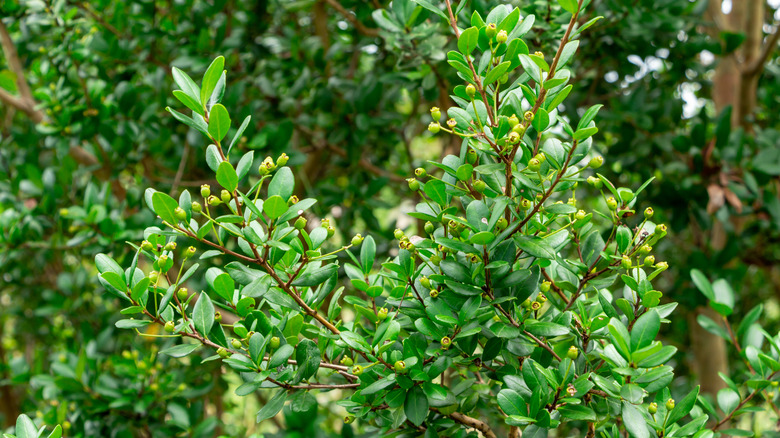
If you want to add Simpson's stopper to your garden, you first need to know what plant hardiness zone you live in. As a native plant of Florida, these shrubs can tolerate heat and some salt, but they don't thrive in cold weather. Simpson's stopper is hardy in zones 8 through 11. It can grow in containers, although you'll need to prune it to keep it as a manageable size. If you live north of zone 8, consider keeping this plant potted and moving it indoors when temperatures drop (though you'll need another trick to attract cardinals to your yard in winter). If you're not trying to control its size and shape, Simpson's stopper doesn't need a lot of regular pruning, but it can also handle pretty aggressive pruning as needed. It typically grows well without fertilizer as well, although container plants will need to be fertilized or repotted in fresh soil occasionally to replenish the available nutrients.
When planting in your garden, choose a spot that gets plenty of sun and has well-draining soil. Once established, Simpson's stopper can tolerate droughts, but it doesn't handle floods well, so avoid planting it in low-lying areas that tend to collect water. It can grow in full sun to partial shade, but the amount of sun will impact how it grows. If you want a dense shrub that offers the most protection for cardinals, full sun is the way to go. When grown in shade, the branches tend to be more leggy and spread out, and more tree-like. If you want to see more of their lovely bark, partial shade is the better option. Simpson's stopper does grow fairly slowly, so if you want to start attracting cardinals right away, start with a more mature nursery plant.