

Plant This Frost-Tolerant Flower As Winter Ends To Get A Jumpstart On Spring Gardening
Winter can be something of a slow season for gardeners. If you are among those champing at the bit to do a little gardening as winter enters its homestretch, sweet alyssum (Lobularia maritima) may just be the solution. You can plant this frost-hardy flower as winter ends to get a jumpstart on spring gardening.
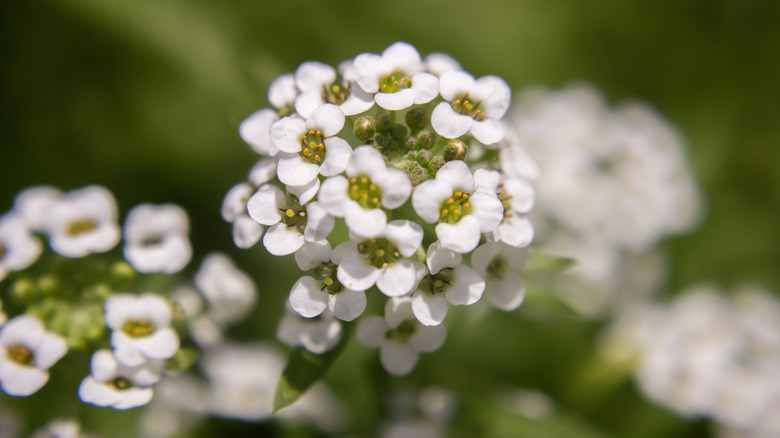
Sweet alyssum is a ground cover that puts forth a bouquet of small, white flowers known for their sweet scent. Inasmuch, there are practical reasons to plant sweet alyssum besides just giving you an excuse to work in your garden. For one, it is a powerful attractant for a variety of pollinators, which can benefit your lawn and garden. On the opposite side of that equation, it is also known to repel various pests, including aphids and the tomato hornworm, so it is a great companion plant to keep your tomatoes healthy and thriving. Others grow it simply for aesthetics, adding charm around a birdbath or depth and color to landscaping. Once established, the plant can endure winter with very little help, or they can overwinter indoors.
Sweet alyssum can be grown throughout most of the U.S., as it is capable of being cultivated in USDA hardiness zones 5 – 11. However, it may have a different growing cycle depending on where you live and the type of weather your area experiences in a given year. In the majority of the areas encompassed in zones 5-9, sweet alyssum is treated as a hardy annual, whereas in parts of zone 9, as well as zones 10-11, it can be a short-lived perennial. It's also worth noting that sweet alyssum is considered an invasive plant in certain areas of the U.S., being native to the Mediterranean region.
Growing sweet alyssum
Another plus when it comes to growing sweet alyssum is that it's relatively easy to do. Alyssum seeds can be sown directly in the ground or they can be started indoors in trays or containers, then transplanted. You can also buy seedlings for transplanting. The primary concern is finding the proper spot. They typically fare best in areas with well-draining, slightly acidic or neutral soil, that receive full sunlight. However, in the hotter portions of its growing range, they are often better off in locations that get afternoon shade.
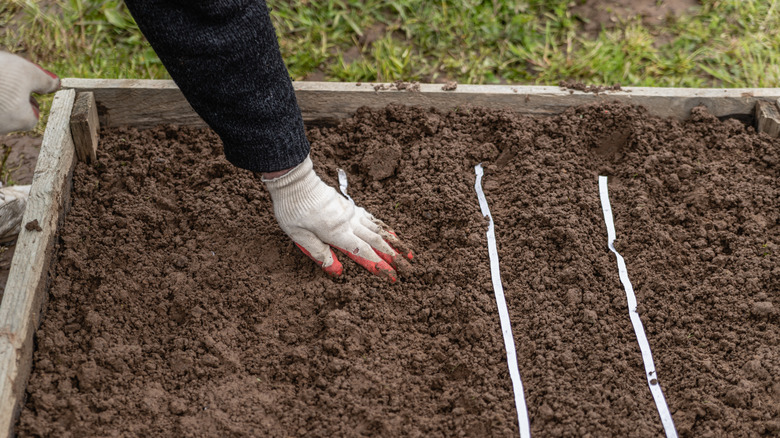
When sowing seeds directly in the ground, do so a couple of weeks before the last frost date. The best method is to broadcast sow them, just slightly pressing them into the soil to ensure good contact. If you are starting the seeds in containers indoors, plant them a couple of months before the last frost date. Seedlings can then be moved to the garden once your soil temperature registers 60 degrees. Either way, you're getting a jump on spring and spending time in garden.
Although sweet alyssum plants can grow a couple of feet wide, most who plant them in beds prefer a dense crowd of multiple plants, resulting in a solid mat of green foliage beneath a dense layer of flowers. In containers, a couple of plants is typically all that is necessary. In either instance, sweet alyssum plants need very little maintenance. Really all that is required is to make sure they get around an inch of water each week and deadhead once the blooms are spent. Otherwise, pruning is only necessary if the plants are spreading past where you want it, or if they are starting to get leggy.