

Want More Owls In Your Yard? This Simple Feature Helps Them Feel Safe
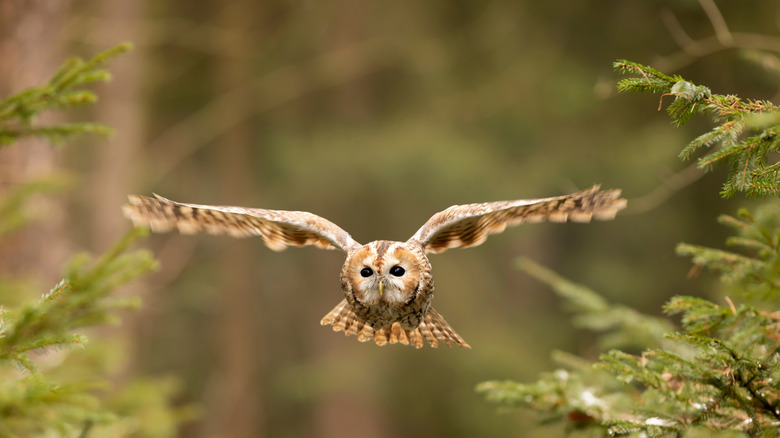
If you love birdwatching, there are plenty of simple ways to attract more songbirds to your yard. But what about larger, more impressive birds, like owls? There are a few tricks to attract owls to your yard, including building nest boxes. But you can also encourage them to stick around to hunt and rest safely. If you want owls to feel at home in your yard or garden, add a tall perch for them to use.
Owls possess impressive eyesight they use to find food and spot danger. From a high vantage point they have a bird's eye view of the area, making it easier to see mice or other small mammals as they scurry between plants. Being high up also helps them stay safe from most threats. While owls are apex predators, small owls can sometimes be injured by other predators, including cats, snakes, foxes, and even larger owls. Being up high won't protect them from other birds of prey, but it does make them less likely to be surprised by a fox or cat.
You may actually already have suitable perches in your yard or garden! If you have a tall, old tree overlooking your garden, that's the ideal spot for an owl to sit. Fences and utility poles may also appeal to owls. If your yard already has some of these features, focus on other ways to appeal to owls, such as creating an owl-friendly birdbath and avoiding chemical rodenticides and pesticides. Don't worry if you don't already have a perfect perch for the owls to use — you can also make your own!
Adding an owl perch to your garden
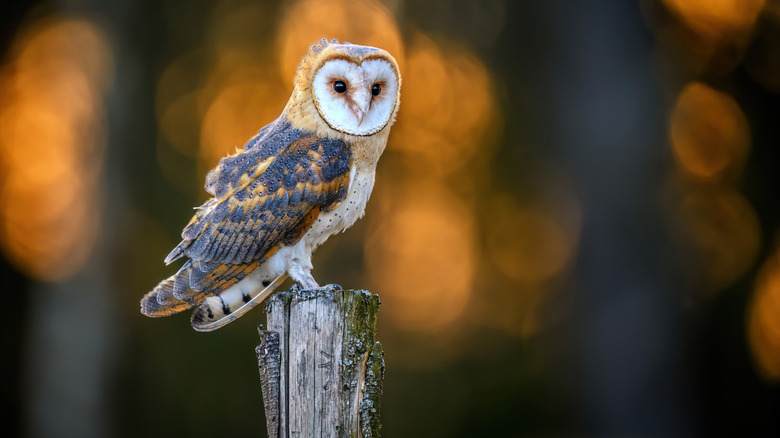
Adding an artificial owl perch to your yard is fairly simple. While you can plant trees and wait for them to grow tall enough, you already be reconsidering planting fast-growing trees in your yard. Besides, even the fastest-growing trees take a while to reach the heights owls prefer. A simple galvanized steel or wood pole, 15 to 20 feet tall, gives owls an excellent perching spot. While owls, along with other raptors such as hawks, will use a plain pole, you can upgrade it by adding a cross beam or platform at the top, creating a very large T-perch. The extra surface area makes it more convenient to land on, and multiple birds can use it at once.
Make sure the platform or cross beam is secure on the post. Consider adding additional support by attaching smaller beams at a diagonal between the post and the cross beam. When putting your post out, try to arrange it so the cross beam is running east to west. This helps reduce prevailing winds catching the perch, making it unstable. It also helps birds see the perch as the sun or move moves across the sky.
Once your perch is constructed, anchor it firmly in the ground. Choose a site away from power lines or other hazards with stable ground. Dig a hole 3 feet deep and 6 inches across, setting your post into it. Fill the hole with concrete to give your new perch a solid foundation. Once the concrete is set, your perch is ready to be used by any owls that come along.