

3 Tough Flowers That Survive Frost And Bloom Beautifully
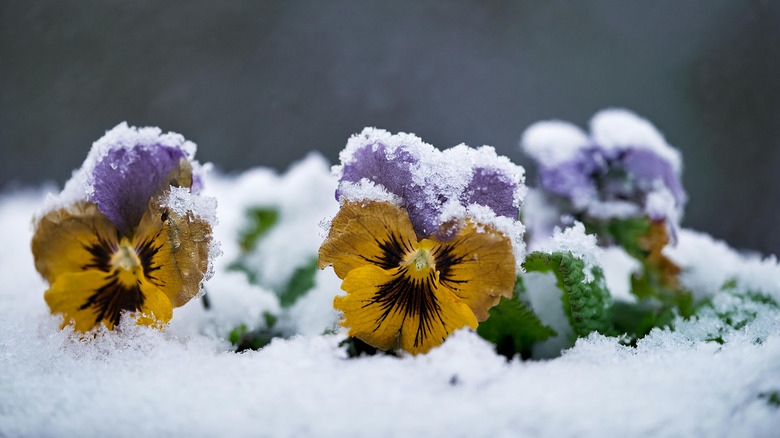
If you live in an area prone to harsh winter weather, late fall through early spring can sometimes feel like a never-ending cycle of protecting your plants and flowers whenever a frost advisory or freeze warning is issued. However, there are a number of flowering plants that need little to no help from you in order to make it through frosts and freezes. Among them are these three tough flowers that survive frost and bloom beautifully. In fact, their colorful blooms are often the first harbinger of spring and some even exhibit their colorful flowers throughout the winter months or while frost is still on the ground.
Among the most tenacious of these flowers are pansies (Viola x wittrockiana). Pansies can be grown in USDA hardiness zones 2 – 9 depending on the variety or cultivar, which is to say almost the entirety of the continental U.S. Pansies are perennials, although, north of zone 5, they may considered annuals or brought indoors for the winter. That aside, they are hardy flowers that make it through winter unscathed throughout their growing range. Some types will bloom twice in a year, while a few can even be counted on to flower during the winter months in zones 6 or higher. The time of year in which you plant your pansies will determine in which season they bloom. Planting in the fall, in the right zones, will give you blooms that winter and spring.
Siberian iris are made for winter weather
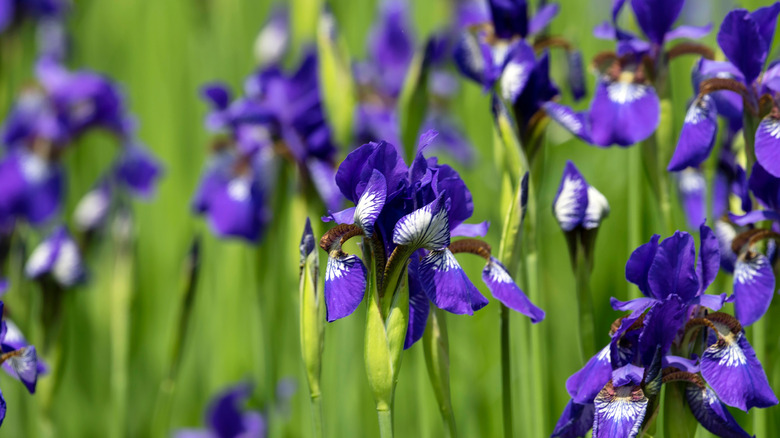
With a name like Siberian iris (Iris siberica), you would certainly expect this colorful flowering plant to withstand severe winter weather, and it does. Native to a vast area stretching from Eastern Europe to Central Asia, Siberian iris does well in USDA hardiness zones 3 – 9. In fact, it blooms best following a significant cold snap; you may not get as many flowers or new bulbs during unseasonably warm winters. This tough flower can endure sub-0 Fahrenheit winter weather and overall it's relatively maintenance-free, requiring little attention throughout the year.
Another unique aspect of Siberian iris is it is tolerant of both dry and moist conditions, once established. As a result, they are a nice addition to a backyard rain garden or near ponds, streams, and low-lying areas. It also means they can deal with heavy snowmelt. While they can weather the winter with no problem, the don't rush to reveal their flowers once the weather warms. Typically, Siberian iris blooms later in the spring, and may take an entire growing cycle, or one year, before a bulb's flower appears.
Primrose provide color before most flowering plants
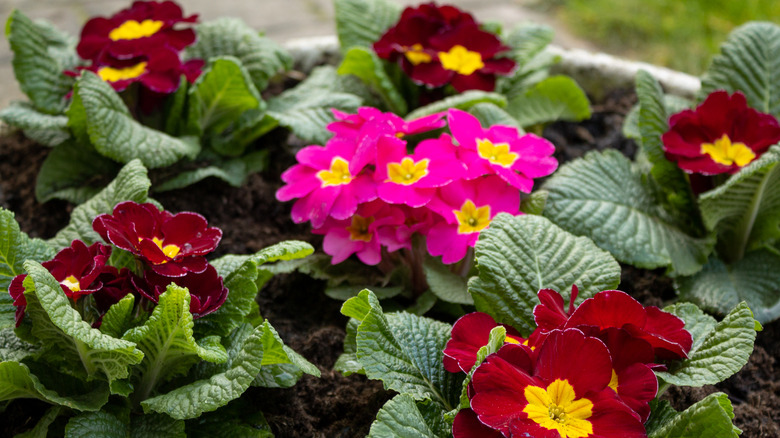
Primrose (Primula vulgaris) is another good option for those looking for a colorful flower they don't have to baby during the winter season. In fact, not only can primrose survive cold weather, in some areas certain types will even begin blooming before spring has sprung. Various varieties of this frost tolerant flower can be grown in USDA hardiness zones 3 – 10, although most types are best suited for zones 4 – 8.
Beyond adapting to a wide range of temperatures and hardiness zones, this tough flowering plant typically reseeds itself. With more than 400 species to choose from, there is a primrose to fit just about every need. Most species of primrose put forth their blooms during the early days of spring. However, quite a few examples, like varieties and cultivars of Primula polyanthus, will actually display flowers as winter wanes. Either way, they are typically among the first flowers to bring color to the landscape each year. Note that the climate as well as the variety dictate when these plants bloom. As a result, consider your hardiness zone and when you hope to see first flowers before choosing your primroses.